


14 Effective Thanksgiving Marketing Ideas to Boost Your Sales in 2026
Discover creative Thanksgiving marketing ideas to engage customers, build buzz, and drive sales before Black Friday and Cyber Monday.
We’ve collected 10 of the best email capture tools on the market today. By using one of these tools, you’ll have a steady stream of new leads!
In short
If you're short on time, here's the bottom line: for most Shopify and ecommerce stores, OptiMonk is the strongest all-round choice as it combines an AI agent that designs your popups, advanced targeting and A/B testing with a free plan that's actually useful. If you want email capture and email sending under one roof, Klaviyo is the best pick, with native SMS support built in. For larger businesses that need a full CRM alongside their capture tools, HubSpot is the most complete suite on this list. Read on for the full breakdown.
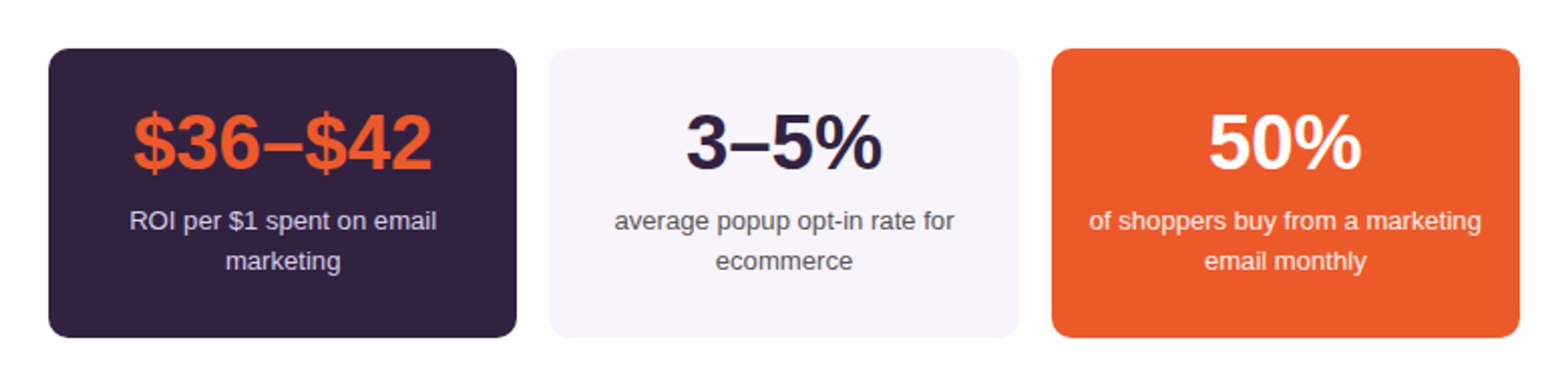
Email marketing delivers an average ROI of $36–$42 for every $1 spent, the highest of any marketing channel. But none of that matters without a healthy, growing email list.
To fully harness its potential, capturing email addresses from your website visitors is the crucial first step, and for online stores, choosing the right tool can make or break your list-building efforts.
In this guide, we've reviewed the 10 best email capture software for ecommerce in 2026, covering dedicated popup builders, all-in-one email marketing platforms, and general marketing suites. Whether you're running a Shopify store or a multi-platform ecommerce business, there's a tool here that fits your needs and budget.
Before you pick a tool, it's worth understanding what's actually at stake. Email marketing consistently outperforms every other channel, but only if you're actively growing your list.
Here's what the data says:
Most popup tools work fine for generic websites. For ecommerce, you need a few things they don't always offer out of the box:
Your capture tool needs to play nicely with your store. Look for native Shopify integration, direct syncing with your email platform (Klaviyo, Mailchimp, Omnisend), and ideally the ability to trigger popups based on cart value or purchase history.
A good tool offers more than a basic lightbox. Look for multi-step forms, sticky bars, embedded forms, slide-ins, and gamified options like spin-to-win; each works better in different contexts and for different audiences.
Timing is everything. The best tools let you show popups based on exit-intent popup signals, scroll depth, time on page, cart value, referral source, and more. Showing the right message to the right visitor at the right moment is what separates a 3% opt-in rate from a 10% one.
You shouldn't have to guess what works. Built-in A/B testing lets you test headlines, designs, offers, and timing to continuously improve your opt-in rate without relying on gut feeling.
Increasingly, ecommerce brands are capturing both email and phone numbers in a single flow. If email and SMS capture is part of your strategy — and it should be — make sure your tool supports both channels natively or integrates with an SMS platform.
Most tools offer a free plan or trial. Evaluate what's included before committing; some free plans are genuinely useful, while others are too limited to deliver real results.
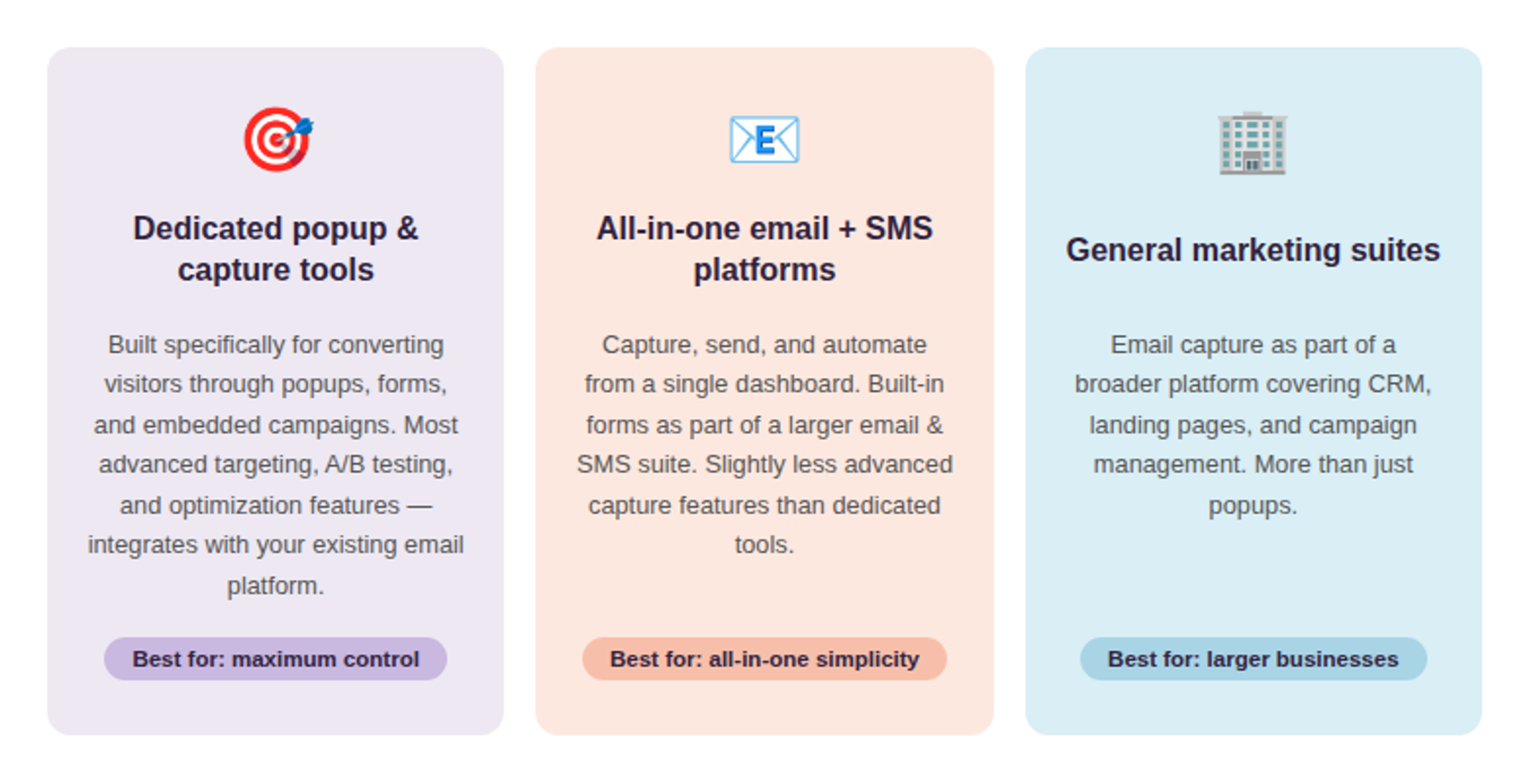
Before diving into the list, it helps to understand the three main categories, because the right type of tool depends on how you want to work:
Not sure where to start? Here's a quick side-by-side overview of all 10 tools before we dive into the full reviews:
| Tool | Category | Best for | Starting price | Free plan |
|---|---|---|---|---|
| OptiMonk | Dedicated popup tool | All-round ecommerce CRO | $19/month | ✅ Yes |
| OptinMonster | Dedicated popup tool | Advanced behavioral targeting | $21/month | ❌ No |
| Sleeknote | Dedicated popup tool | Visitor-friendly popups | €62/month | 7-day trial |
| Claspo | Dedicated popup tool | Personalized email capture campaigns | From $39/month | ✅ Yes |
| Klaviyo | Email + SMS platform | Ecommerce email & SMS | $20/month | ✅ Yes |
| Privy | Email + SMS platform | Shopify email & SMS | $24/month | 15-day trial |
| Mailmunch | Email + SMS platform | Budget all-in-one | $19.99/month | ❌ No |
| Wishpond | Marketing suite | Landing pages + capture | Custom pricing | 14-day trial |
| Omnisend | Marketing suite | Multi-channel email + SMS + push | $16/month | ✅ Yes |
Popup tools are a different breed from all-in-one platforms. They're laser-focused on the moment a visitor lands on your store and what it takes to get them to hand over their email. Because that's what they do: they offer targeting, testing, and customization options that email platforms simply can't match. Pair one with your existing ESP and you get the best of both worlds.
OptiMonk is the most powerful email capture tool for ecommerce on this list. It's an agentic popup builder: you describe the popup you want, and the AI agent designs it on brand, writes the copy and builds a mobile version.
With smart targeting and built-in A/B testing, it's designed to grow your email list and increase revenue. With a free plan and 60+ integrations, it's the go-to choice for Shopify and ecommerce brands that want serious results without a serious price tag.
Pricing: Free plan available, or from $19/month billed yearly ($29 monthly).
Key features
✅ Pros
❌ Cons
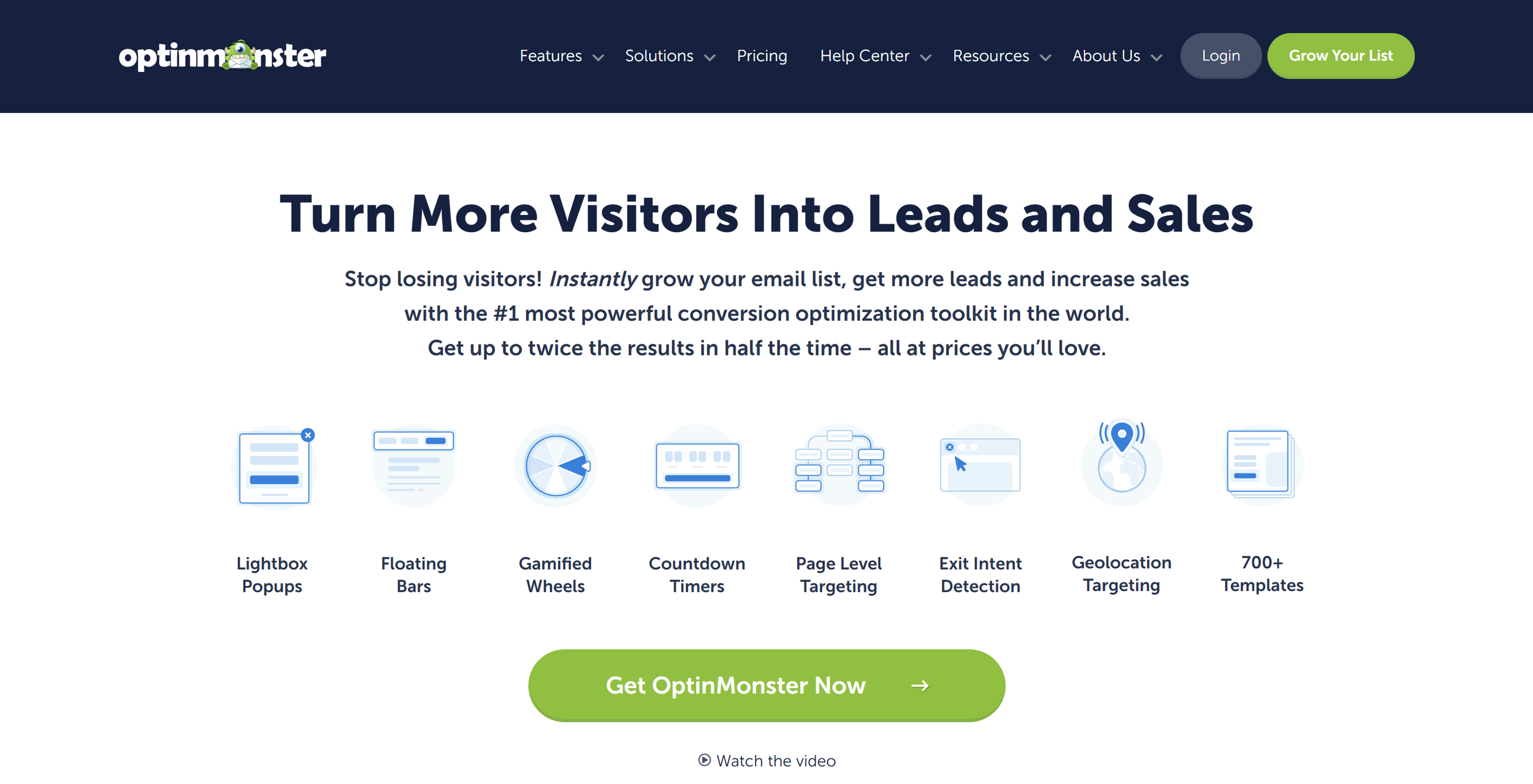
OptinMonster is a powerful lead generation software that goes well beyond basic popups, particularly strong for ecommerce brands that need hyper-granular visitor segmentation, targeting by referral source, device, geolocation, cart content, and user behavior all in a single campaign.
Pricing: From $21/month.
Key features
✅ Pros
❌ Cons
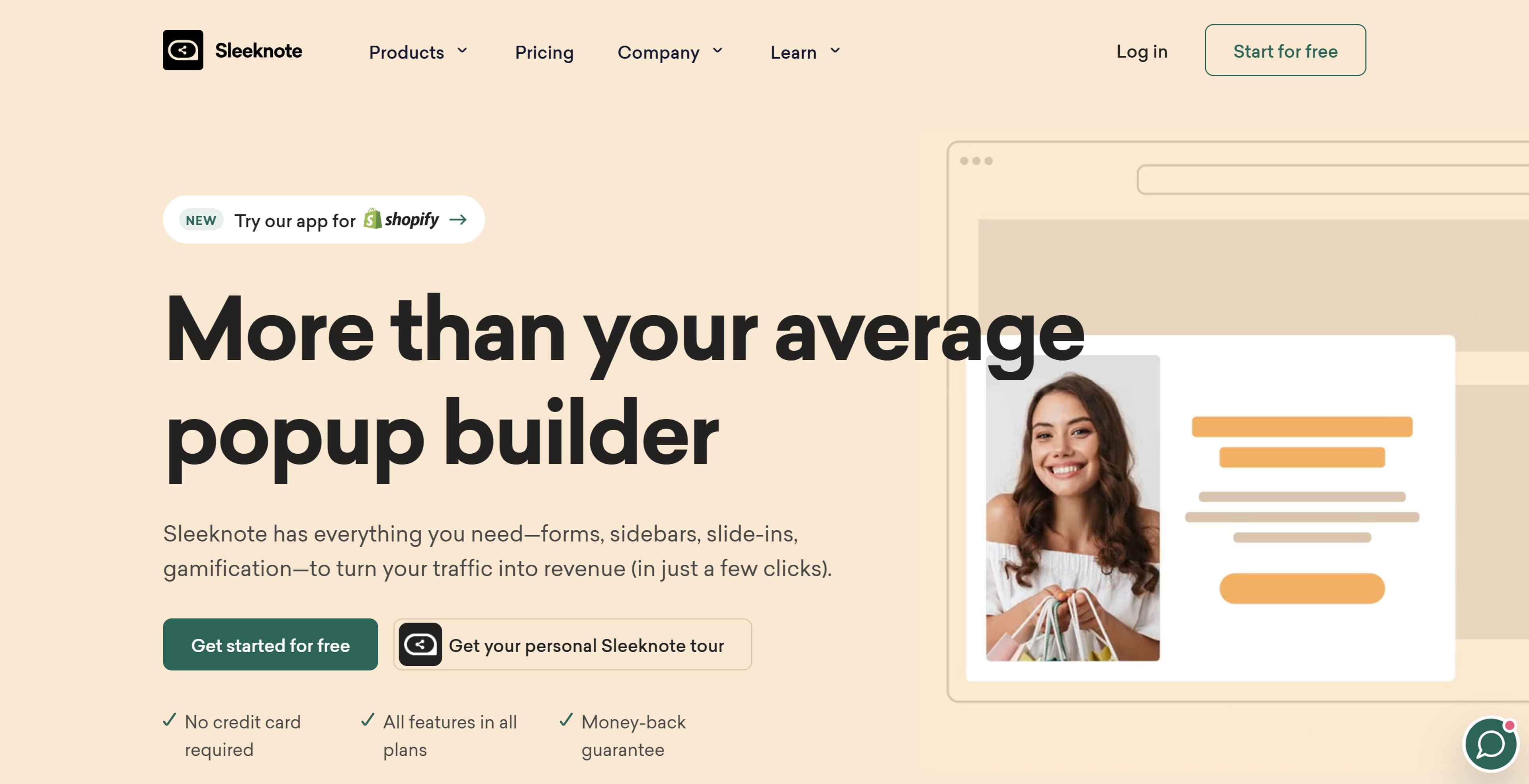
Sleeknote is an email capture app for Shopify and other ecommerce platforms that prioritizes the visitor experience. Rather than aggressive overlays, Sleeknote's campaigns are designed to feel contextual and helpful, which translates into better long-term subscriber quality and lower unsubscribe rates.
Pricing: From €62/month. 7-day free trial.
Key features
✅ Pros
❌ Cons

Claspo is an email capture platform designed to help businesses convert more website visitors into subscribers using personalized onsite campaigns. With flexible targeting, gamified widgets, and a no-code builder, it makes it easy to create email capture forms that match different audiences and customer journeys without requiring technical skills.
Pricing: Free plan available. Paid plans start from $39/month.
Key features
✅ Pros
❌ Cons
If managing a separate popup tool and email platform sounds like one more thing to maintain, these platforms are worth a look. You capture the email, send the welcome flow, and run your campaigns all from the same dashboard with subscriber data that's synced from the moment someone opts in.
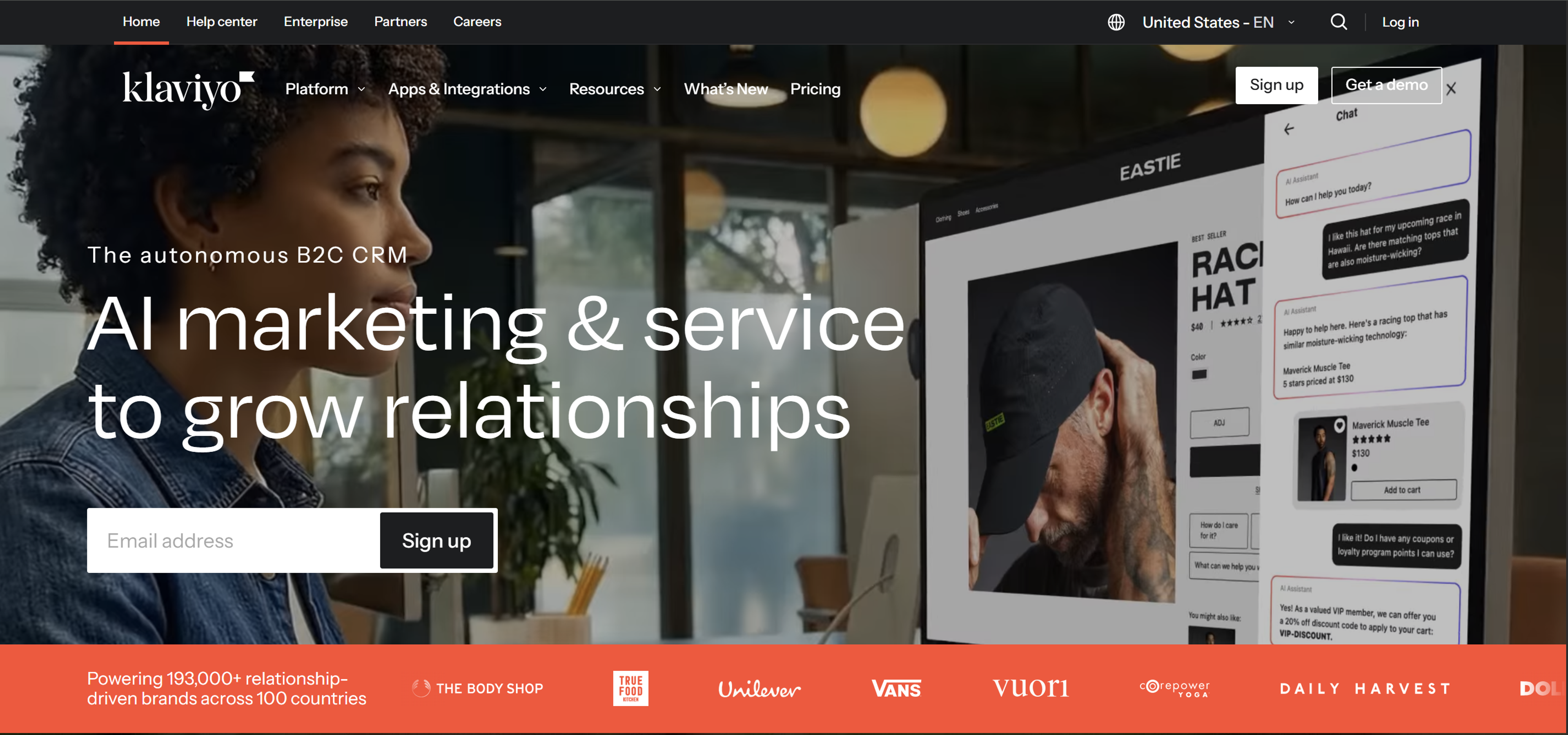
Klaviyo is the most popular ecommerce email marketing platform on the market, and it comes with solid built-in capture tools too. If you're already using Klaviyo for your email campaigns, using its native forms for email list building for ecommerce is a natural fit that keeps everything in one place and your subscriber data automatically synced.
Pricing: Free plan available, or from $20/month.
Key features
✅ Pros
❌ Cons
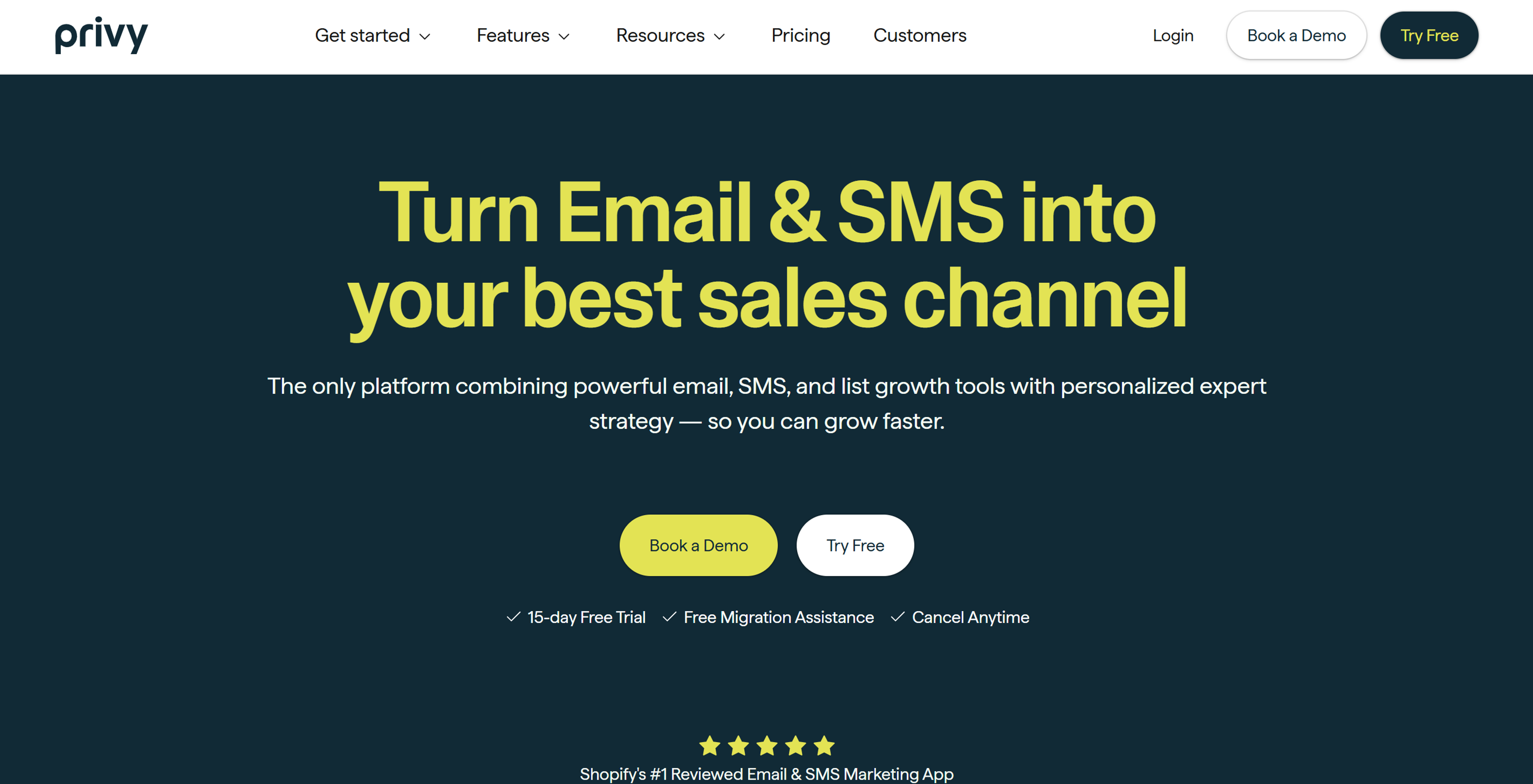
Privy calls itself Shopify's #1 reviewed email & SMS marketing app, and with over 4,000 reviews and a 4.5 rating on the Shopify App Store, that's hard to argue with. It's a natural fit for small and mid-sized Shopify stores that want a single, beginner-friendly platform to grow their list and send email and SMS campaigns, all without touching a line of code.bers and customers.
Pricing: From $24/month (popups only, via Shopify App Store). Email marketing from $30/month. Email + SMS from $45/month. 15-day free trial, no credit card required.
Key features
✅ Pros
❌ Cons
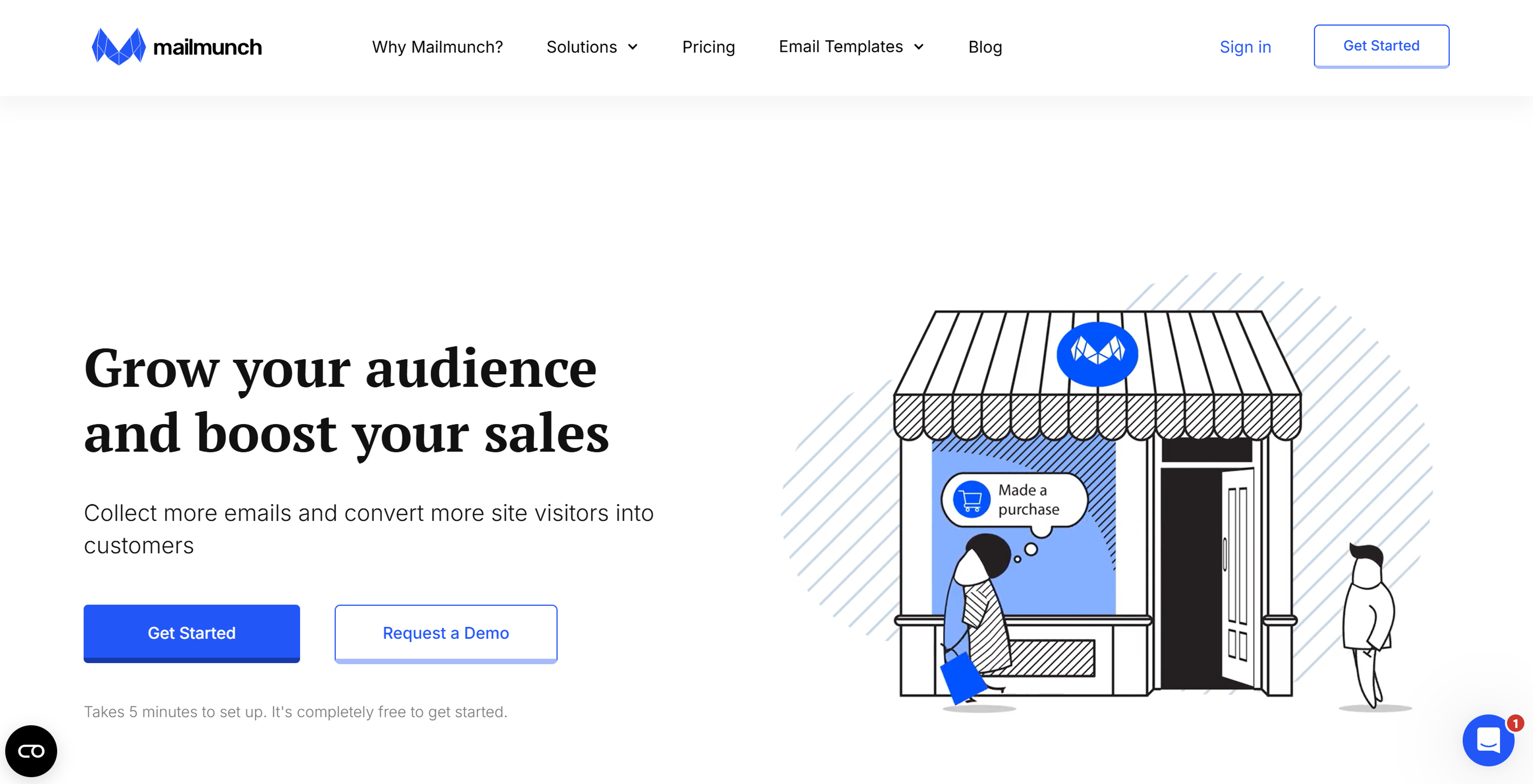
Mailmunch is a beginner-friendly email capture tool for ecommerce that packs landing pages, multiple popup types, and basic email marketing into one affordable package. It's consistently praised for how fast you can get up and running, with most users having their first form live in under 10 minutes. A practical pick for smaller stores that want a no-fuss solution without managing multiple tools.
Pricing: From $19.99/month (up to 1,000 contacts).
Key features
✅ Pros
❌ Cons
The tools in this category weren't built specifically for email capture. They were built for businesses that need a lot more than that. Landing pages, CRM, campaign management, and marketing automation all come as part of the package. If you've outgrown standalone tools and need everything connected, this is where to look.
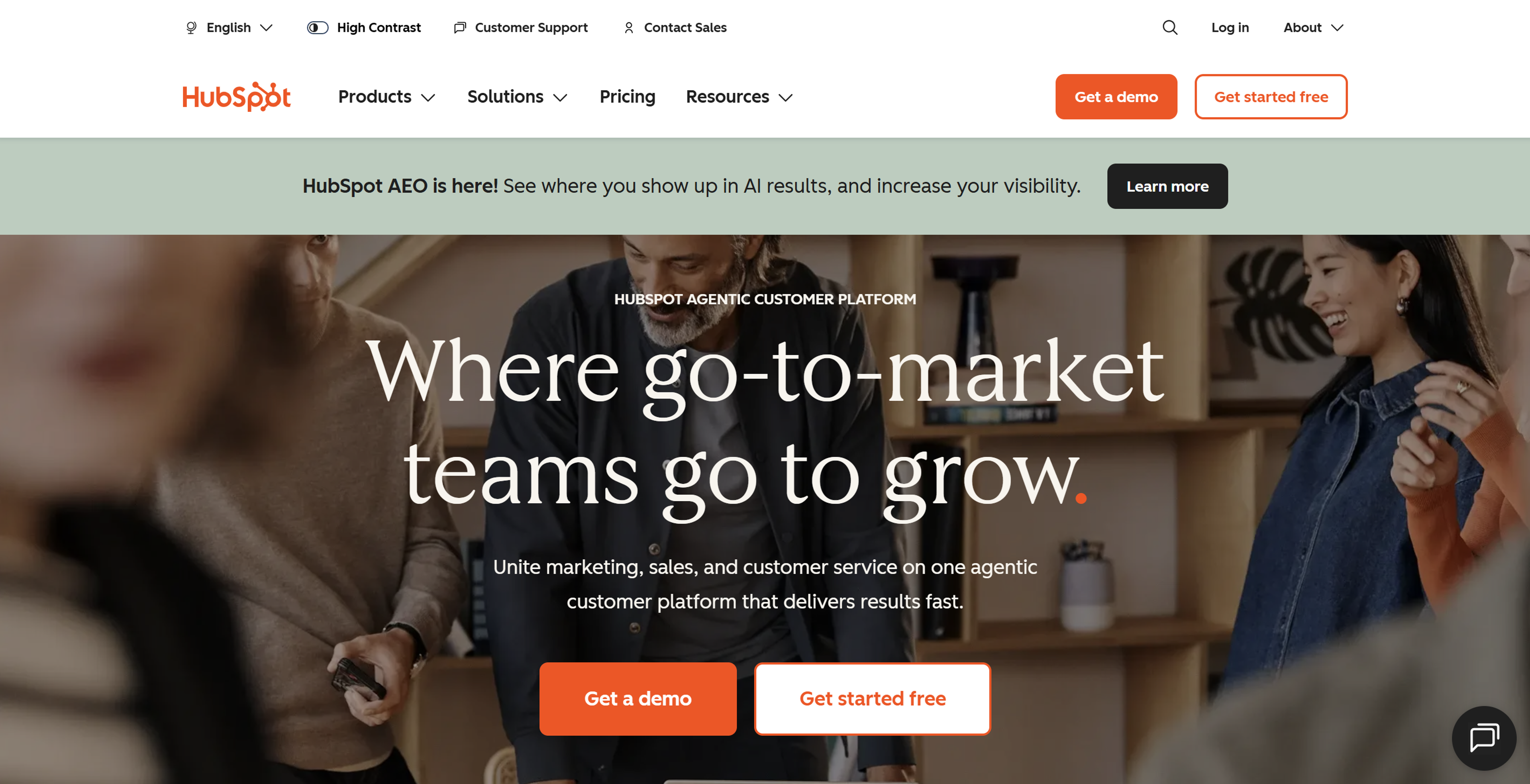
HubSpot is an all-in-one marketing, sales, and CRM platform, and the most important thing to know upfront is how its plans stack up. The free plan covers forms, landing pages, and basic email (2,000 sends/month, HubSpot-branded). Starter at $15/seat/month removes branding and expands limits, but has no automation workflows, A/B testing, or SMS. For those features — the ones most tools on this list include from $20–$45/month — you need Professional at $800/month, plus a $3,000 onboarding fee. HubSpot makes most sense when you genuinely need the CRM and sales pipeline on top of your email capture, not for capture alone.
Pricing: Free plan available. Starter from $15/seat/month. Professional from $800/month + $3,000 onboarding fee (first-year minimum: $12,600).
Key features
✅ Pros
❌ Cons
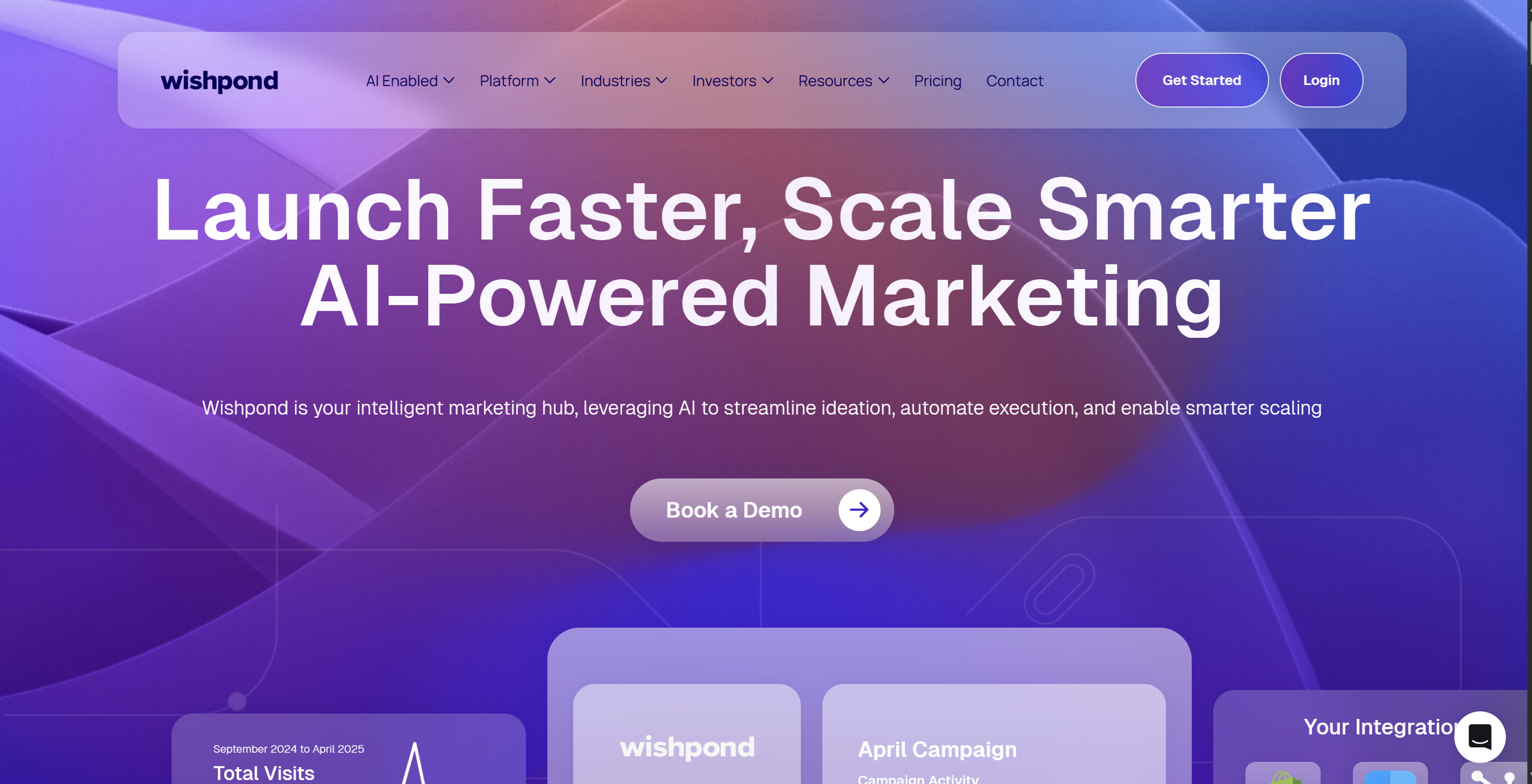
If HubSpot's pricing gave you pause, Wishpond is worth a look. It covers the marketing side of what HubSpot offers — landing pages, email capture, automation, and campaigns — at a fraction of the cost. You won't get a full CRM, but for ecommerce businesses that want an affordable all-in-one marketing suite without a $12,600 first-year commitment, that's often a reasonable trade-off.
Pricing: Not publicly listed — requires a demo call. Third-party sources suggest plans starting around $49/month (billed annually), but quotes vary by business size. 14-day free trial available.
Key features
✅ Pros
❌ Cons
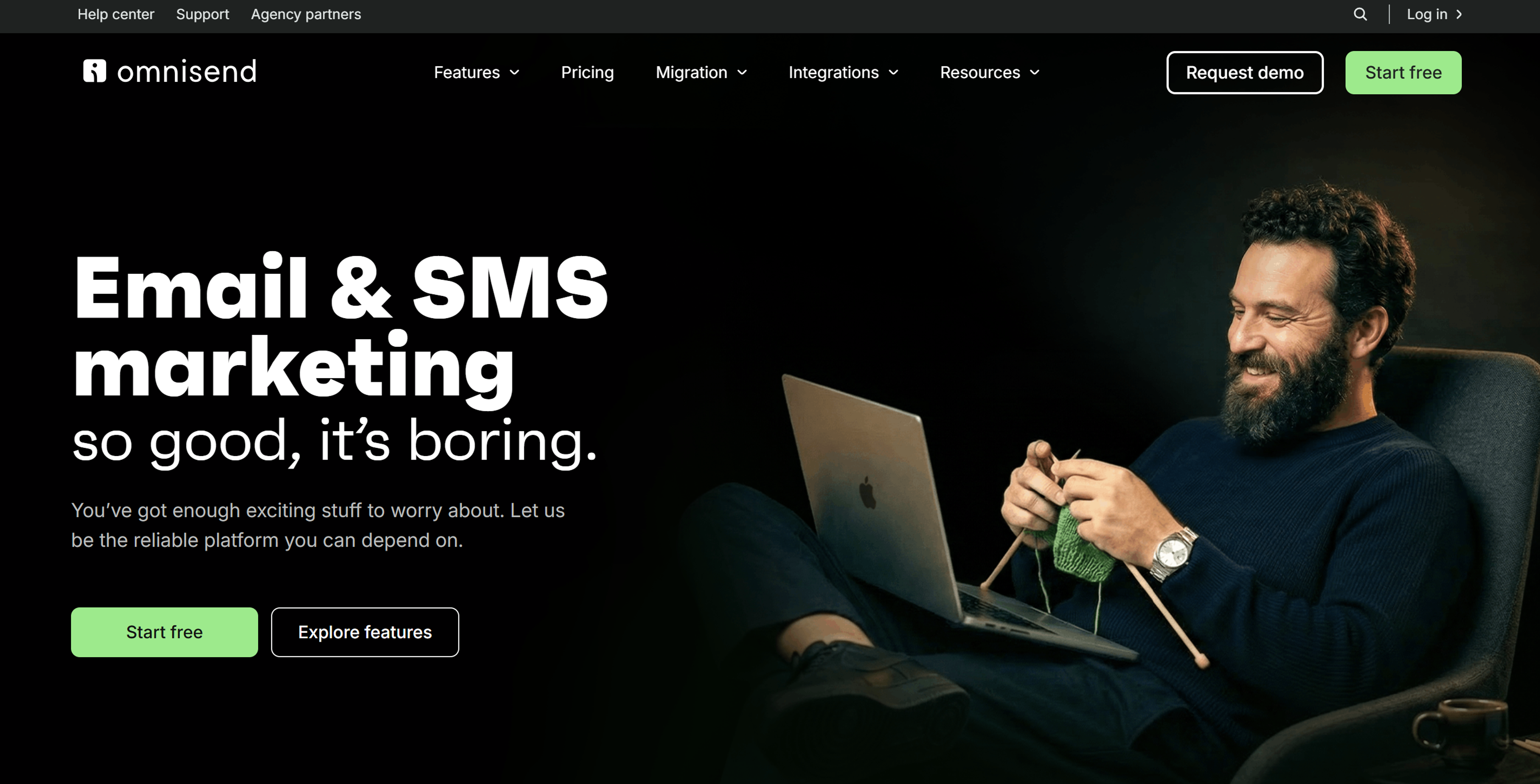
Omnisend is an ecommerce-focused marketing platform trusted by 100,000+ brands and one of the most highly rated tools on the Shopify App Store (4.7 stars). Where Klaviyo leans toward advanced data and segmentation, Omnisend strikes a balance between power and ease of use, making it a strong choice for growing Shopify stores that want email, SMS, and web push notifications all running from a single platform without a steep learning curve.
Pricing: Free plan available (250 contacts, 500 emails/month). Standard from $16/month for up to 500 contacts — scales with list size. Pro from $59/month (unlimited emails + SMS credits included).
Key features
✅ Pros
❌ Cons
Choosing the right email capture software for ecommerce comes down to what you actually need. Here's how to decide:
And if you're on a tight budget, don't overthink it: start with OptiMonk's free plan or Klaviyo's free tier. Both are genuinely useful without paying a cent.
Email capture software is a tool that collects email addresses from website visitors through popups, embedded forms, or landing pages. For ecommerce businesses, it's the foundation of any email marketing strategy, turning anonymous store visitors into subscribers you can market to directly, without relying on social media algorithms or paid ads.
The average opt-in rate for ecommerce popups is 3–5%. Anything above 5% is strong. Well-optimized campaigns using the right timing, offer (like a discount or free shipping), and targeting can push opt-in rates to 10–15% or higher. Gamified formats like spin-to-win can reach even further.
OptiMonk offers the most capable free plan for Shopify stores, with every feature, including the AI agent, targeting and integrations. Klaviyo's free plan is also worth considering if you want email capture and email sending in a single platform; it includes up to 500 email sends per month and native Shopify integration.
Yes — if your platform supports it, capturing both in a single form flow is one of the highest-ROI moves in ecommerce marketing. Email and SMS capture together allows you to reach customers across two channels, and SMS in particular has significantly higher open rates than email. Tools like Klaviyo and Privy support both natively.
The most effective method is a well-timed popup with a compelling offer, typically a discount (10–15% off) or free shipping in exchange for an email address. Install an email capture app for Shopify like OptiMonk or Privy, set your trigger (exit-intent or time-on-page), design the popup (with OptiMonk, the AI agent does it for you), and connect it to your email platform. Most tools take under 30 minutes to set up and can start capturing emails the same day.
A dedicated popup tool like OptiMonk or Sleeknote is built purely for converting website visitors, offering more advanced targeting, triggers, and A/B testing than most all-in-one platforms, and integrates with your existing email tool rather than replacing it. An all-in-one platform like Klaviyo or Omnisend combines email capture with email and SMS sending, automation, and analytics in a single dashboard. The trade-off is that capture features are usually less advanced, but you avoid managing multiple tools. For most growing Shopify stores, starting with an all-in-one platform makes sense, and layering in a dedicated popup tool later as you scale.

Discover creative Thanksgiving marketing ideas to engage customers, build buzz, and drive sales before Black Friday and Cyber Monday.
Learn 5 ways ecommerce brands can turn new subscribers into recurring revenue using welcome flows, personalization, loyalty programs, re-engagement, and referrals.
In this article, we’ve compiled a list of the 25 top ecommerce apps that will help you streamline your operations, boost sales, and grow your online business.