


How Often Should You Send Marketing Emails? A Simple Guide for Email Marketing Frequency
Learn about email marketing frequency for ecommerce stores. Most send 1-3 emails per week, with frequency adjusted by subscriber engagement and store type.
In this article, we'll share 30 actionable Black Friday marketing ideas for ecommerce businesses to make 2026 your most successful yet.
In short
Start your Black Friday plan about six weeks out. Pick one clear offer first, then grow your email and SMS list with an early-access sign-up popup. During the sale, show the same offer on every channel, catch leaving visitors with exit intent, and recover abandoned carts. After it, run a Cyber Monday “last chance” and move straight into holiday gifting.
A Black Friday marketing strategy is a plan for the six weeks around Black Friday. Grow your email and SMS list early, tease the sale, give subscribers early access, run one clear offer with real urgency, recover abandoned carts, and follow up through Cyber Monday. The stores that win prepare the list and the site before the traffic arrives.
Black Friday 2026 falls on November 27, and Cyber Monday on November 30. Below is a week-by-week calendar, 30 ideas sorted by when to use them, and the onsite offers that turn the extra traffic into orders.
It's the plan that decides who you talk to, with which offer, on which channel, and when, from early October to the week after Cyber Monday. A strategy is more than a discount. It covers the list you build beforehand, the offer itself, how your site behaves on the day, and how you keep the new customers afterwards.
The stakes are high and the window is short. US shoppers spent $44.2 billion online during Cyber Week 2025, up 7.7% on the year before, including $11.8 billion on Black Friday and $14.25 billion on Cyber Monday (Adobe). On Cyber Monday, 57.5% of online sales came from phones.
One more number to plan for: AI traffic to US retail sites (shoppers clicking a link from an AI assistant) was up 670% on Cyber Monday 2025 (same Adobe report). More shoppers now arrive from a chat answer, already knowing what they want. Your product pages have to answer their questions fast.
Most Black Friday advice is a list of tactics. The order matters more than the list. Here is when each job belongs.
| When (2026) | Goal | Channels | What your site shows | What to measure |
|---|---|---|---|---|
| 6 weeks out (Oct 12–18) | Plan the offer and the margin | Internal | Nothing new yet | Last year's BF numbers, stock |
| 5–3 weeks out (Oct 19–Nov 8) | Grow the list | Ads, social, organic | Sign-up popup: "Get early access to our Black Friday sale" | New subscribers per day, popup conversion rate |
| 2 weeks out (Nov 9–15) | Build anticipation | Email, SMS, social | Countdown to the sale for subscribers and returning visitors | Opens, clicks, list growth |
| 1 week out (Nov 16–22) | Reward the list | Email, SMS | Early-access offer for subscribers only | Early-access revenue |
| Black Friday week (Nov 23–29) | Sell | All channels | Main offer, exit-intent saver, cart-value nudge, product recommendations | Conversion rate, AOV, revenue per visitor |
| Cyber Monday (Nov 30) | Sell the last chance | Email, SMS, ads | "Last day" countdown, one final offer | Same as above |
| 2 weeks after (Dec 1–14) | Keep the new customers | Email, SMS | Welcome offer for first-time buyers' second order, holiday gift guide | Repeat purchase rate, unsubscribe rate |
Print this table and put dates next to every row before you write a single email.
Lock three things by mid-October:
Everything else (emails, ads, popups) follows from those three.
Pull last year's Black Friday numbers first: revenue per day, best-selling products, conversion rate, and where traffic came from.
That's your baseline for every decision below.
Pick one main offer you can explain in five words, such as "30% off everything" or "Free gift over $80". Shoppers compare dozens of offers that week, so a complicated one loses.
The list you have on November 1 is the list you can sell to on November 27. Every subscriber you add in October is someone you can reach without paying for an ad in the most expensive week of the year.
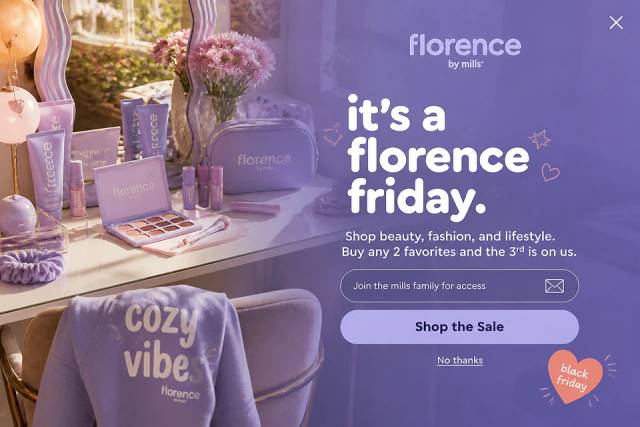
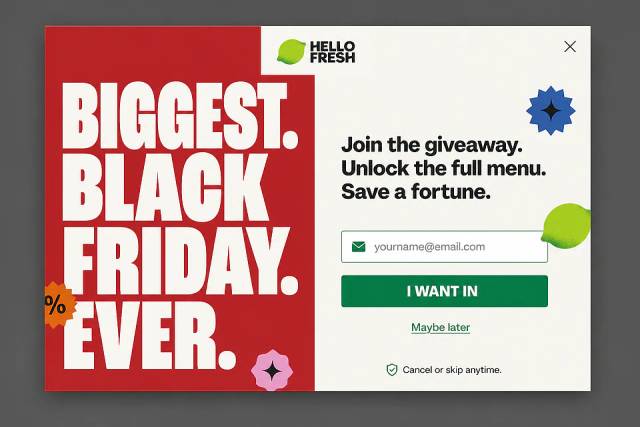
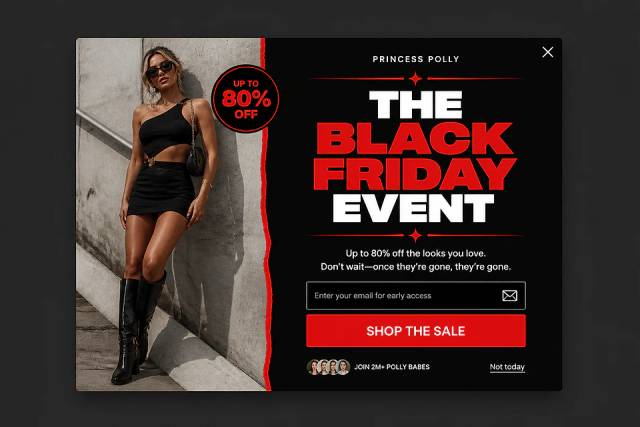
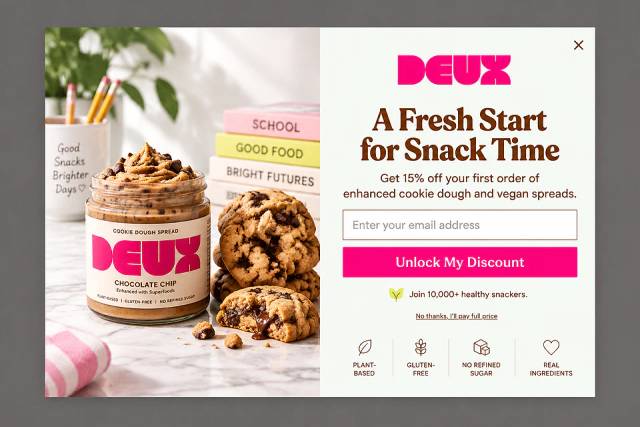
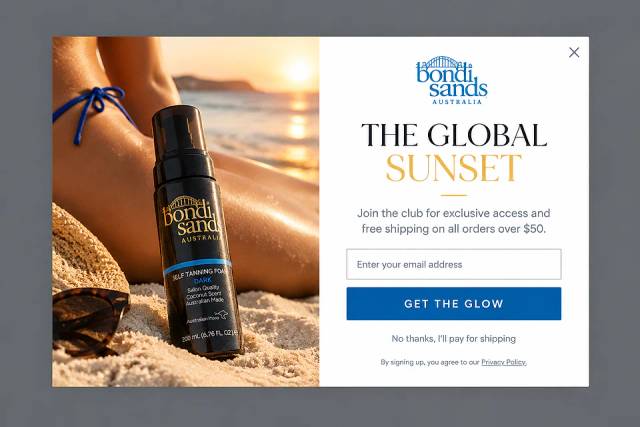
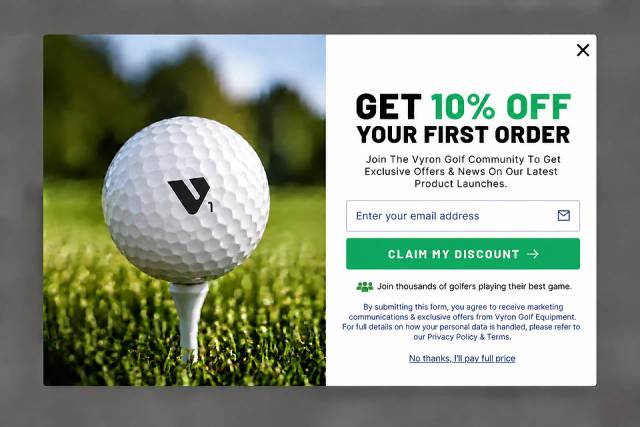
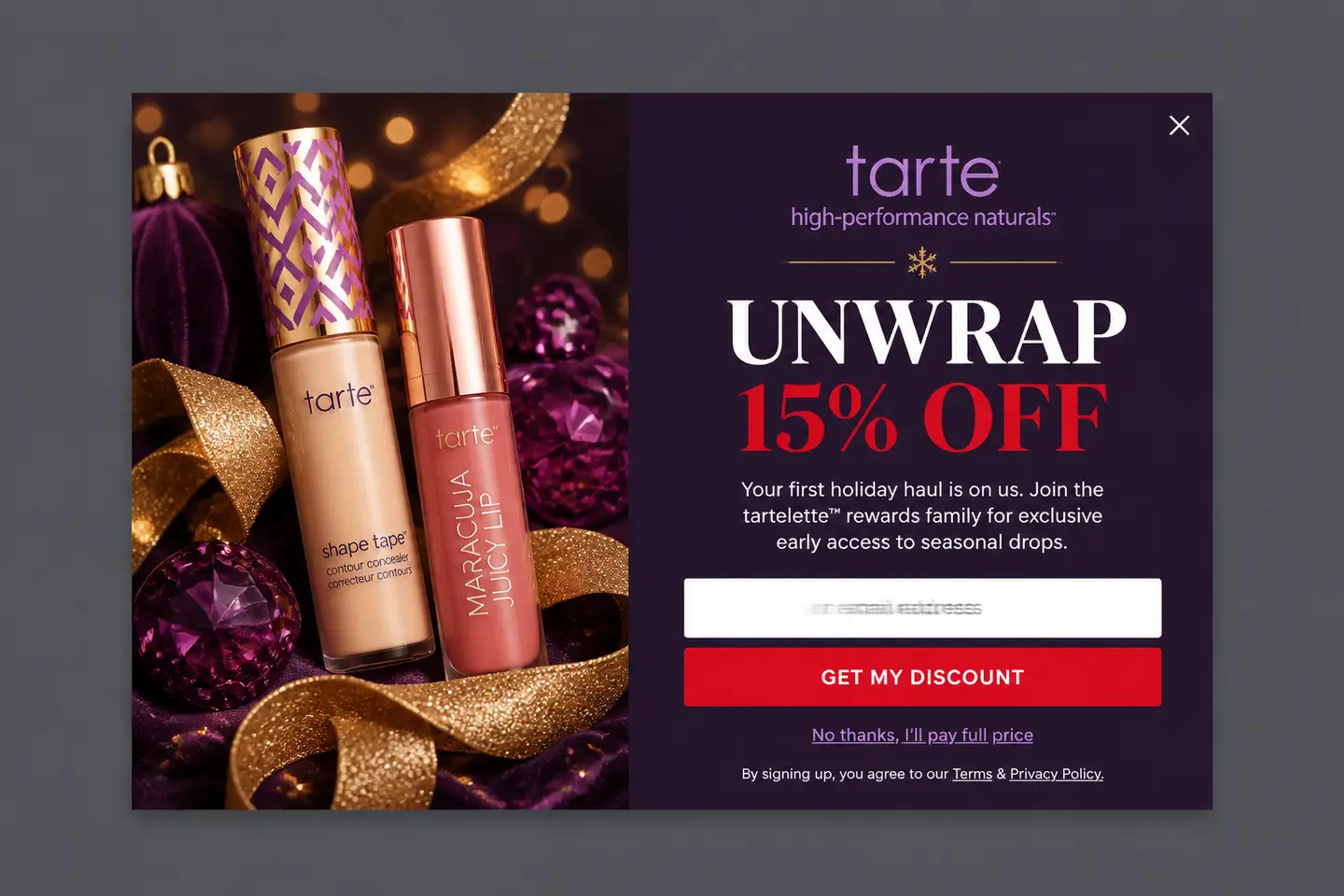
Run a sign-up popup that promises early access to the sale instead of a generic newsletter. "Be first to our Black Friday sale" gives a reason to sign up now, not in three weeks.

This strategy not only helps you grow your list but also ensures that the people who sign up are genuinely interested in what you have to offer, making them more likely to convert when you launch your Black Friday promotions.
Here are some list-building popup ideas you can try:
SMS cuts through on the busiest inbox days of the year. Ask for the email first and the phone number on a second step, so the form never feels long.
Supplement brand Obvi used exactly this two-step popup, and its teaser campaign the week before Black Friday collected 205 new phone numbers in one week.

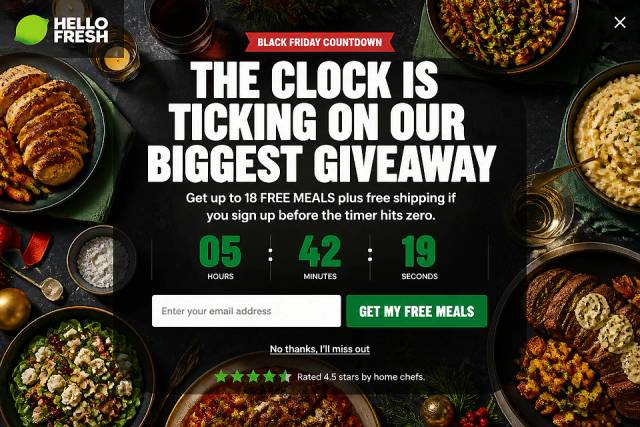
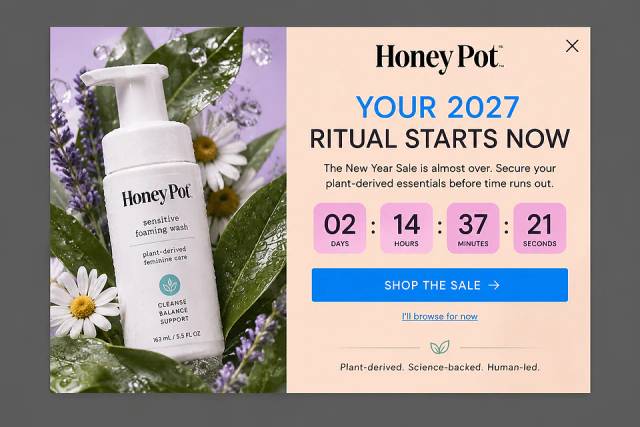
Two weeks out, show subscribers and returning visitors a countdown to the start of the sale. A real deadline gives people a reason to come back.
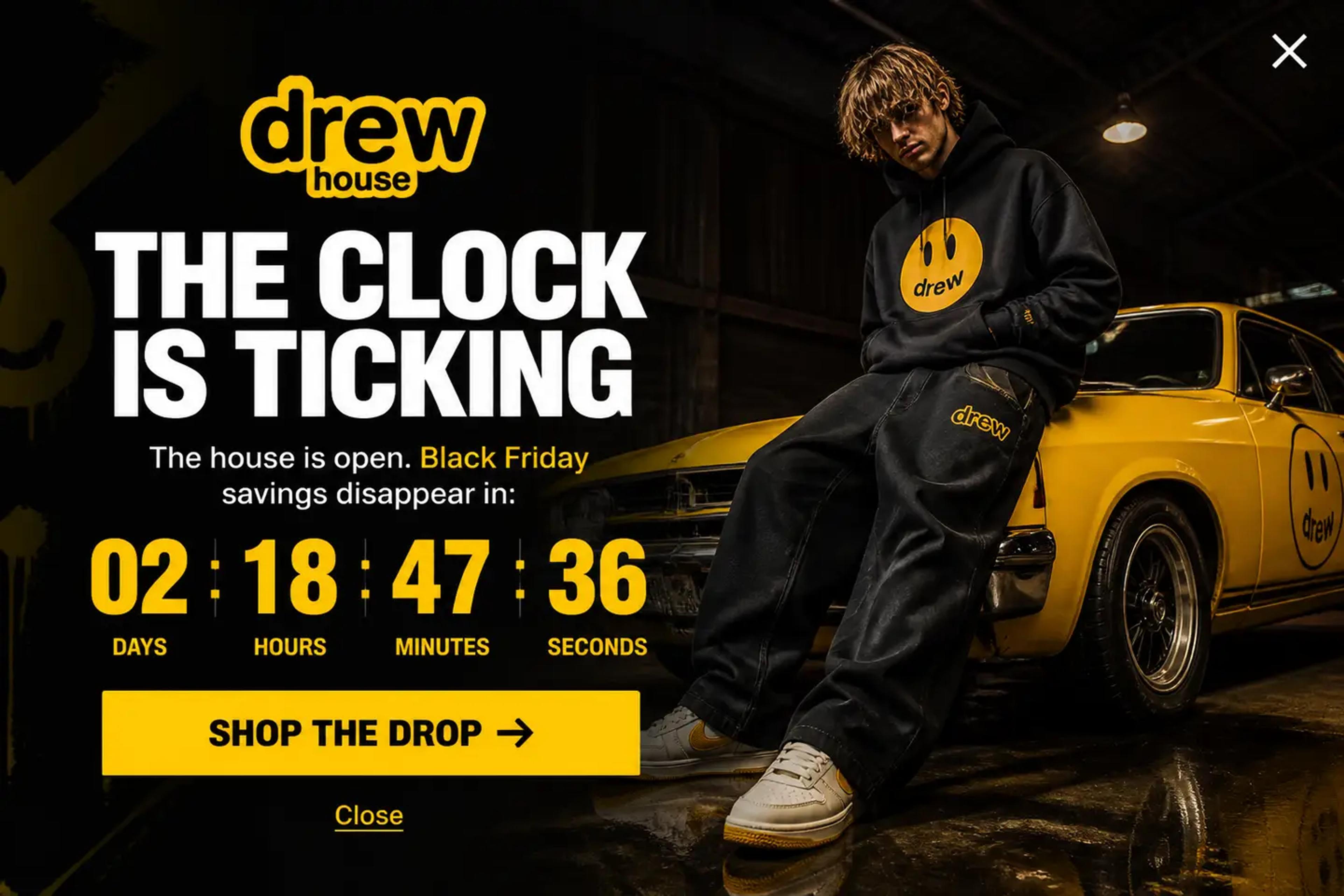
Keep the timer honest. If it says the sale starts Friday at midnight, it should.
Open the sale to subscribers a day or two before everyone else. It rewards the people who signed up, spreads your traffic across more days, and makes your list worth joining next year.
Say it in the email subject line: "You're in: early access starts now".
Sephora is a perfect example of this strategy. During their annual savings event, they give members of their Beauty Insider program the chance to shop with exclusive discounts before the general public.
The higher a customer's Beauty Insider tier, the earlier they can shop and the bigger the discounts they receive.

Bundles raise order value without cutting the price of your best seller. Tiered deals ("Spend $100, get 15% off; spend $150, get 20%") give shoppers a reason to add one more item.
Decide the tiers from your current average order value, not from round numbers. If your AOV is $70, a first tier at $100 is reachable; one at $200 is not.
PlayStation has perfected the art of the bundle deal. During Black Friday, they often offer bundles that include a console, a popular game, and additional accessories like extra controllers or a subscription to their online services—all at a discounted rate compared to buying each item separately.

And here’s an example from ZooShoo, promoting their Black Friday tiered discount through a popup:

Split your list into at least three groups: past buyers, subscribers who never bought, and VIPs (your top 10% by spend). Each group gets a different email and, ideally, a different offer.
If you use Klaviyo, the same segments can decide who sees which popup on your site, so the email and the site tell one story.
A slow page on Black Friday costs more than on any other day. Ask your platform or developer to test the store under several times your normal traffic, and run a full test order with a discount code on mobile.
Fix what breaks now. You won't have time on the 27th.
More shoppers now arrive from ChatGPT, Perplexity or Google's AI answers. Make sure each product page states the price, the Black Friday price, sizes, delivery time and returns in plain text, not only in images.
A clear product page answers the assistant's question, and the shopper's.
The same offer, in the same words, on the homepage, in emails, in ads and in your popups. Mixed messages ("20% off" in the email, "Up to 40%" on the site) make shoppers hesitate.
In the ads, put the offer on the creative itself, not only in the copy; these Black Friday creatives for your product catalog show how a sale badge and the new price look on real products.
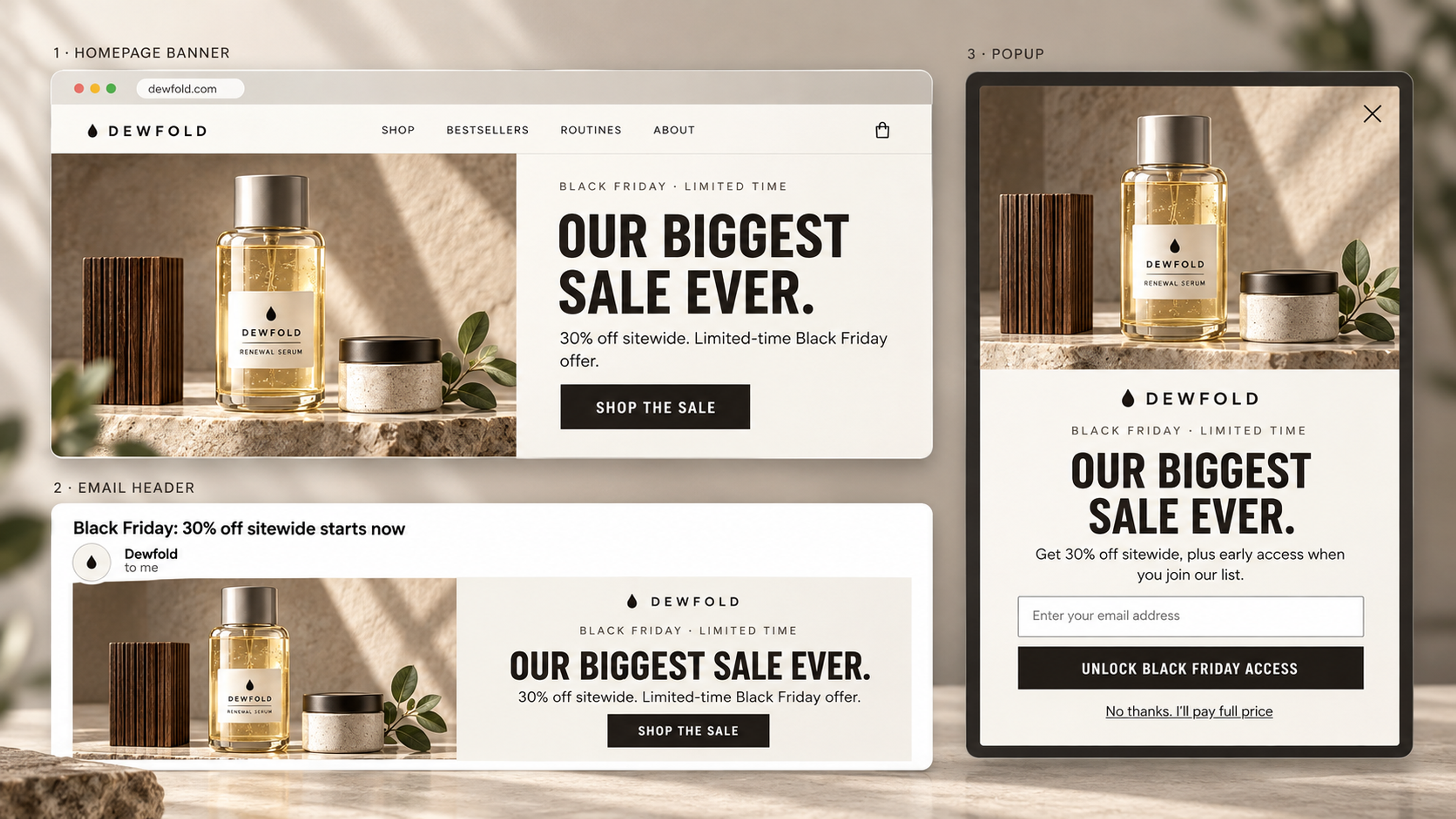
Need ideas for the popup? Browse our Black Friday popup examples.
A four-hour deal on one product category on Saturday or Sunday gives your list a reason to open one more email. Announce the end time and stick to it.
Free shipping over a threshold, or a free gift with purchase, can protect your margin better than another 10% off. See the worked example in how deep should you discount.

Beauty brands are particularly known for their strategic use of free gifts. Many brands offer free samples or travel-sized products as gifts with purchase, especially during big sales like Black Friday.
For instance, a customer buying skincare products might receive a free mini moisturizer or a deluxe sample of a new serum. These gifts are not only appreciated by customers but also give them a chance to try new products, which could lead to future purchases.
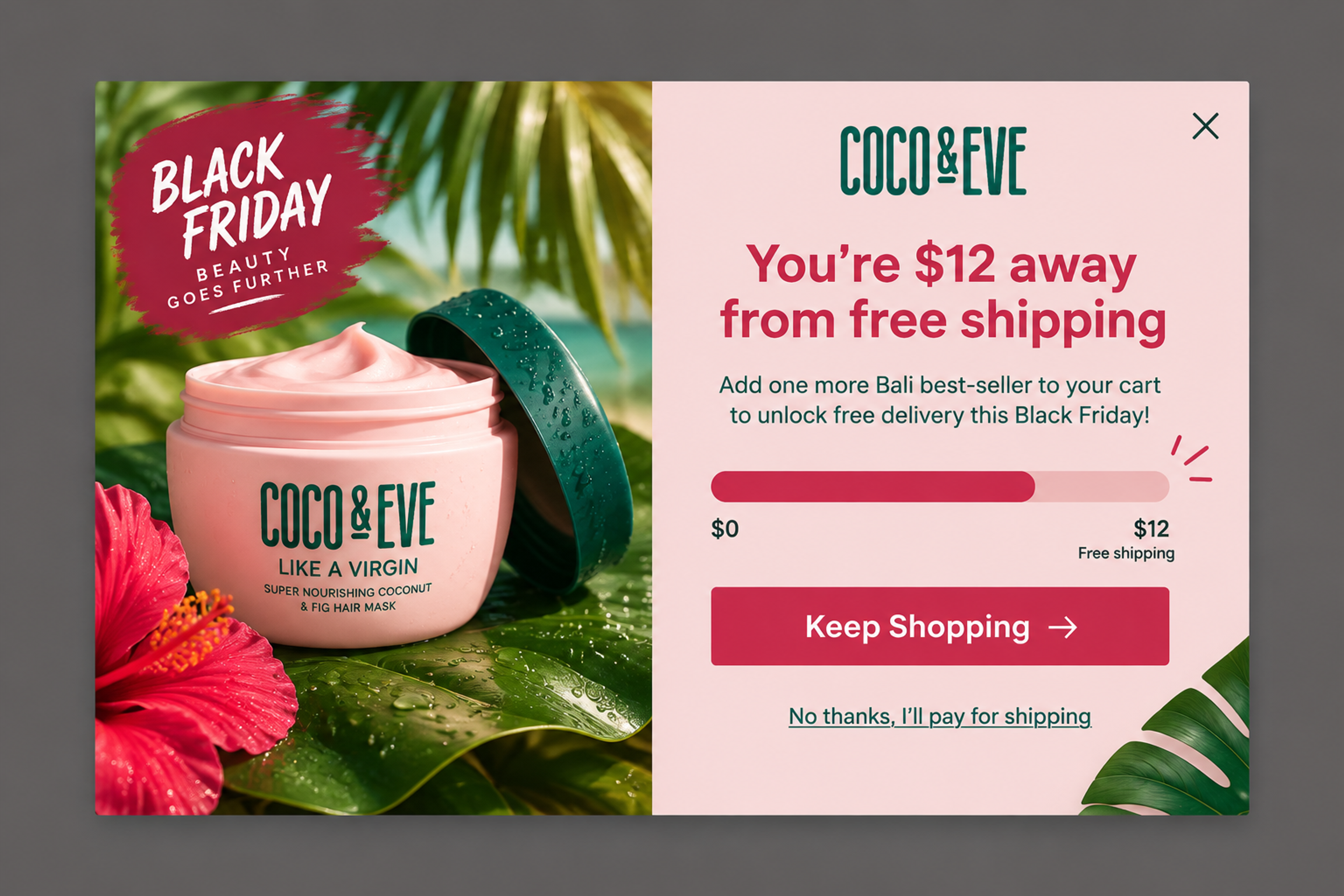
When a shopper's cart is close to your free-shipping or tier threshold, tell them how close: "You're $12 away from free shipping". Show it to visitors whose cart value is just under the line, not to everyone.
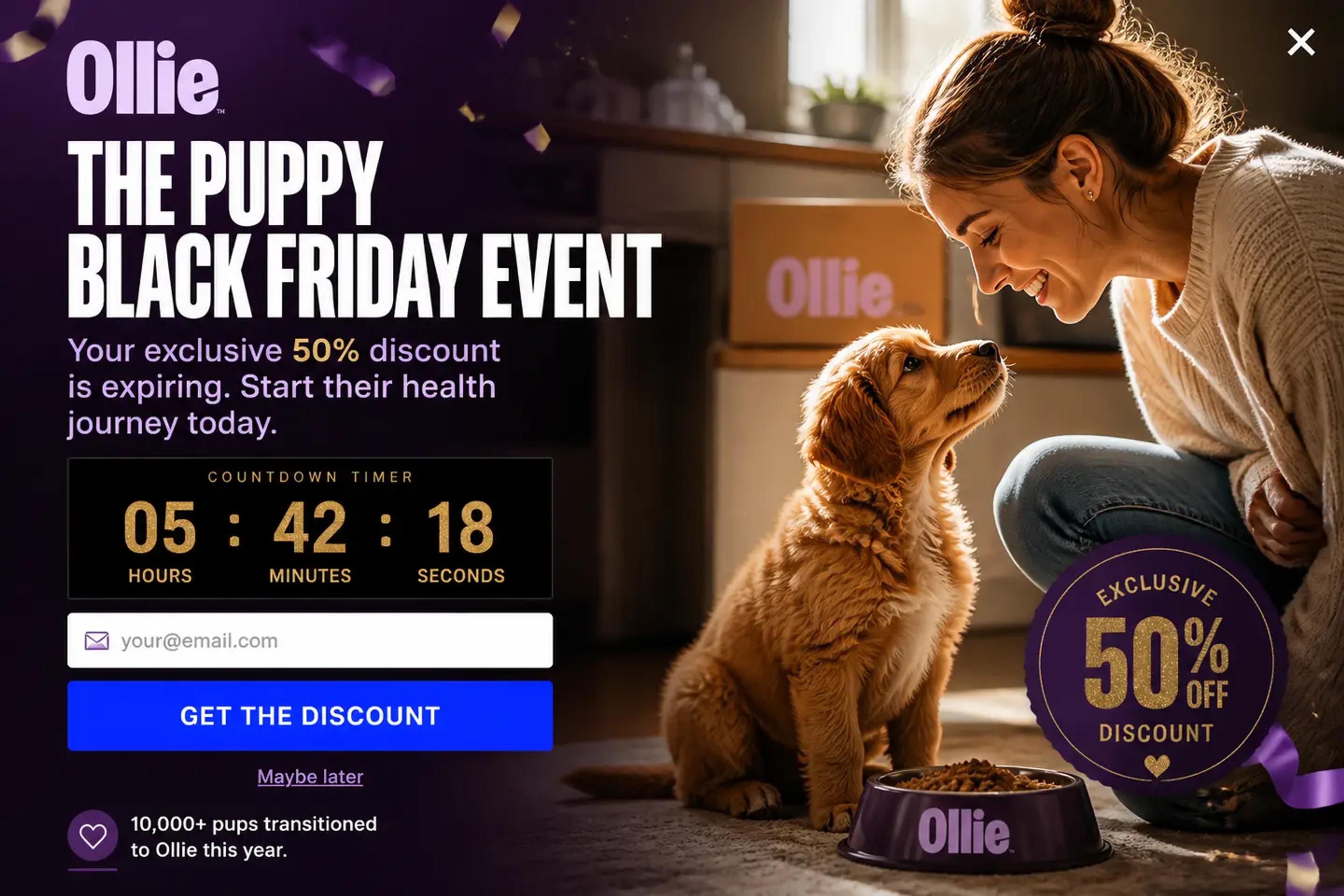
Some visitors will leave anyway. An exit-intent popup gives them one last reason to stay, such as the main offer with a code, a gift, or a reminder that the sale ends tonight.
Obvi showed its Black Friday exit popup to visitors with an empty cart who had spent at least 30 seconds on the site. It converted 7.23% of the visitors who saw it during the sale.

If you're interested in implementing exit intent offers, try these popup ideas:
Cart abandoners are your warmest leads of the week. On the site, show cart abandoners a limited-time code with a countdown. By email and SMS, send a reminder within the hour.
For Obvi, a cart-abandonment popup with a countdown, unique codes and auto-applied discounts reached a 25.17% conversion rate.
A code like "BF20" gets shared on coupon sites within an hour. Unique codes, one per visitor, keep the offer yours. On Shopify, OptiMonk can create the codes for you and apply them at checkout, so nobody has to paste anything.
A popup that shows the right products, such as best sellers, recently viewed items or items that go with what's in the cart, sells more than one that only shows a discount.
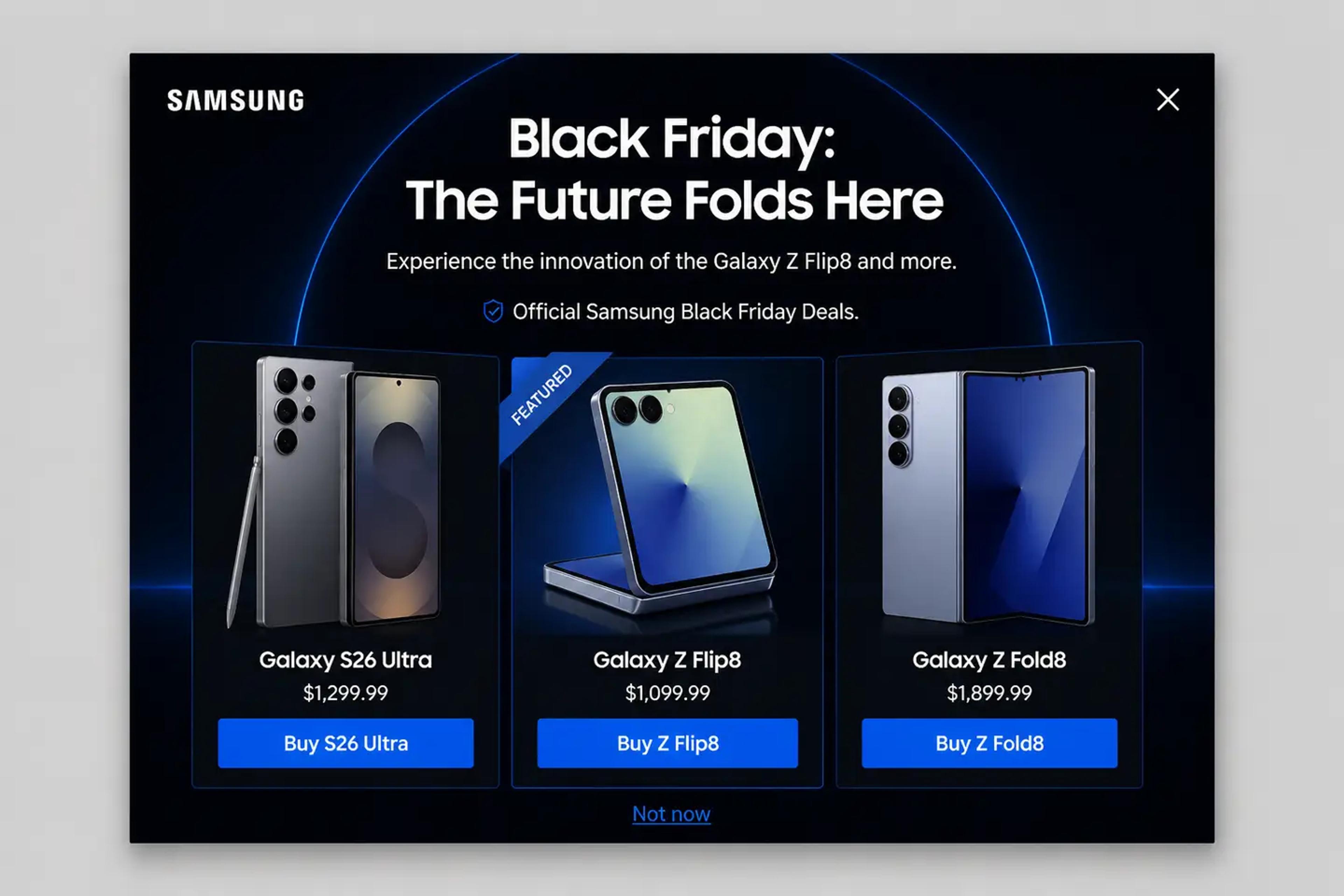
To copy their strategy, use these popup ideas:
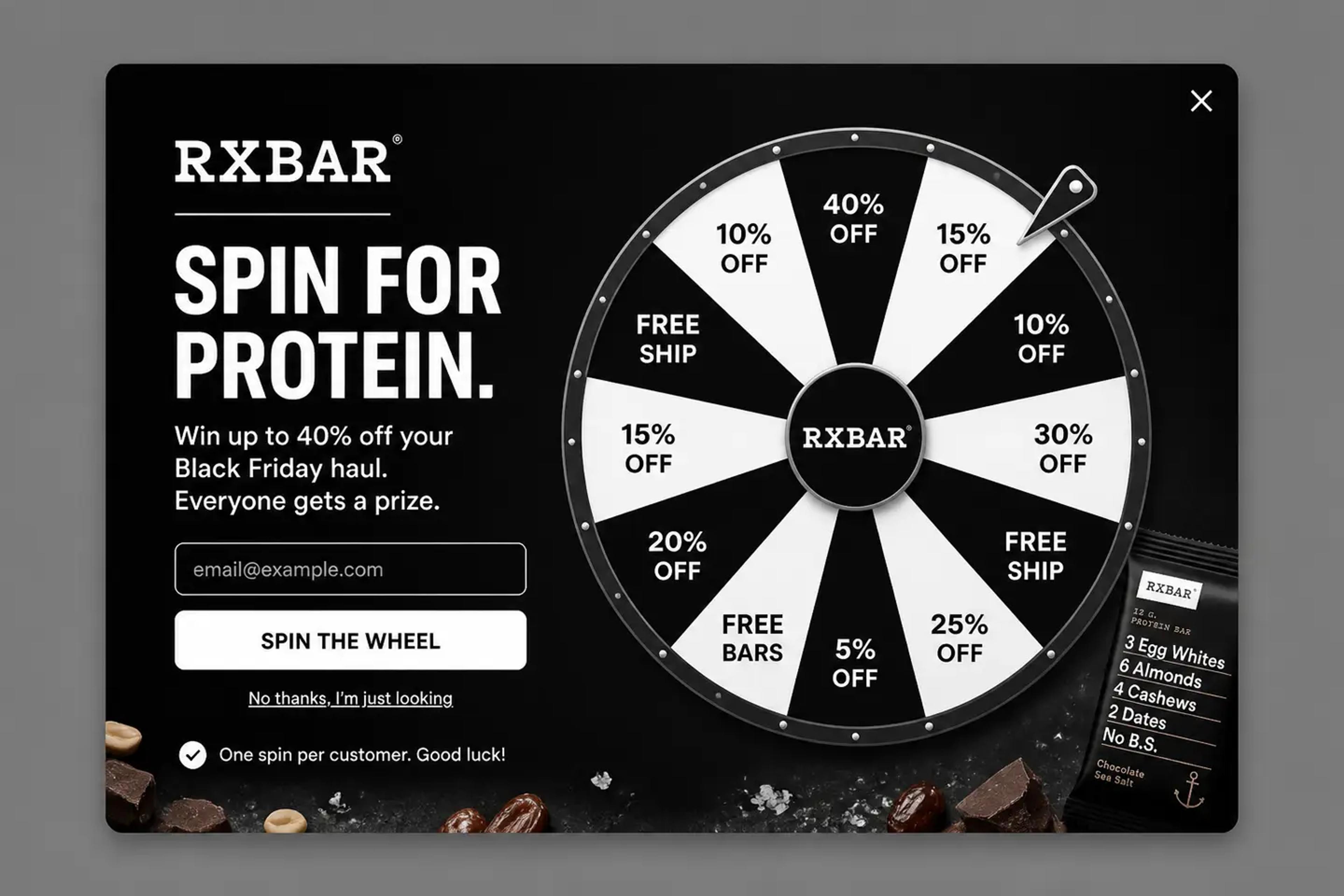
A lucky wheel or a scratch card turns a discount into a moment. Use it for the sign-up offer, not as a replacement for your main deal, and make sure every prize is something you're happy to give.
Show reviews, ratings and "bought in the last 24 hours" counts near the add-to-cart button and in your offer popup. Make sure every number is real.
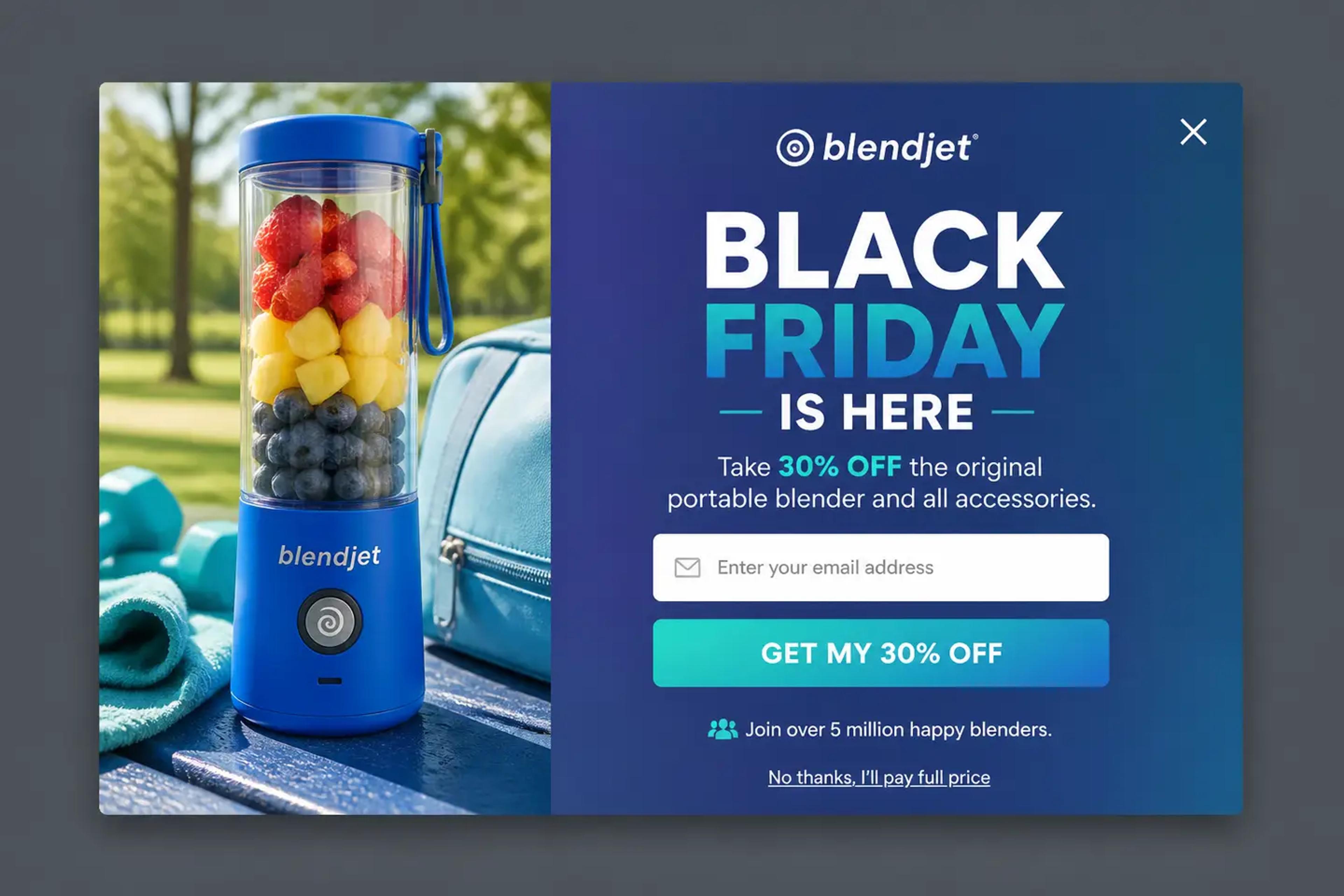
More than half of Cyber Monday spend came from phones. Check every popup, email and landing page on a phone first. On mobile, a popup should never cover the add-to-cart button or be hard to close.
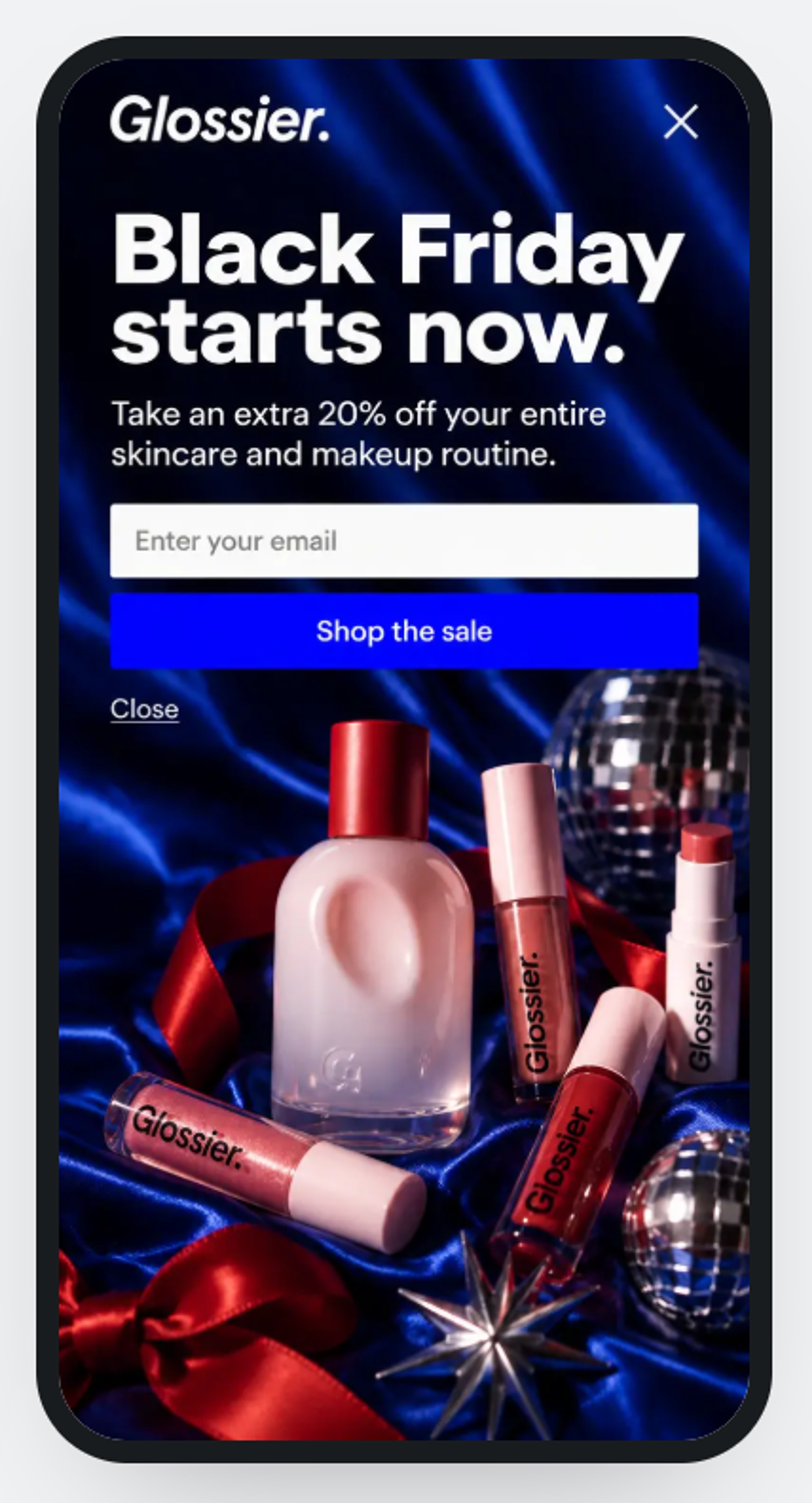
Shoppers with a question about sizing or delivery won't wait until Monday. Put more people on chat during your peak hours, and add the top five questions (delivery cut-off, returns, codes) to your FAQ before the sale.
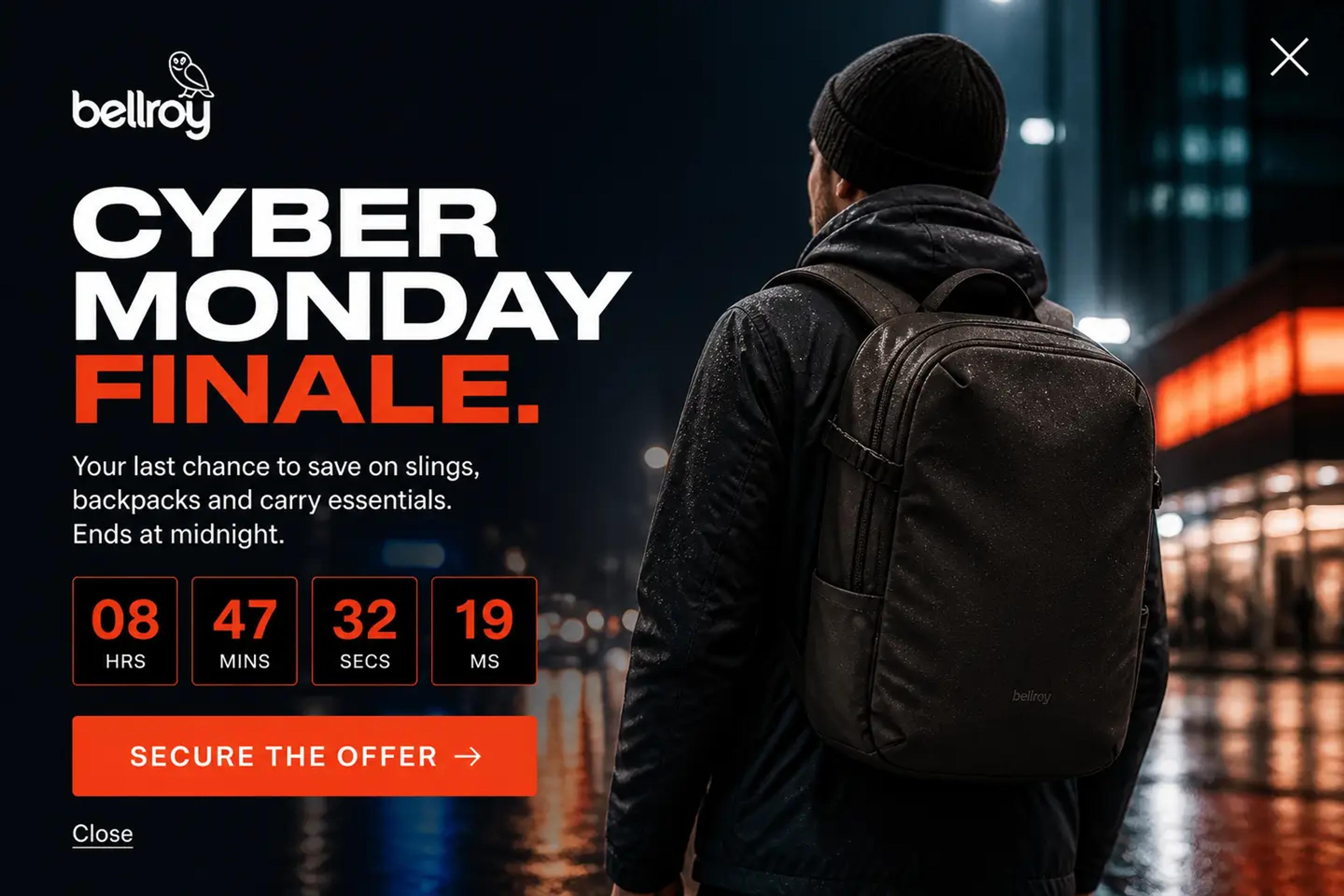
Cyber Monday is its own day, not an extension. Send a "last day" email and SMS, and show a countdown to midnight on the site.
A plain order confirmation wastes your best moment. Send a thank-you email with how to use the product, and a reason to come back (a code for their second order, valid in January).
Ask Black Friday buyers for a review one to two weeks after delivery. The reviews you collect in December are the social proof you show next year.
Visitors who viewed products or added to cart but didn't buy are cheap to win back in early December. Show returning visitors a holiday gift offer instead of the Black Friday discount.
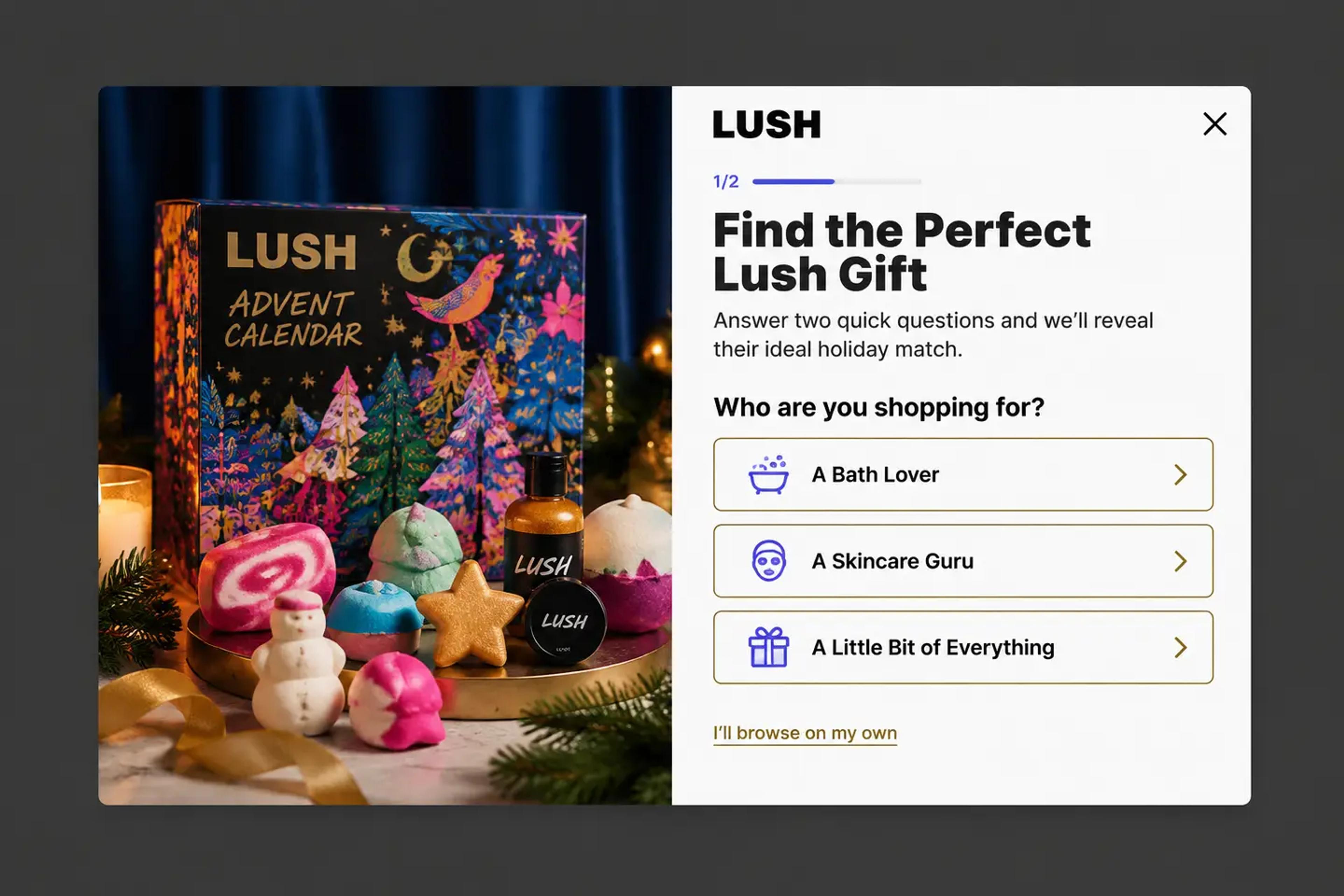
Shopping doesn't stop on Tuesday. Switch your site from "Black Friday" to "Holiday gifts" the morning after Cyber Monday, with a gift guide and the shipping cut-off date.
Remove hard bounces and look at who unsubscribed and when. If unsubscribes spiked after a specific email, you sent too much to the wrong segment.
Look at the same numbers you pulled in idea 1: revenue per day, conversion rate, average order value, new subscribers and new customers. Write down what worked while you remember it.
Note the offer, the timing and the three campaigns that earned the most. Next October, you start from this page instead of from zero.
Black Friday traffic is not one audience. A first-time visitor from an ad, a loyal subscriber and a shopper with a full cart need different messages. Here is a simple map you can copy. This is ecommerce personalization in practice, applied to your biggest sales week.
| Visitor | What to show | Why |
|---|---|---|
| First-time visitor (before the sale) | Sign-up popup: "Get early access to Black Friday" | Builds the list you'll sell to |
| Returning visitor (before the sale) | Countdown to the sale start | Gives a reason to come back |
| Subscriber | No sign-up popup. Early-access offer, then product recommendations | Don't ask for an email you already have |
| Visitor from a paid ad | The exact offer from the ad | Matches the promise that brought them in |
| Cart value just under your threshold | "You're $X away from free shipping" | Raises order value |
| Cart abandoner | Limited-time code with a countdown | Wins back the warmest shoppers |
| Visitor leaving with an empty cart | Exit-intent popup with the main offer or a gift | Last chance before they go |
| First-time buyer (after the sale) | Code for a second order, valid in January | Turns a deal hunter into a customer |
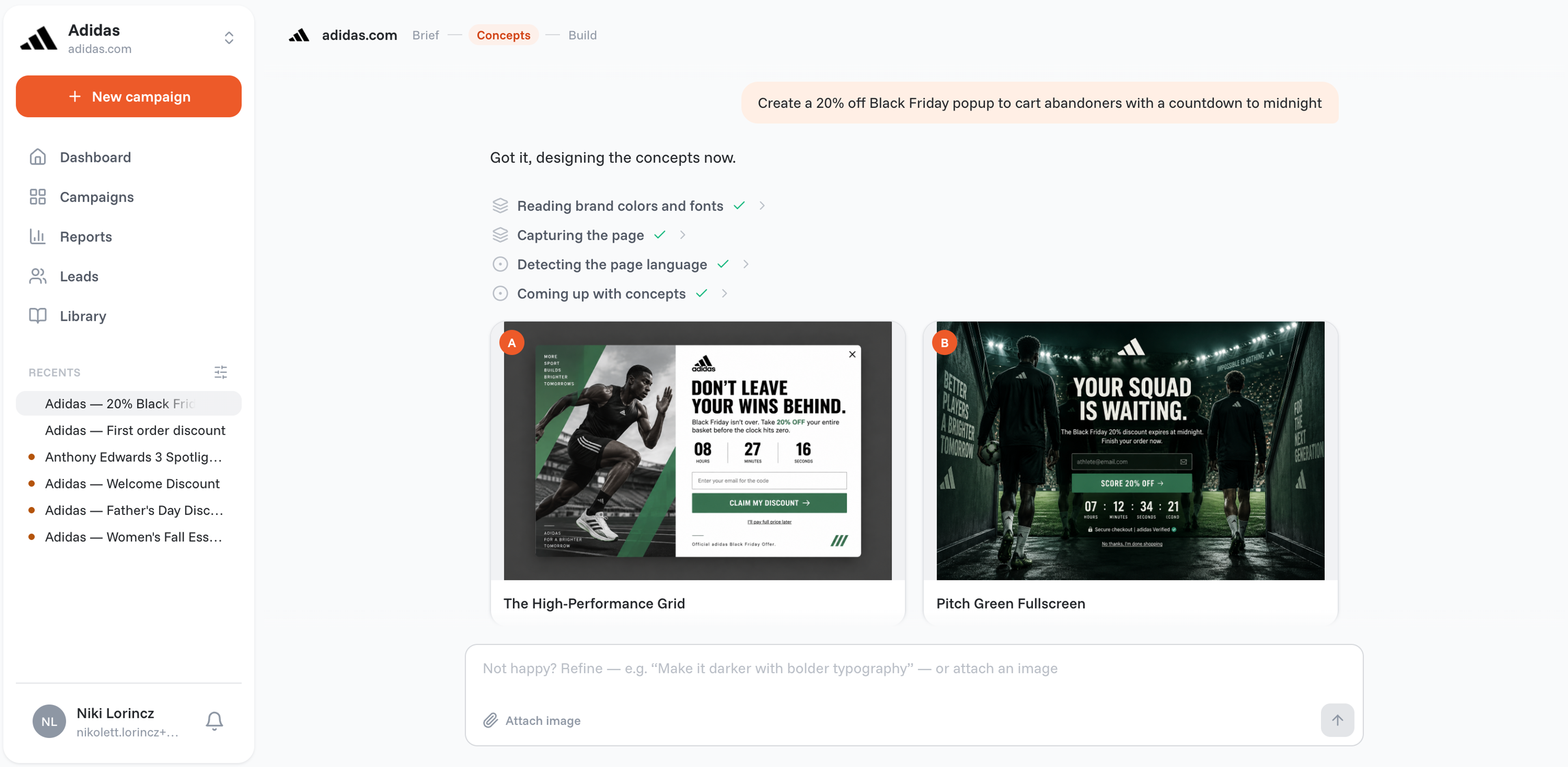
With OptiMonk, you describe the campaign in one sentence ("Create a 20% off Black Friday popup to cart abandoners with a countdown to midnight") and the agent designs it, sets the targeting and puts it live.
Deeper discounts bring more orders but less profit per order. Before you choose, run the numbers on one product.
Here’s an illustrative example (not real data): a $60 product that costs you $24 to make and $6 to ship.
| Offer | Price paid | Your cost | Profit per order | Orders needed to match a normal week's 100 orders at full price |
|---|---|---|---|---|
| Full price | $60 | $30 | $30 | 100 |
| 20% off | $48 | $30 | $18 | 167 |
| 30% off | $42 | $30 | $12 | 250 |
| Free shipping (you pay it) | $60 | $30 + $6 | $24 | 125 |
| Free gift (costs you $8) | $60 | $30 + $8 | $22 | 137 |
In this example, 30% off has to sell two and a half times as many units to earn the same profit. Free shipping has to sell a quarter more, and the gift about a third more. Put your own numbers into the same table before you announce an offer.
Discounts still have their place. They win back price-sensitive shoppers and clear stock. Just choose them knowing what they cost.
Black Friday traffic is big enough to learn fast. Start tests in the early-access week, so the winner runs during the main sale.
Test one thing at a time, and let a test run until the result is clear before you roll out the winner.
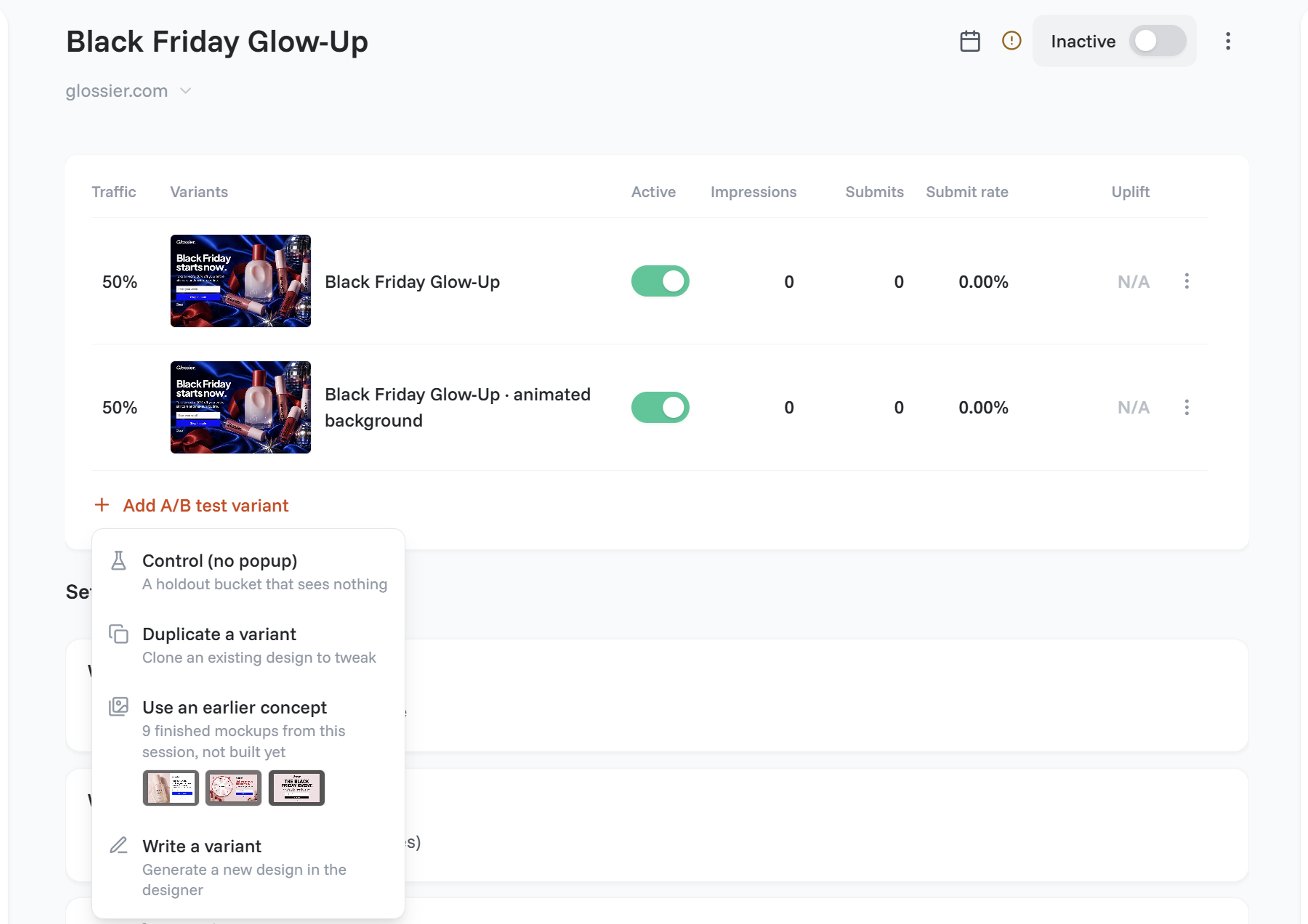
Start planning six weeks before Black Friday (mid-October for 2026) and start growing your list three to five weeks before. Teasers belong in the two weeks before the sale, and early access in the final week.
Offer something worth signing up for now: early access to the sale or an extra discount for subscribers. Show the sign-up popup to first-time visitors, ask for the phone number on a second step, and stop showing it to people who already subscribed.
As much as your margin allows, and no more. Calculate the profit per order at each discount level, then compare it with free shipping or a gift with purchase. Often a smaller discount plus free shipping earns more than a deep cut.
Use real deadlines: the sale start, the end of early access, the end of the day, or limited stock. A countdown that resets for every visitor damages trust; one that matches your real sale schedule builds it.
Switch to holiday gifting the next morning, thank first-time buyers with a reason to buy again, ask for reviews, and compare your results with last year while the details are fresh.
Early access for subscribers, a free gift over a threshold, bundles of your best sellers, and an exit-intent offer. They cost little to set up and protect your margin better than a site-wide deep discount.
You have about seven weeks. This week, pick your offer and launch the early-access sign-up popup. Every subscriber you add now is a customer you can reach on November 27.
Build your first Black Friday popup in one sentence. Free to start, no credit card.

Learn about email marketing frequency for ecommerce stores. Most send 1-3 emails per week, with frequency adjusted by subscriber engagement and store type.
Let's take a look at the 21 best lead generation software for 2026 and discuss the features that any lead generation tool should have.
In this guide, you'll learn what UTM codes are, how they work, and how to generate UTM links for email, social, and ads.