


Tarte Cosmetics Marketing Breakdown: How a 25-Year-Old Beauty Brand Keeps Making Products Feel Viral
How Tarte turns founder storytelling, creator trips, TikTok virality, and smart on-site funnels into a repeatable beauty marketing growth engine.
Discover how Away turned luggage into a $1.4B lifestyle brand through storytelling, social media, and influencer marketing.
In short
Away redefined luggage by creating a travel lifestyle brand, achieving a $1.4 billion valuation. Through strategic storytelling, influencer collaborations, and a robust SEO strategy, Away connects with modern travelers, turning suitcases into aspirational products. Their innovative marketing and community-building efforts on social media have positioned them as leaders in the competitive travel gear market.
Founded just a decade ago, Away reached unicorn status in only three years, hitting a $1.4 billion valuation.Their secret? They don’t just sell luggage. They position themselves as a lifestyle travel brand.
Through smart storytelling, strategic use of social media, and collaborations with influencers and celebrities, they’ve built a brand that resonates far beyond suitcases.Let’s explore how Away’s marketing strategy fueled their rapid rise to success.
When Steph Korey and Jen Rubio (both ex-Warby Parker execs) launched Away in 2015, they weren’t just launching another direct-to-consumer (DTC) product. They were building a travel lifestyle brand.
Away’s mission? Design sleek, functional, high-quality travel gear that fits the aesthetic and needs of the modern traveler.
Luggage that looks good on Instagram, works like a charm in airports, and feels like a must-have accessory on any adventure.
But here's the smart part: they weren’t just selling a product. They were selling possibility. Every campaign, every product, every story tied back to a broader mission: making travel easier, more stylish, and more inspiring.
At the heart of Away’s marketing strategy is an emphasis on storytelling, which creates a deep emotional connection with their audience.
One of Away's first major content initiatives was a hardcover book titled The Places We Return To.
This book featured travel stories from photographers and writers, subtly incorporating Away products while highlighting the joy and beauty of travel itself.
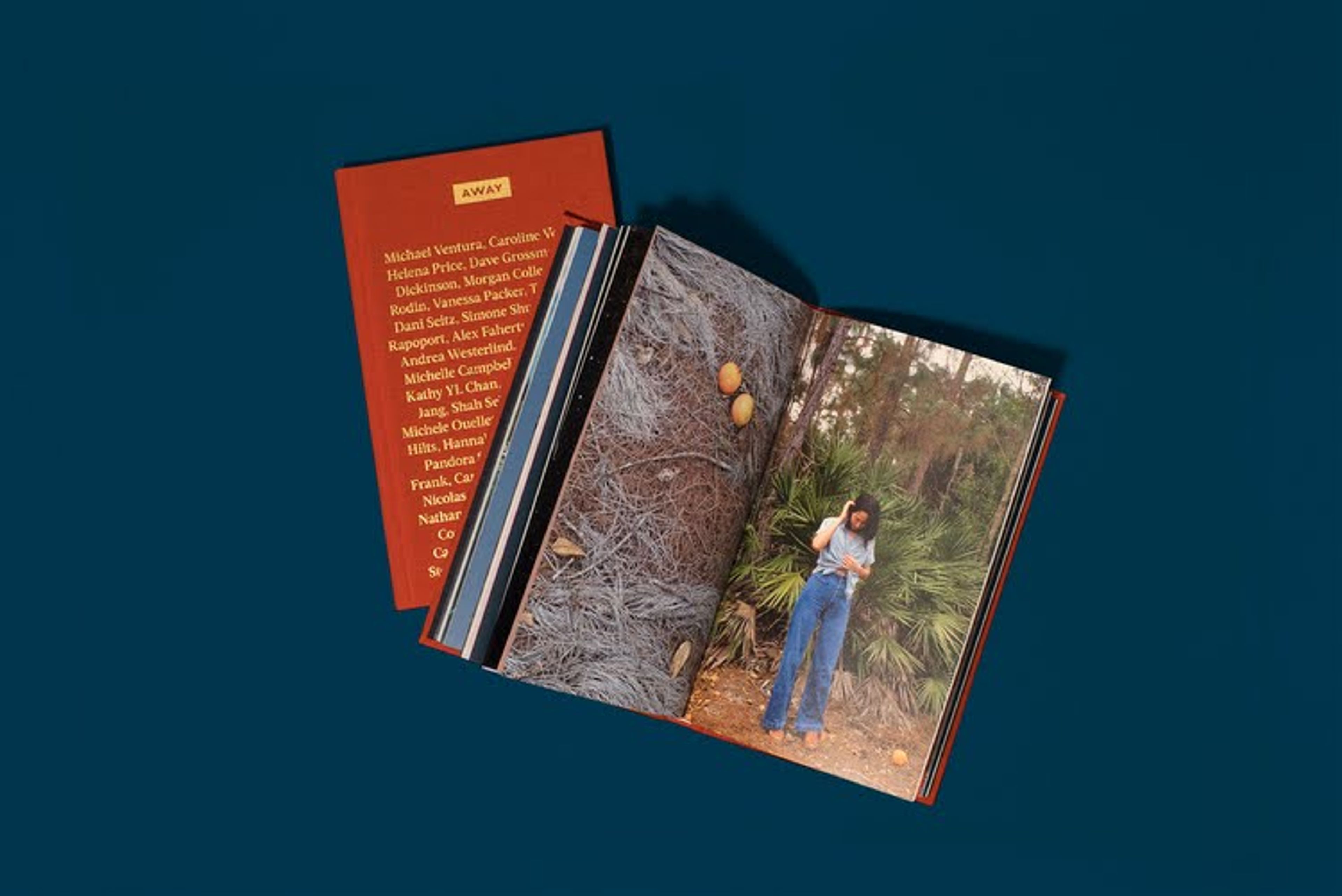
Through this, the brand became more than a company; it became part of the narrative of personal exploration and connection with the world.
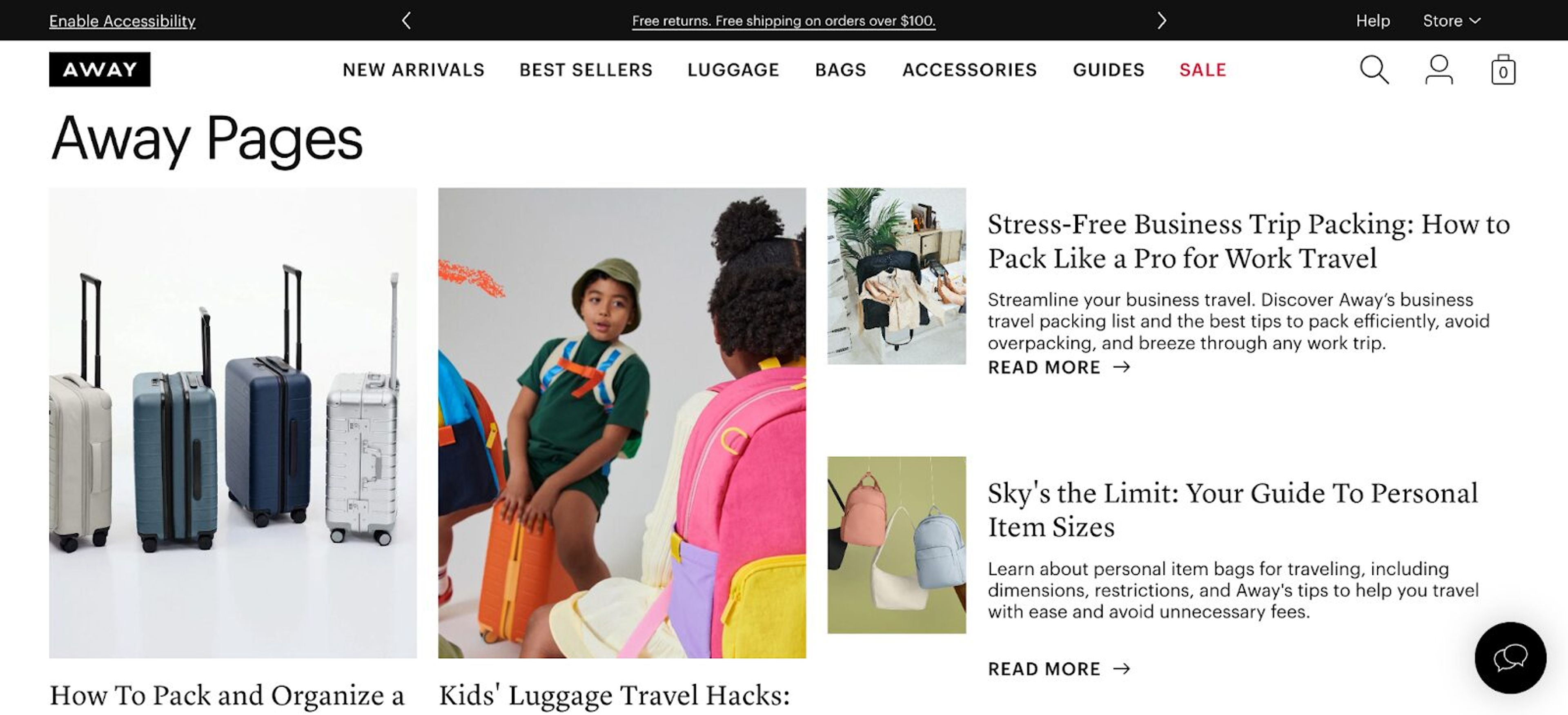
Away’s blog, Away Pages, takes this approach further by providing useful, practical content.
From tips on how to efficiently pack a suitcase to life hacks for traveling with kids, the blog offers helpful advice that resonates with its community of travel enthusiasts.
Away places a strong emphasis on SEO, targeting both branded and non-branded keywords to drive traffic to their product pages.
Keywords like "best carry-on luggage" and "best luggage brands" help them capture organic search traffic from potential customers actively looking for top-tier luggage options.
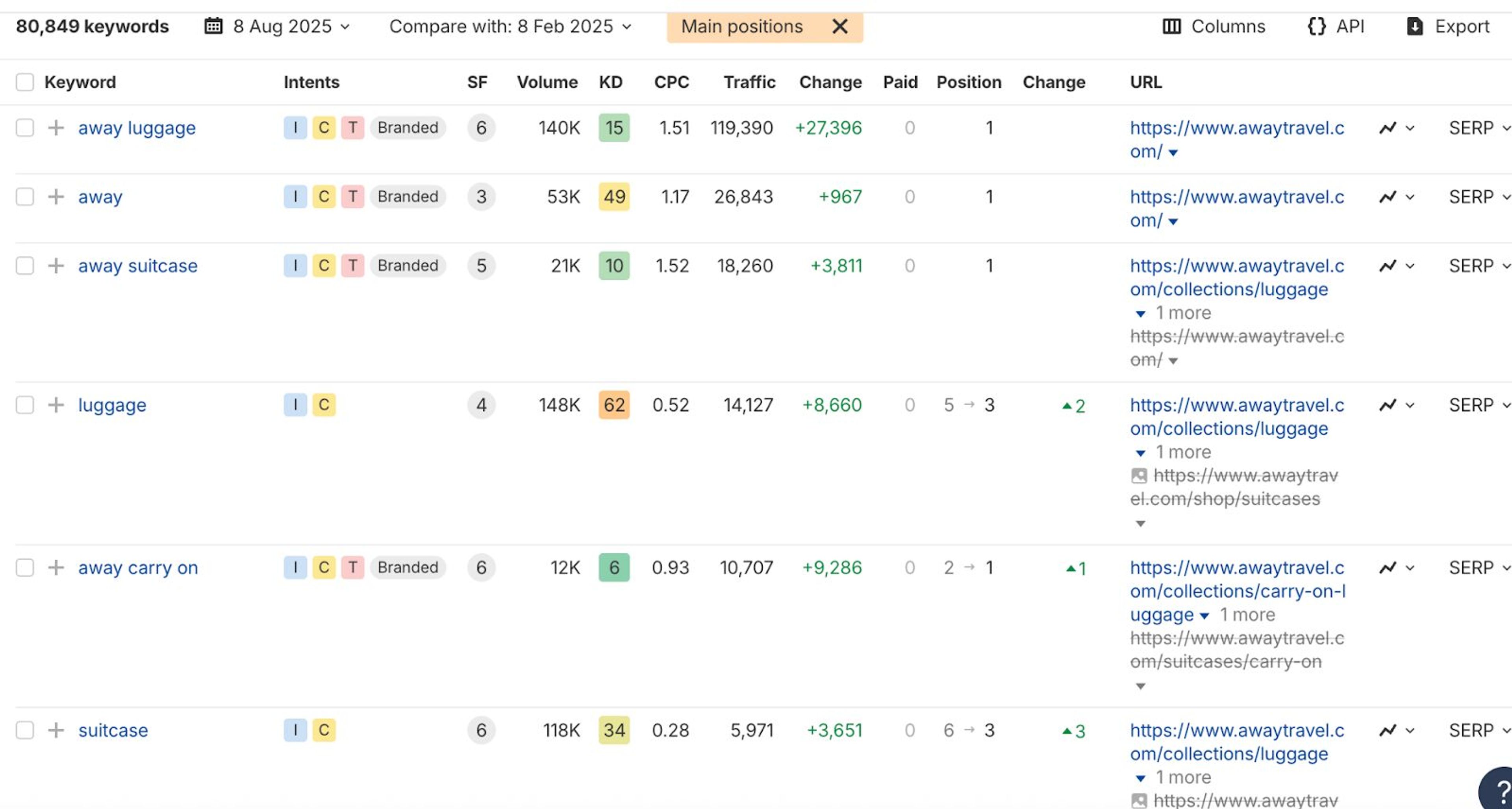
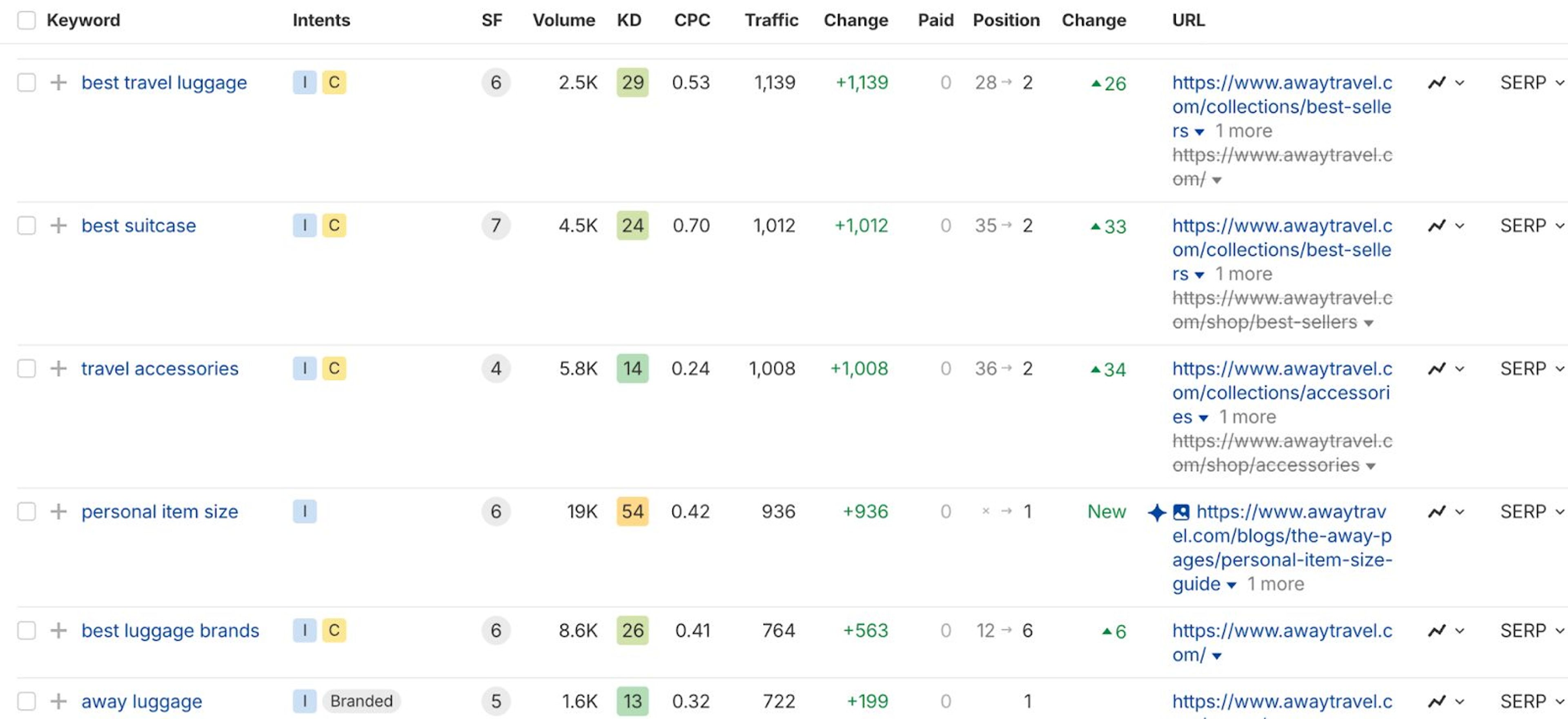
Their SEO strategy is robust, with over 80,000 keywords currently in play, and it continues to grow.
This comprehensive approach ensures Away remains visible across various search queries, driving consistent traffic and building long-term visibility for their products in a highly competitive market.
Away has taken full advantage of social media, especially Instagram, to create an engaged and loyal customer base.
With over 600,000 followers on Instagram, Away uses the platform as a key tool to showcase their products in real-life travel scenarios.
The company encourages user-generated content (UGC), allowing real travelers to share their experiences with Away products, which adds authenticity to the brand’s messaging.
Away’s #TravelAway campaign has been particularly successful in building a strong, inclusive community.
The campaign encourages both customers and influencers to share their travel moments, fostering a sense of connection and loyalty.
This UGC strategy not only increases engagement but also positions Away as a brand that truly understands the modern traveler’s needs.
While organic content is Away’s sweet spot, they’ve also got a smart paid media game.
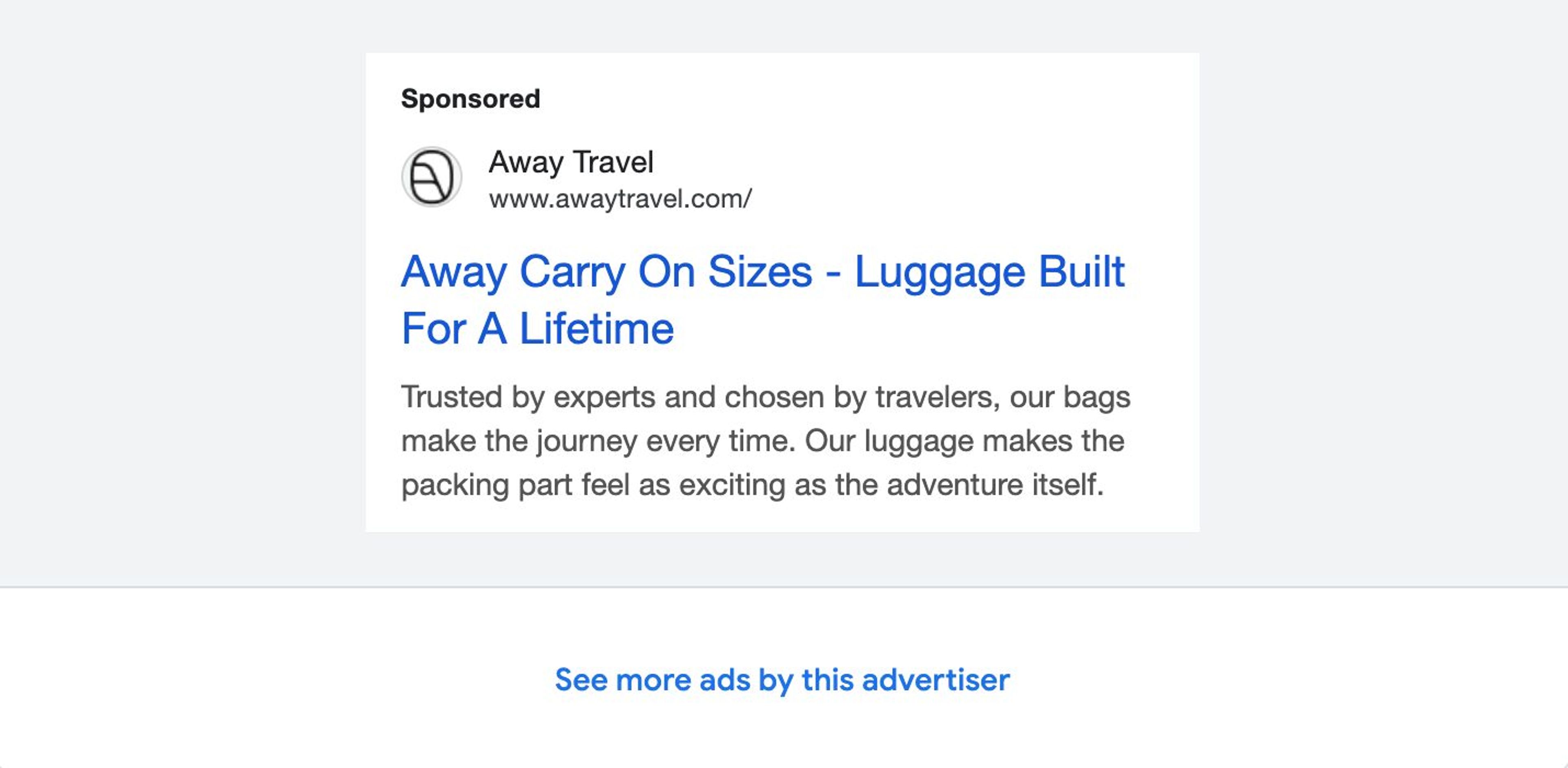
They invest in Google Ads to capture both branded and non-branded search traffic with text ads and shopping ads.
This allows them to target potential customers at different stages of their buying journey, whether they’re searching for specific product names or general travel gear keywords.
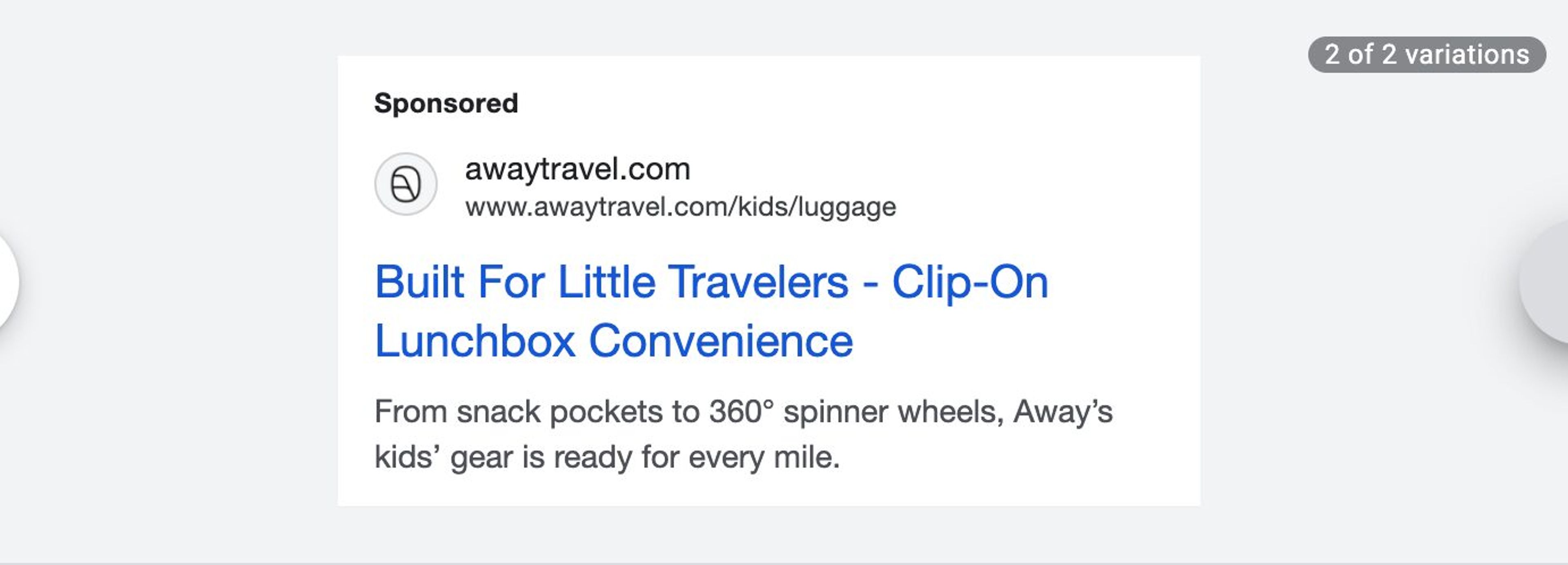
Away customizes their ads to cater to different audiences. For example, they run targeted campaigns for savvy travelers who value functionality and design…
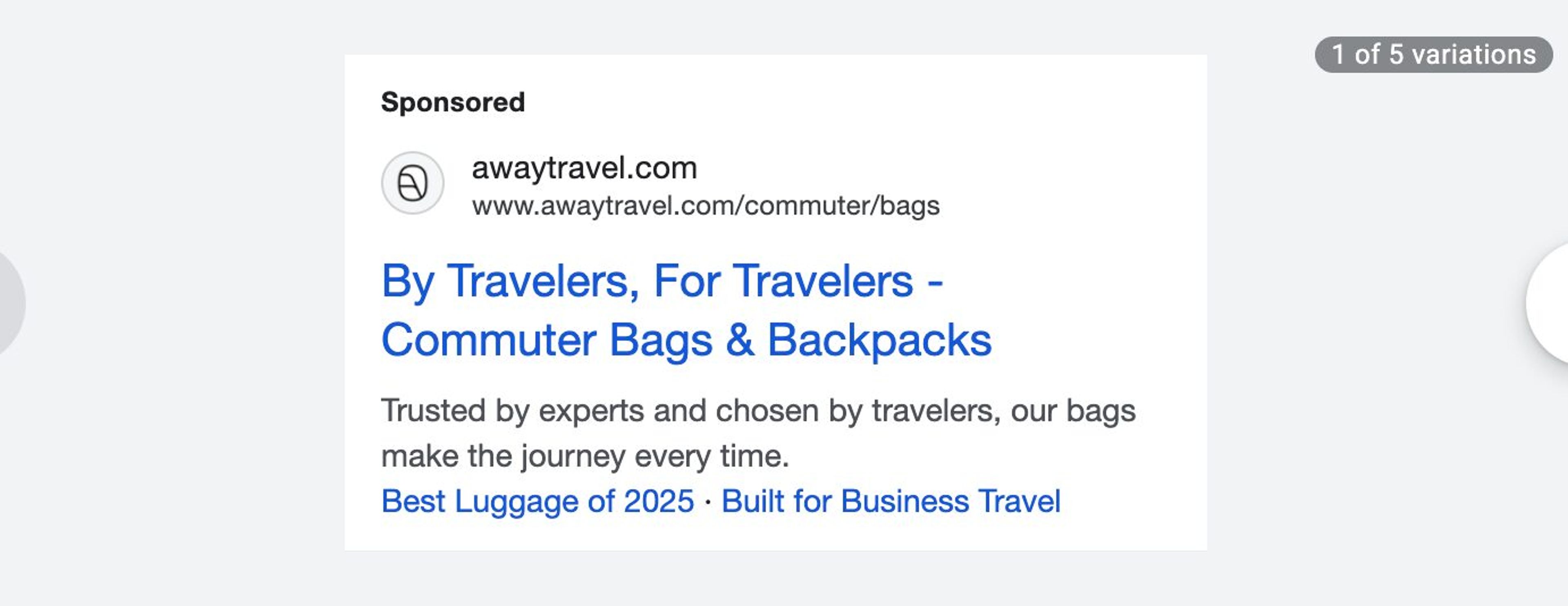
…and others for parents who need practical and reliable travel solutions for family trips. This segmentation ensures they connect with a wide range of potential buyers.
In addition, Away uses a mix of image and video formats in their paid campaigns, which helps capture attention and increase engagement.
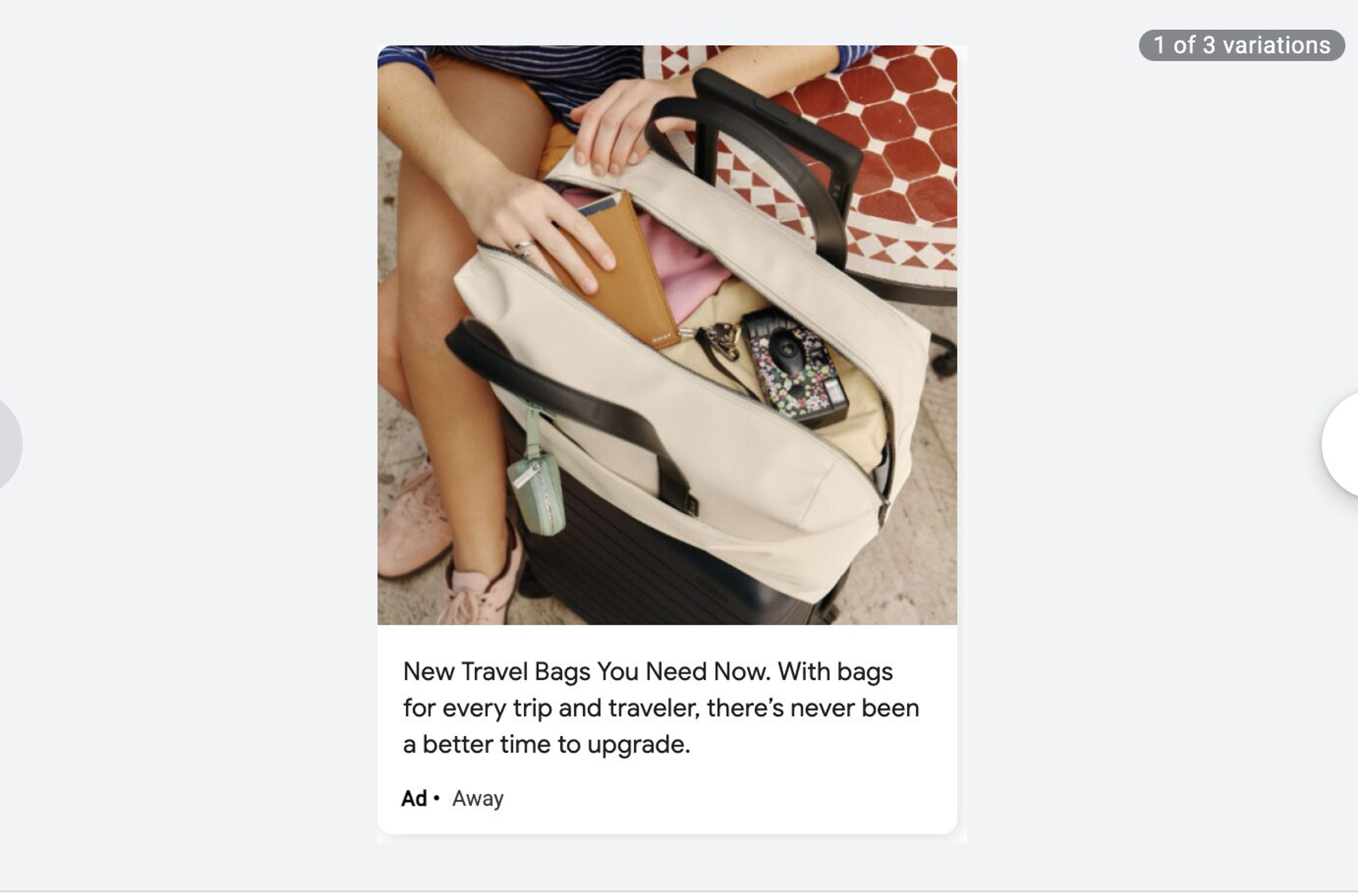
Their video ads, in particular, align with their brand's storytelling approach, showcasing the lifestyle that comes with using Away products.
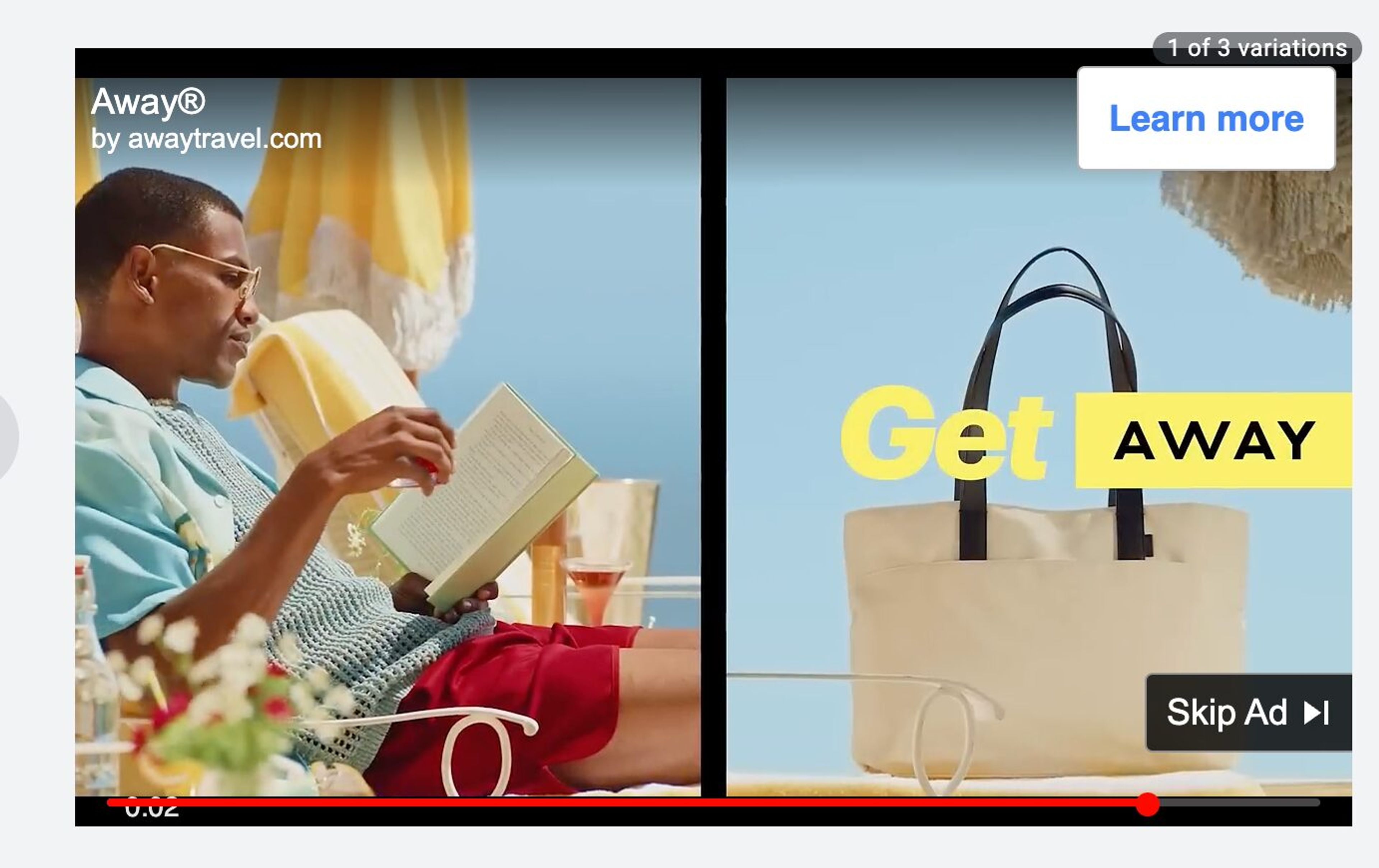
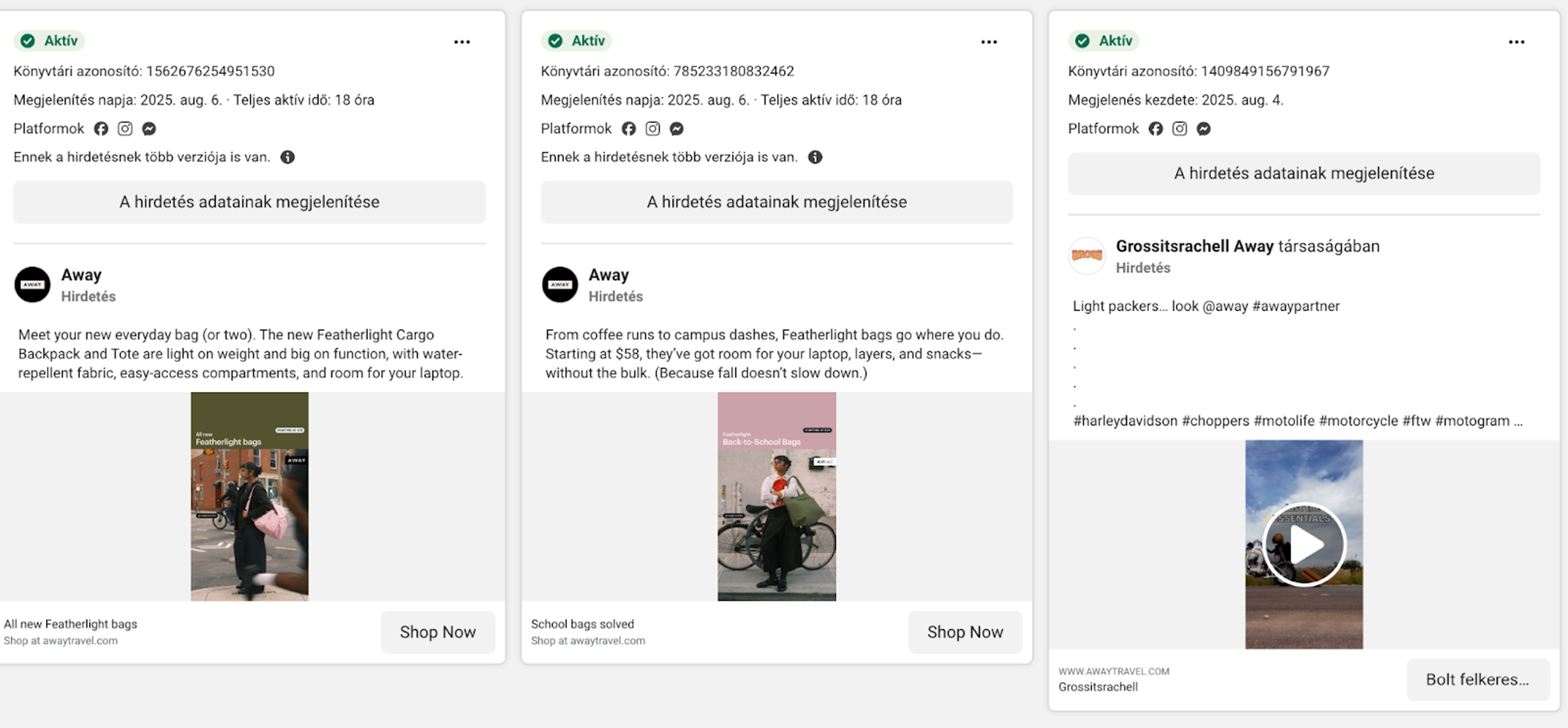
They also go big on Meta ads. Their ad mix includes product shots, influencer collabs, and short-form videos that match the aesthetic of organic content.
This means the ads don’t feel like ads—they blend seamlessly into a user’s feed.
Away focuses on converting visitors into customers through strategic website optimization.
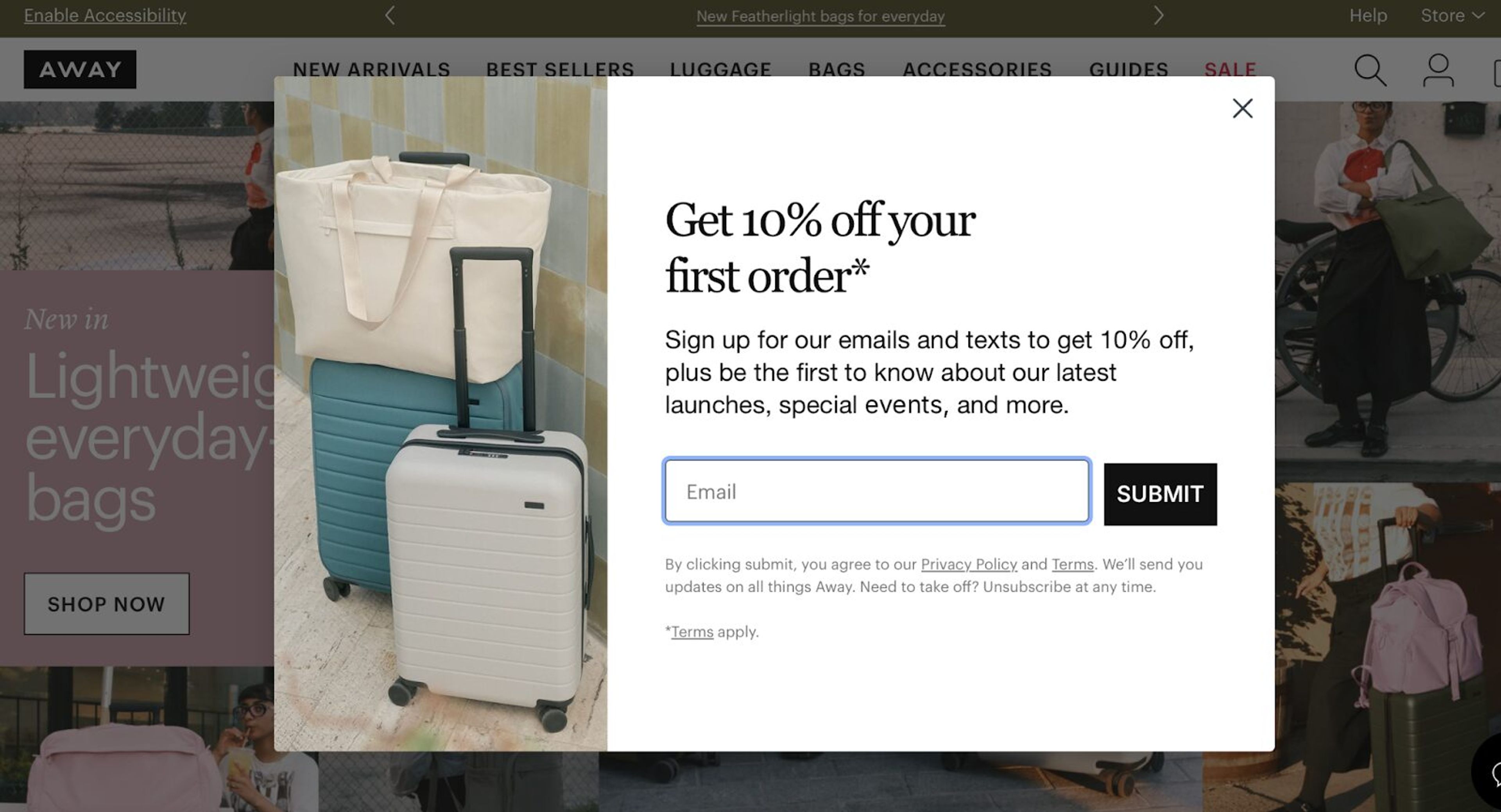
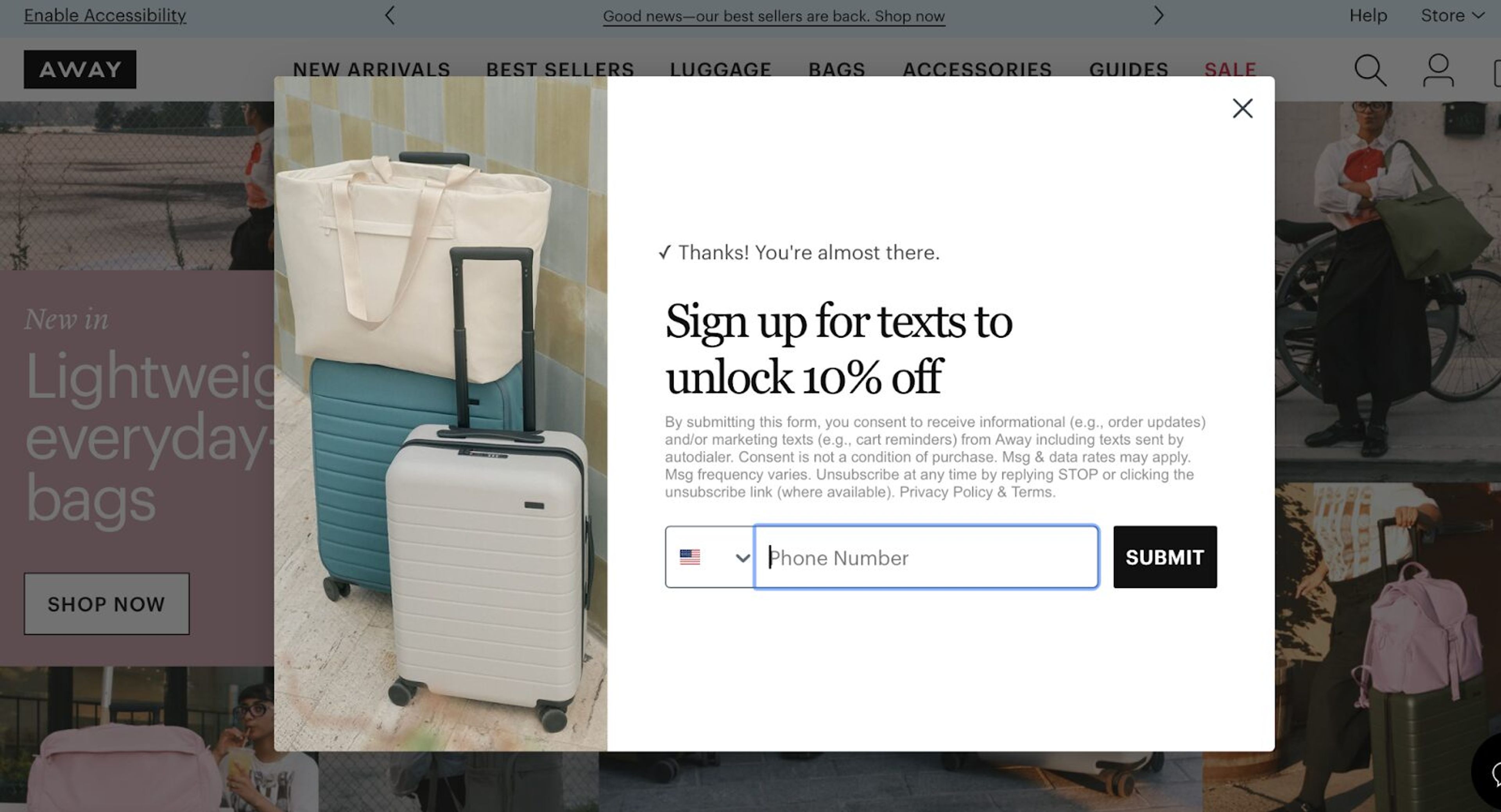
They use email and SMS popups offering 10% off the first order, encouraging sign-ups and immediate sales.
In the first step, they ask for an email address. They follow that with a request for a mobile number in the second step to unlock the discount.
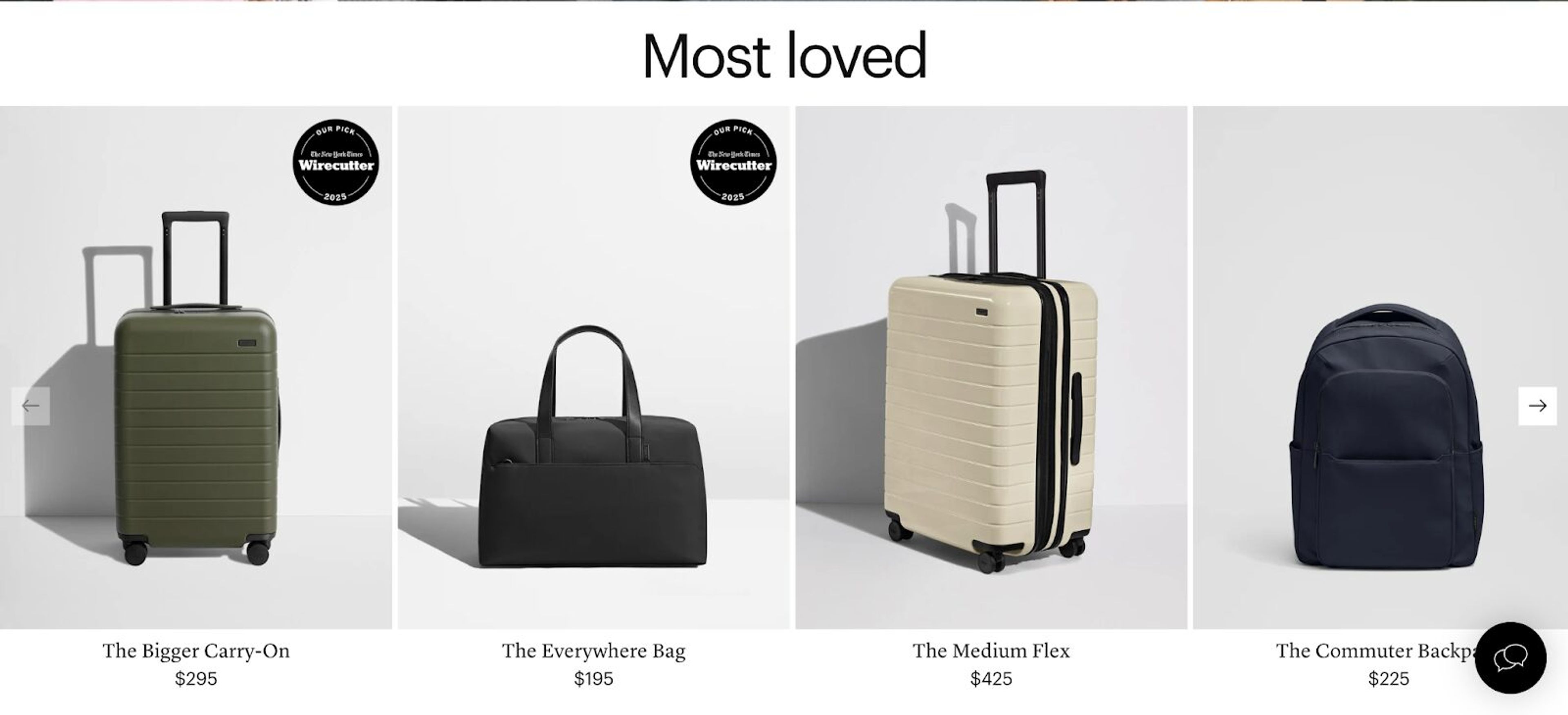
The homepage features their most popular products, guiding customers toward items they’re likely to purchase.
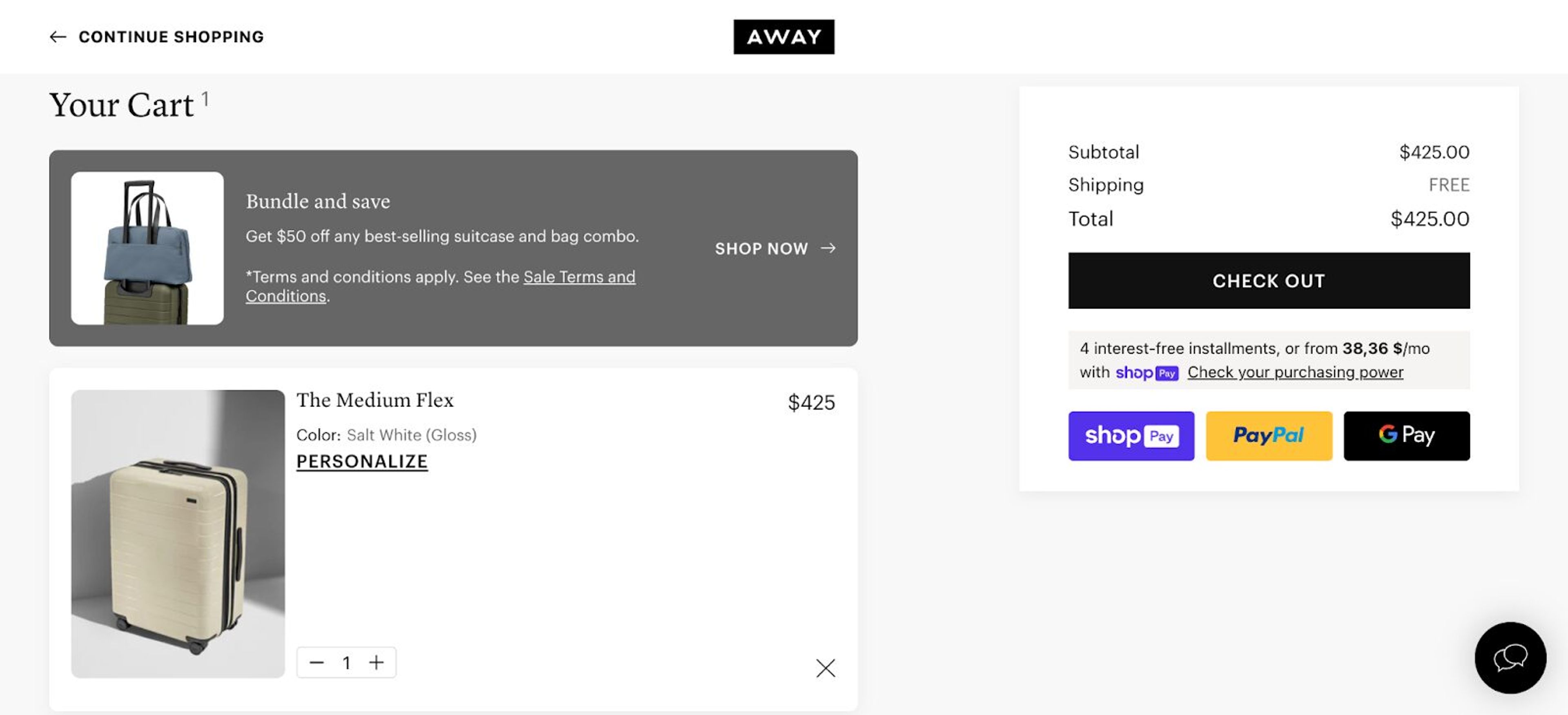
Away also focuses on in-cart offers. When a visitor adds an item to their cart, a "Bundle and Save" option appears, offering $50 off if they select a product combo.
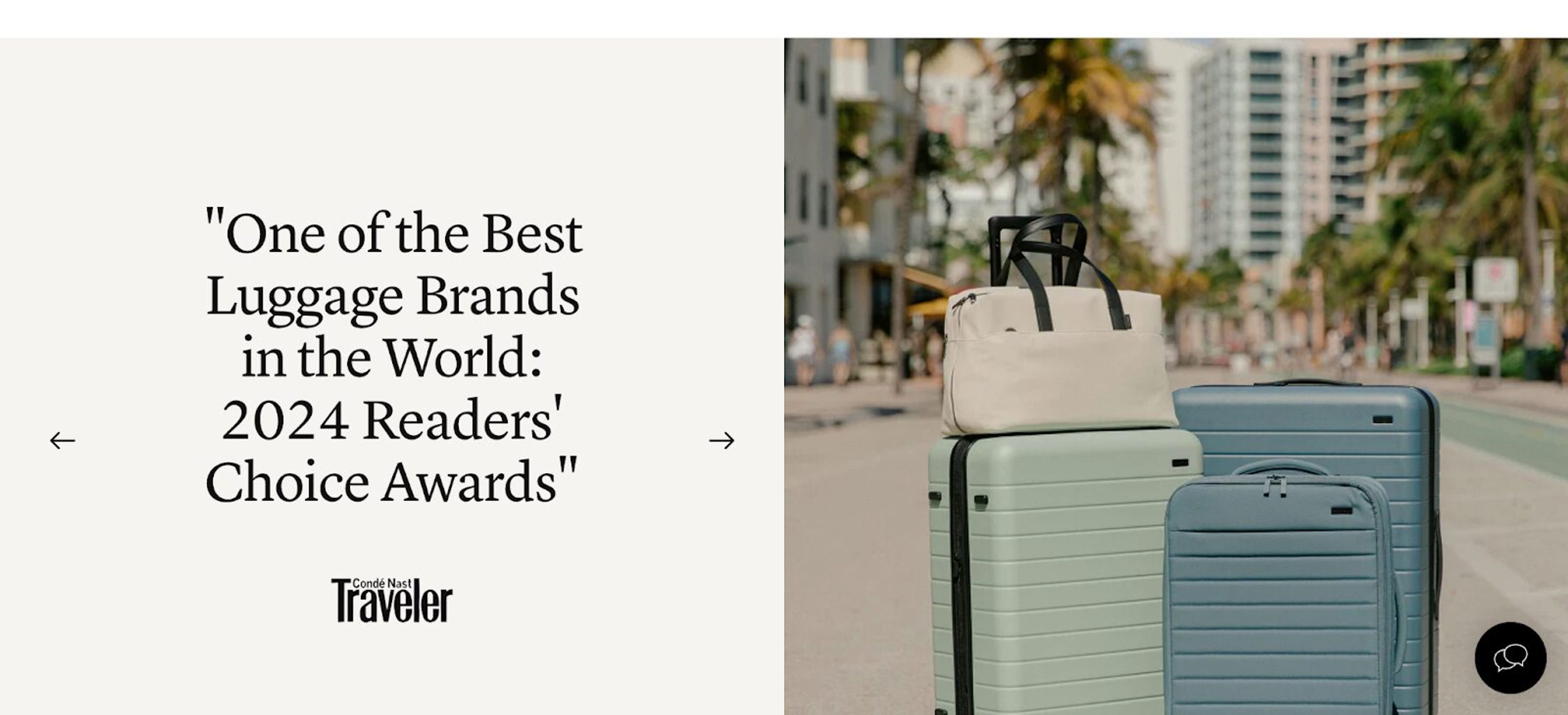
They also build trust by displaying social proof, including reviews from reputable outlets like Condé Nast Traveler.
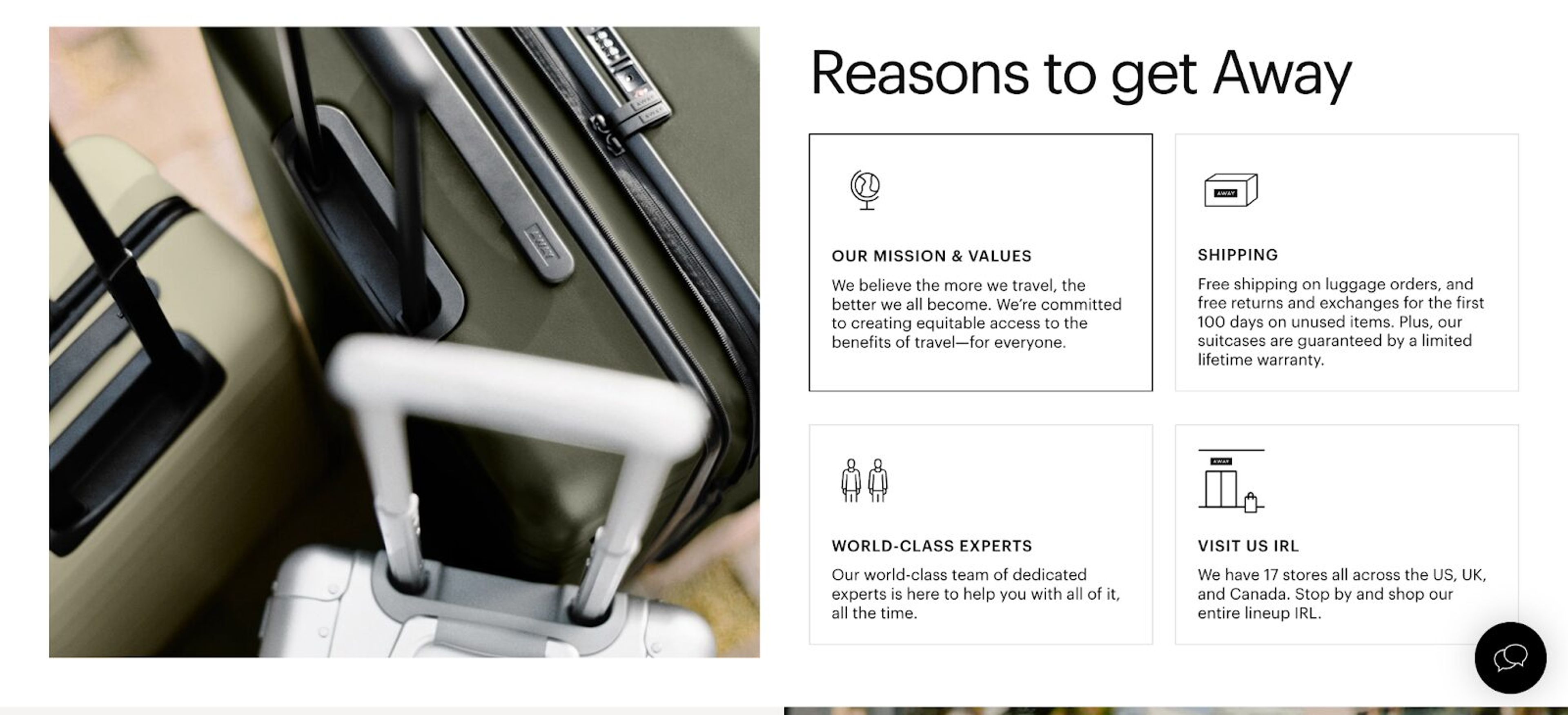
Additionally, they highlight key benefits like free shipping and returns, expert customer service, the option to shop in physical stores, and their brand mission, ensuring customers understand the value of purchasing from Away.
On a dynamic shipping bar, various information appears, including payment details, free shipping availability, and new products.
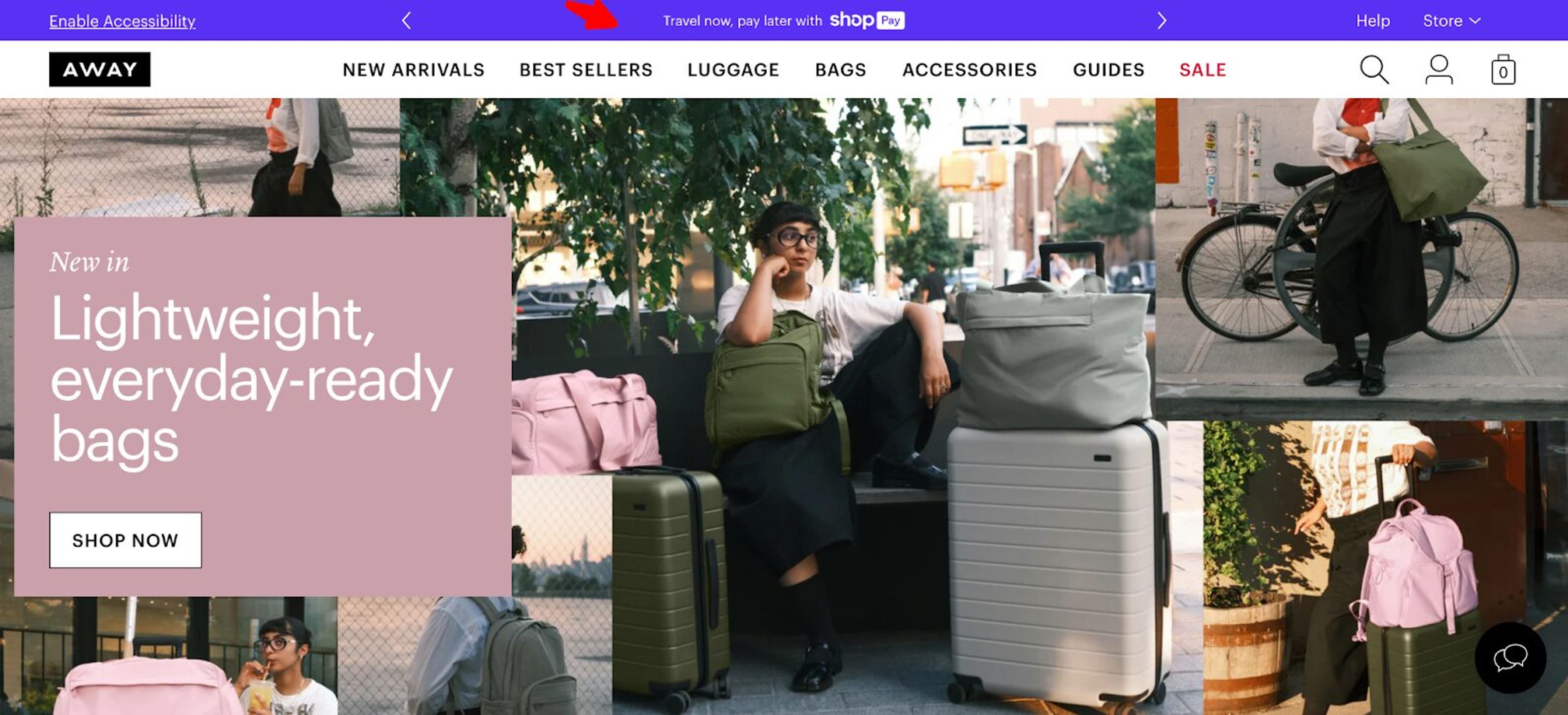
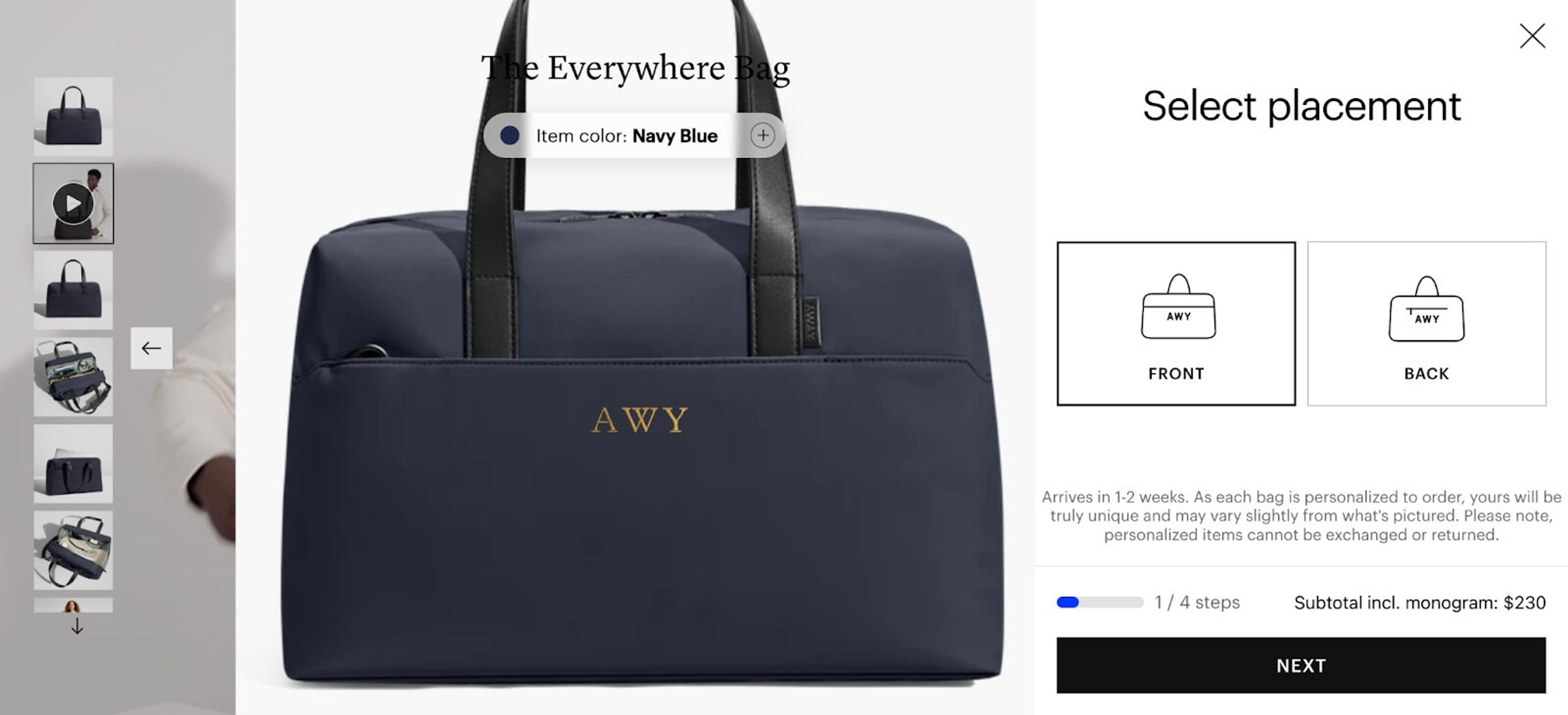
What really stands out is the ability to personalize your bags—making them truly your own—on Away’s product pages. Customers can:
This customization creates a more personal connection to the product, allowing customers to design luggage that reflects their unique style.
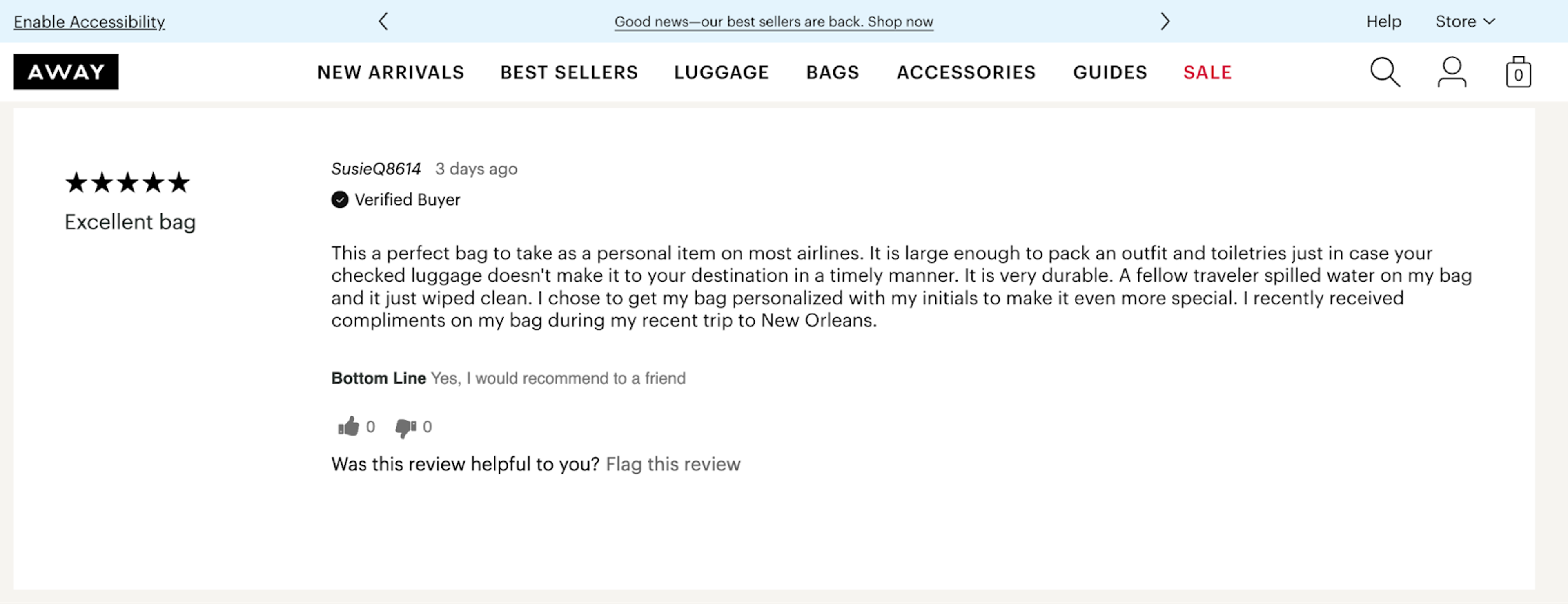
They also feature customer reviews at the bottom of each product page, offering further validation from real users and helping potential buyers feel confident enough to check out.
Influencer partnerships have been crucial to Away’s rapid success. At the start, the brand collaborated with around 1,000 influencers on Instagram to create buzz and build brand awareness.
These partnerships allowed Away to tap into niche audiences and generate organic content that resonated with different types of potential customers.
Away also forged celebrity collaborations with notable figures like Karlie Kloss, which helped bring their products to a wider audience.
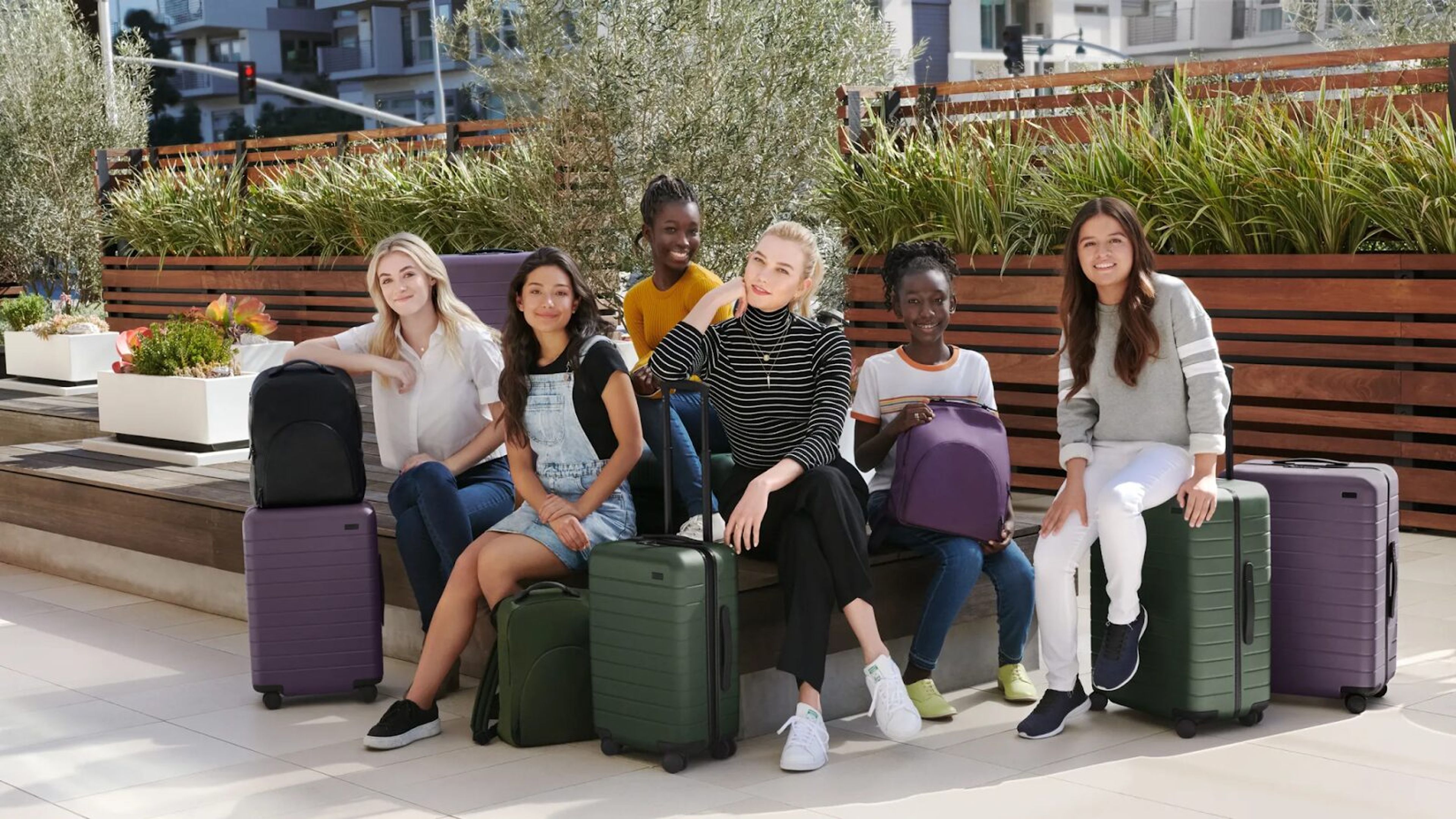
Another successful collaboration was with Devon Aoki, for a limited edition kids collection:
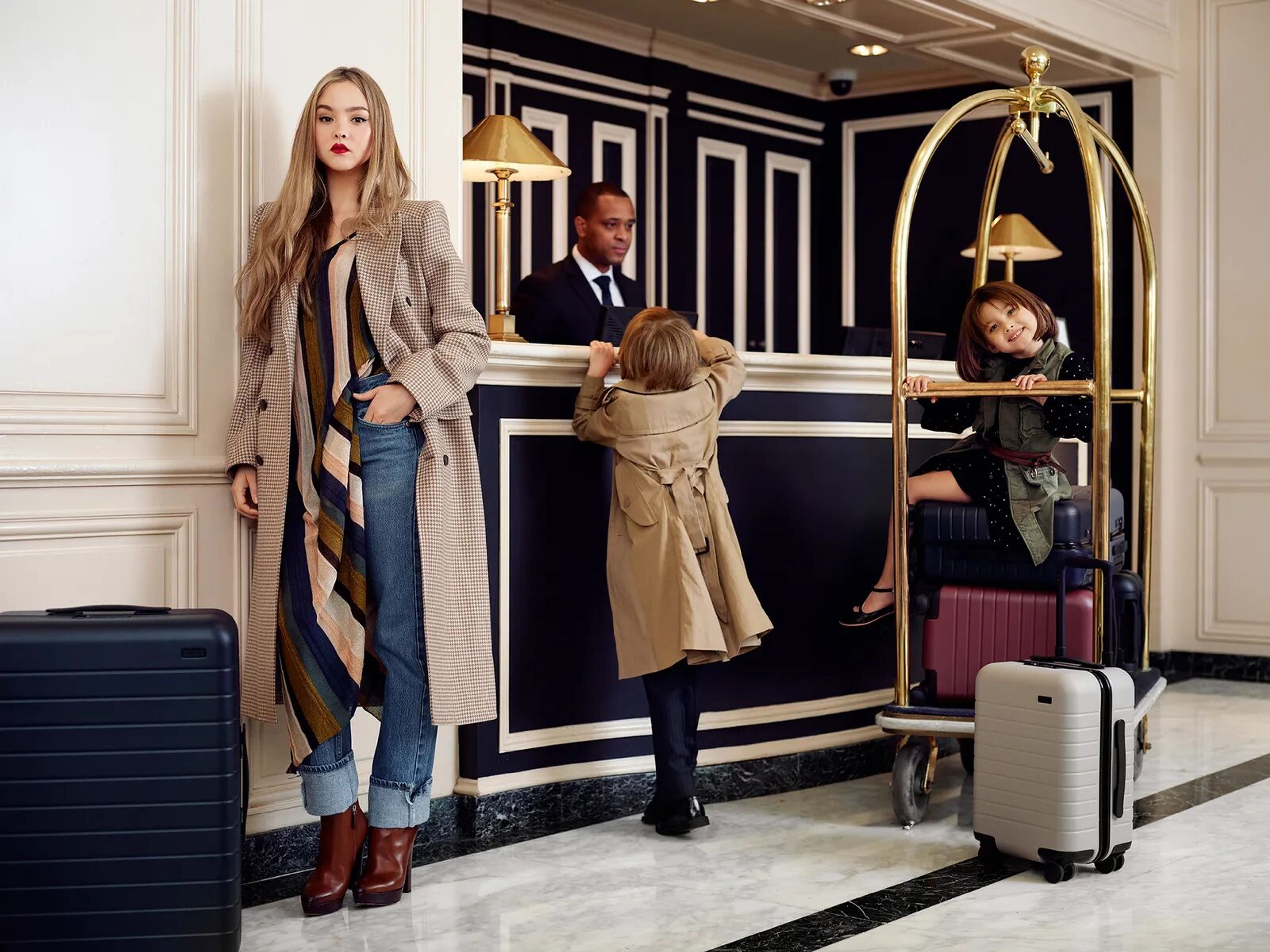
These partnerships allowed Away to build credibility within both the fashion and travel spaces, further extending their reach and appeal.
In short, Away has transformed luggage into a lifestyle by blending strong storytelling, seamless website optimization, and strategic social media use.
Their focus on personalization, influencer partnerships, and a robust SEO strategy has helped them connect with modern travelers and stand out in a highly competitive market.
Away shows that with the right mix of creativity and optimization, even everyday products can become aspirational.
Looking for more marketing breakdowns? Check out these articles:

How Tarte turns founder storytelling, creator trips, TikTok virality, and smart on-site funnels into a repeatable beauty marketing growth engine.
How Carroten went from unknown to every US Target shelf in under a year — using TikTok virality, creator-led commerce, and heritage brand positioning.
A deep dive into WavyTalk’s marketing strategy, from TikTok Shop and creator-led launches to UGC, cultural moments, and high-converting DTC tactics.