


Tarte Cosmetics Marketing Breakdown: How a 25-Year-Old Beauty Brand Keeps Making Products Feel Viral
How Tarte turns founder storytelling, creator trips, TikTok virality, and smart on-site funnels into a repeatable beauty marketing growth engine.
How Carroten went from unknown to every US Target shelf in under a year — using TikTok virality, creator-led commerce, and heritage brand positioning.
In short
Carroten, a 40-year-old Greek suncare brand, entered the US in 2024 with no recognition and a $30 tanning gel priced 3× above competitors. By leaning on TikTok virality, a fully optimized Amazon presence, and a Target launch as credibility signal, it hit 377% revenue growth and 221,800 units sold in four months. The playbook: heritage as a pricing asset, UGC-driven growth as the content engine, a focused one-hero product line, and infrastructure ready before the viral moment arrived.
For forty years, Carroten was a Mediterranean secret. Greeks knew it, Australians had adopted it, and beauty shoppers across Europe and the Middle East trusted this Greek suncare brand as the #1 in its home market. But no one in the United States had heard of it and that, it turns out, was the best possible positioning for the TikTok era.
In 2024, Carroten launched its European suncare brand US expansion by partnering with Miami-based marketplace specialist SAYN Beauty. The challenge was steep: a premium-priced Carroten tanning gel ($29.99–$31.99) entering a category dominated by Hawaiian Tropic at $9.99 and Australian Gold at $7.39, with zero brand recognition and no retail footprint.
In their first four months of 2025, the brand achieved a 377% year-over-year revenue increase and sold 221,800 units, with over 90% of that visibility powered by a single platform. By February 2025, Carroten had launched in all US Target locations.
A brand nobody had heard of, at three times the category price, had become a mainstream American beauty brand in under a year.
Here's how.
Carroten didn't arrive in the US as a new brand, it arrived as a 40-year-old one. That heritage brand positioning matters enormously in a category flooded with startups and me-too formulas.
At $29.99, Carroten costs three to four times more than the tanning products sitting next to it on the Target shelf. That kind of price gap doesn't survive without a story.
"Made in Greece by the brand that's dominated European sun care for 40 years" is that story.
A startup DTC brand can't say it. Hawaiian Tropic can't say it either. Carroten's point of origin is the one competitive advantage neither can replicate, and the brand positions it front and center.
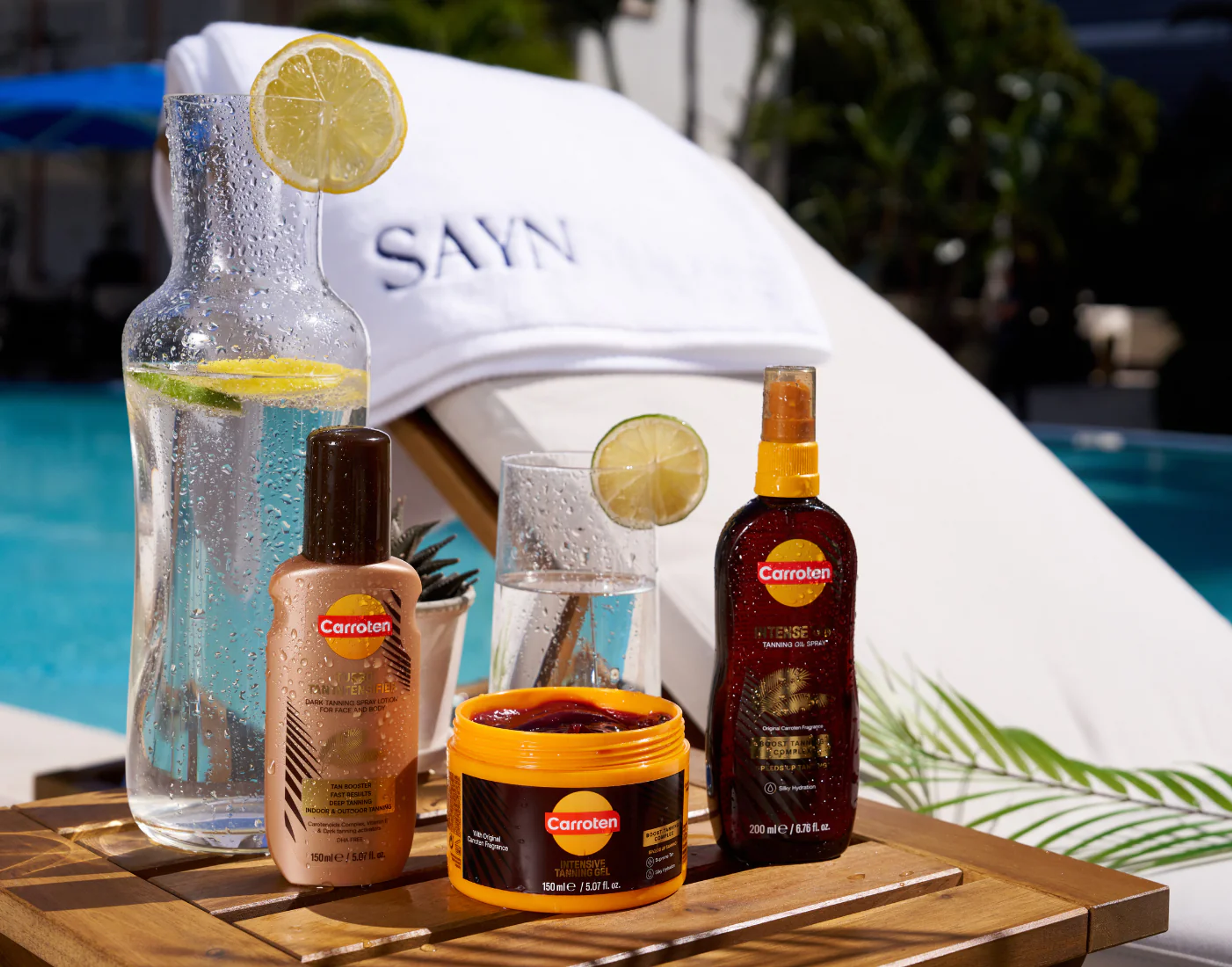
The formula reinforces the positioning.
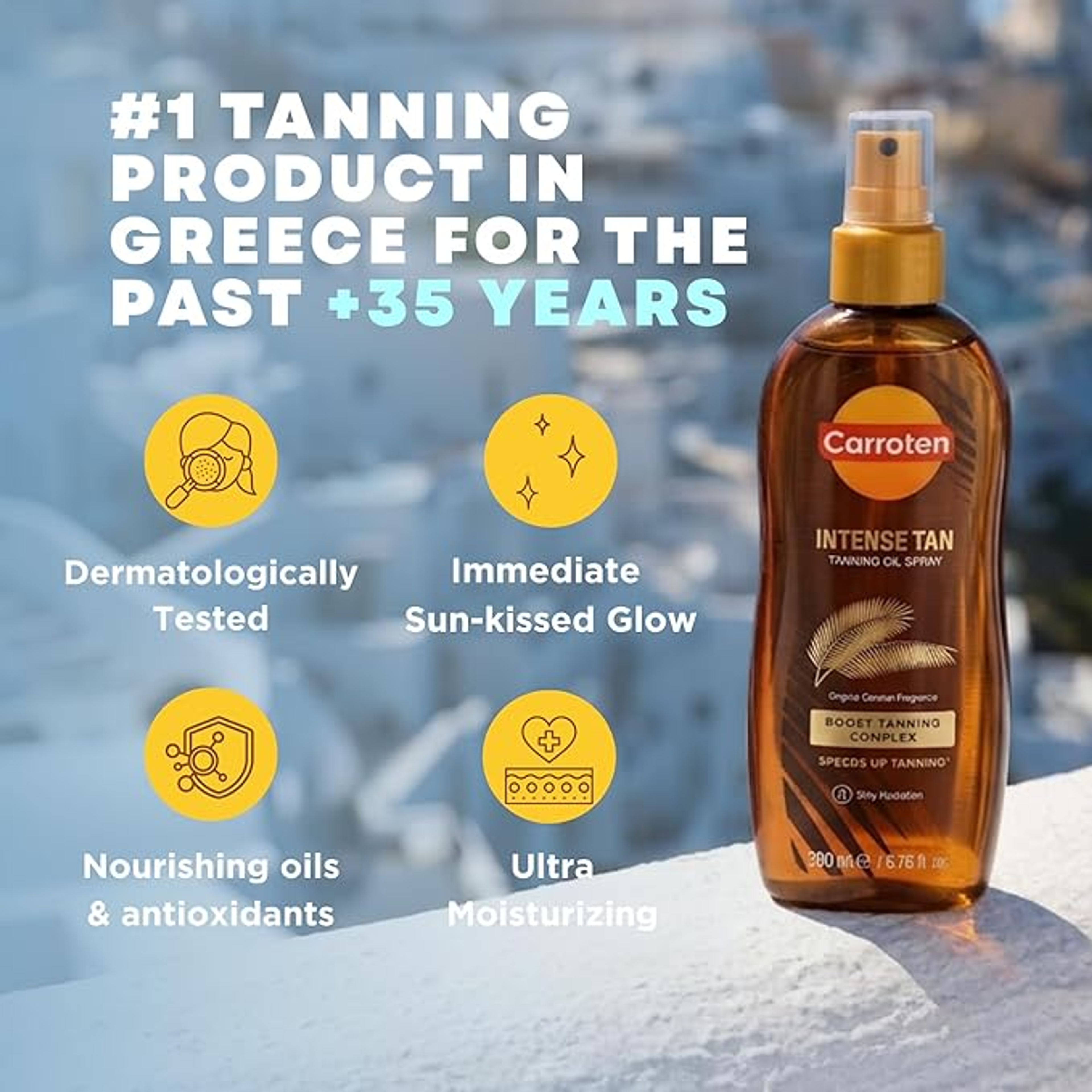
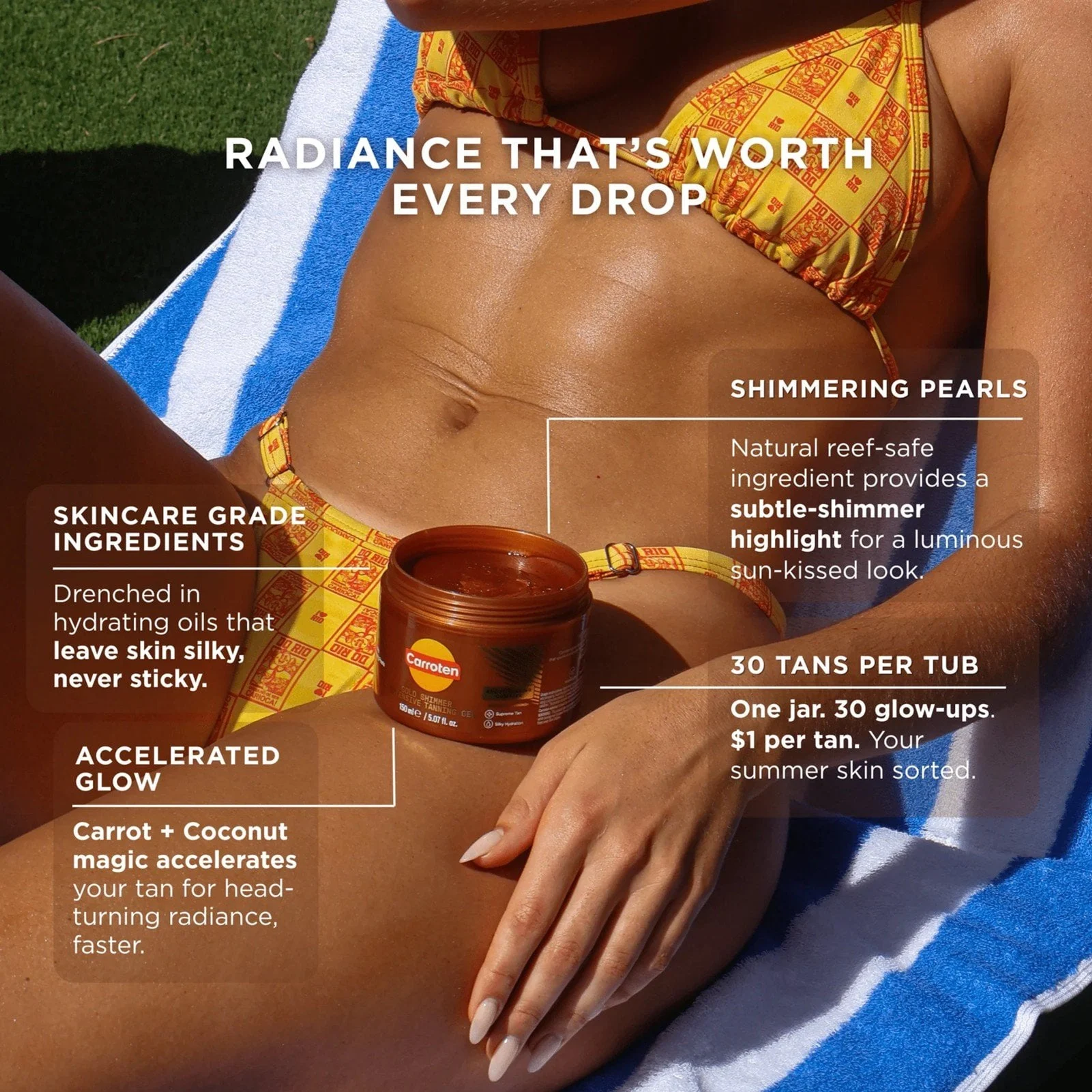
Carrot extract rich in beta-carotene, coconut oil, calendula, lipoplastidina, and tanami oils. These are all ingredients that sound premium and Mediterranean, evoking a product developed by people who actually understand tanning rather than a lab formula optimized for mass retail margin.
Takeaway: If your brand has a genuine origin story, that story is a pricing asset, not just a communications one. Lead with it before you lead with the product.
Most brands treat their TikTok marketing strategy as a brand awareness play and treat Amazon, Target, and TikTok Shop as separate revenue streams. The Carroten marketing strategy used TikTok virality as the primary growth engine, and every other platform was infrastructure designed to capture the demand it created.
The thesis works like this: a creator's video goes viral on TikTok. Interested viewers immediately search the product name on Amazon or Google.
A fully optimized listing converts that search intent into a sale. The spike in search volume improves organic ranking. Better ranking reduces advertising costs. Lower ad costs improve margins, which fund more creator partnerships, which generate more viral content.
TikTok virality created a massive surge in branded Amazon searches, thousands of people searching specifically for "Carroten tanning gel" and "Carroten gold shimmer tanning gel", resulting in a 4x increase in product sales on Amazon.
The content itself was engineered for shareability. Tanning gel transformations:
… are among the most watchable before-and-after formats on social media.
Carroten's products delivered visible, fast results and smelled like a Mediterranean vacation, which meant every satisfied customer had a natural incentive to document and share the experience.
Virality without infrastructure is a missed sale. Most brands invest heavily in getting discovered and underinvest in the moment a viewer becomes a buyer.
Carroten's creator-led commerce model — TikTok as spark, Amazon as converter, Target as validator — creates a full-funnel system where each platform reinforces the others.
Takeaway: Understanding the TikTok to Amazon flywheel means building the Amazon listing, the retail presence, and the branded search strategy before the TikTok moment arrives. When it does, you have a narrow window to capture it. The brands that win are the ones that are already ready.
Carroten's UGC-driven growth in the US is built largely on what customers are saying, not what the brand is saying. The UGC ecosystem runs entirely on authentic enthusiasm:
People are filming themselves using the product because the results are visible and the scent is distinctive enough to want to tell someone about.
The language that appears consistently across UGC is the most valuable market research the brand has:
These phrases didn't come from a copywriter. They're what real customers reach for when trying to explain the experience to someone else and they tell Carroten exactly which product attributes drive word of mouth.
The scent dimension is particularly powerful. Fragrance is an emotional trigger that cannot be communicated in text, which means the "it smells amazing" thread running through Carroten's UGC functions as a promise that only purchase can fulfill.
A viewer who reads "smells like a Mediterranean vacation" can't verify that claim without buying, which is exactly what makes it such an effective conversion driver.
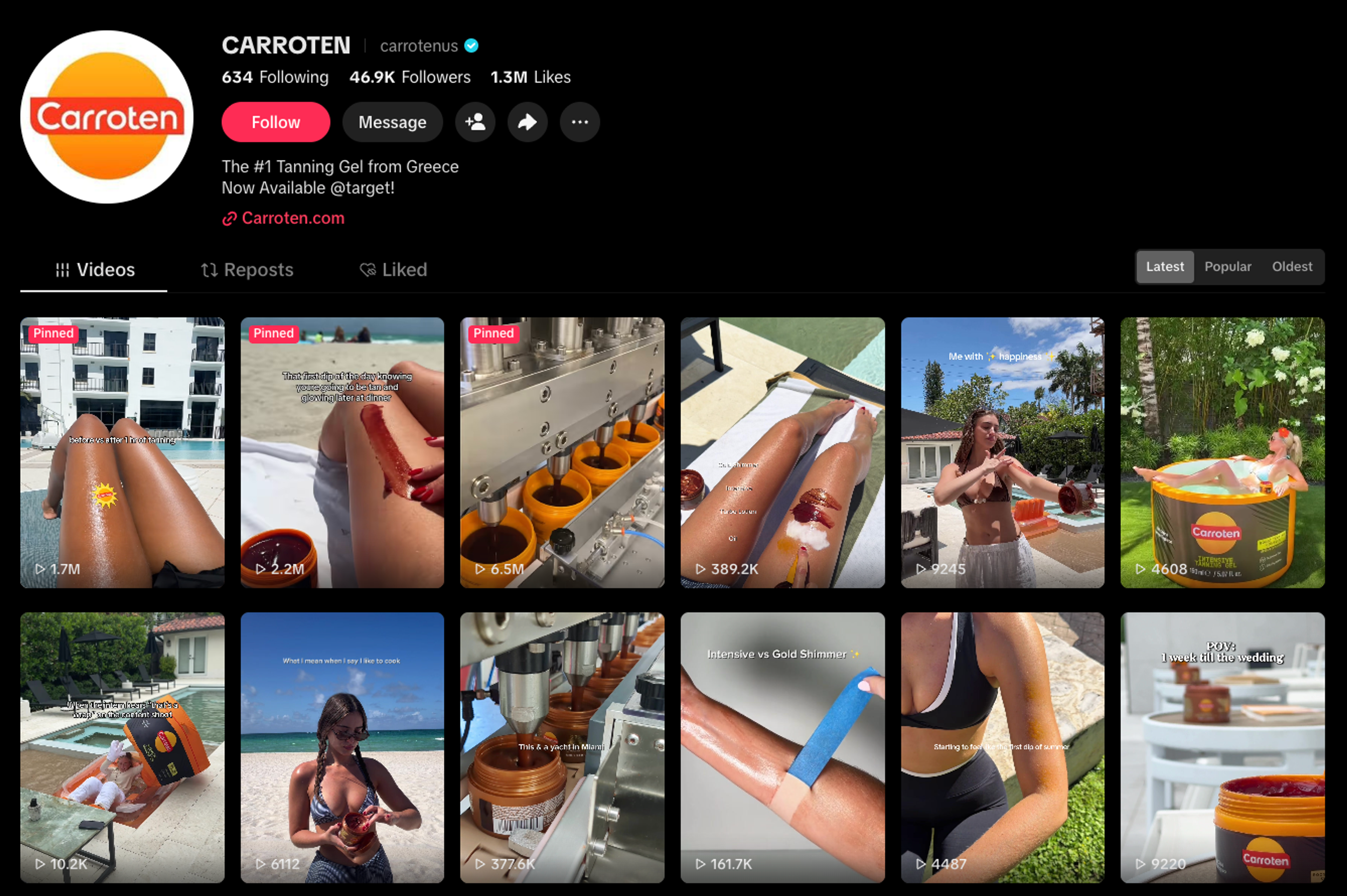
The brand's own channels amplify rather than manufacture. The @carrotenus TikTok profile anchors organic discovery to real-world retail availability, leading with the brand's Greek heritage credential and its Target availability in the same line.
Takeaway: Read your UGC the way a researcher reads qualitative data. The phrases your customers use unprompted are your best ad copy, the fuel for UGC-driven growth. The attributes they keep returning to are your actual value proposition, not the one in your creative brief.
Carroten's Target launch in February 2025 wasn't just a distribution decision. It was a brand-building move that changed what the product meant to every consumer who encountered it, on every platform.
Seeing a product on Target shelves is a form of third-party validation that TikTok views cannot replace. It signals that a real buying organization staked real money on the brand's viability.
On Target's own site, the Intensive Tanning Gel shows "18k+ bought in last month", a social proof signal visible to every online shopper before they've read a single review.
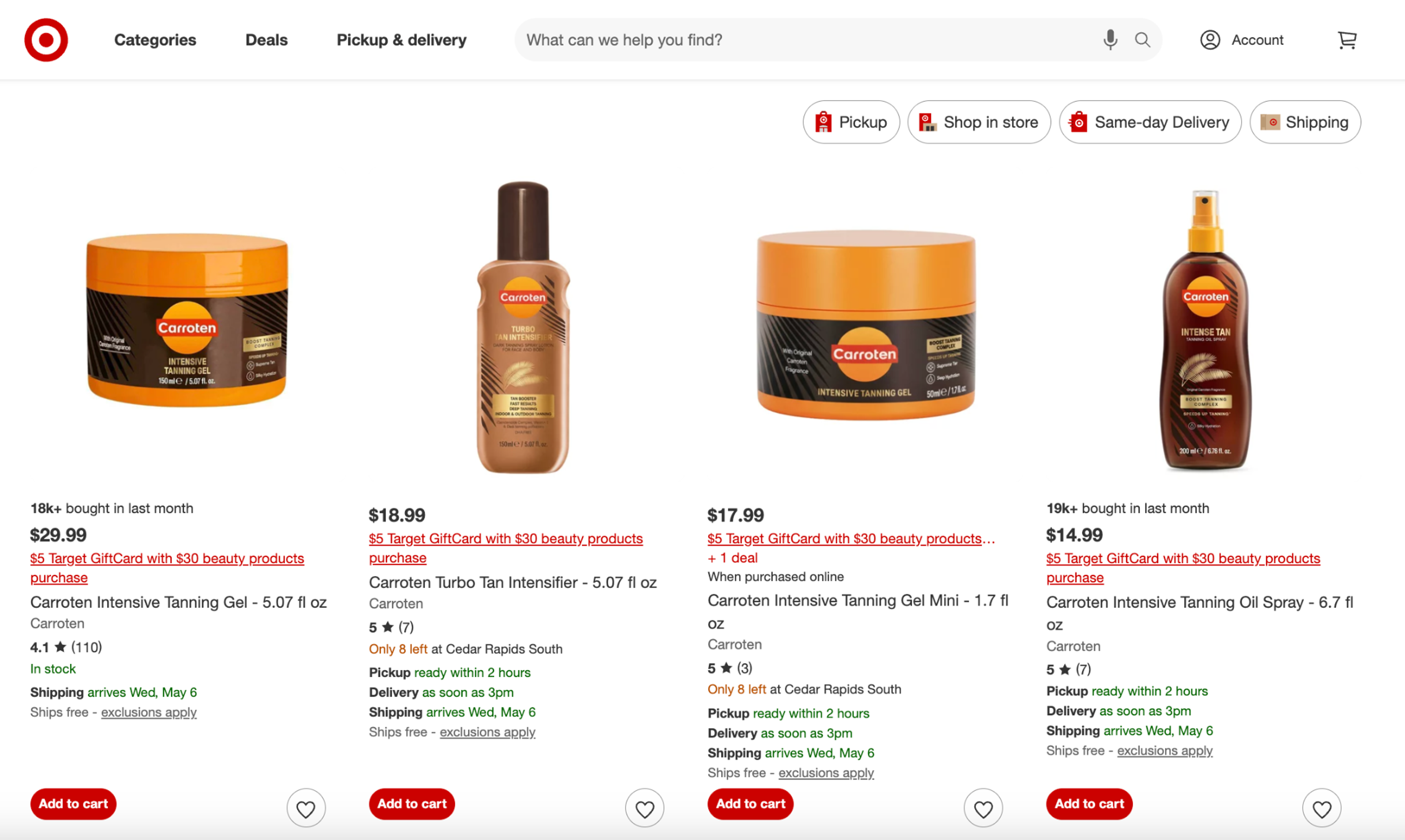
The pricing held. At $29.99–$31.99, Carroten sits at two to four times the price of category competitors on the same shelf and it is not being discounted to compete. That's the clearest evidence that TikTok credibility translates into real purchase behavior at full margin.
The mechanism worth understanding is the triple-confirmation loop. A consumer who discovers Carroten on TikTok, searches it on Amazon, and then sees it at their local Target doesn't just trust the product, they trust it the way they trust established brands.
Each touchpoint confirms the last. By the time they reach checkout, the decision has already been made.
Takeaway: Retail presence creates a legitimacy halo that radiates across every other channel. Social platforms drive awareness, retail partnerships drive credibility, and together they create a customer who converts faster and pays full price. The goal of a retail launch isn't just new revenue, it's what that shelf placement does to every other channel the moment it happens.
Carroten's US range is deliberately small:
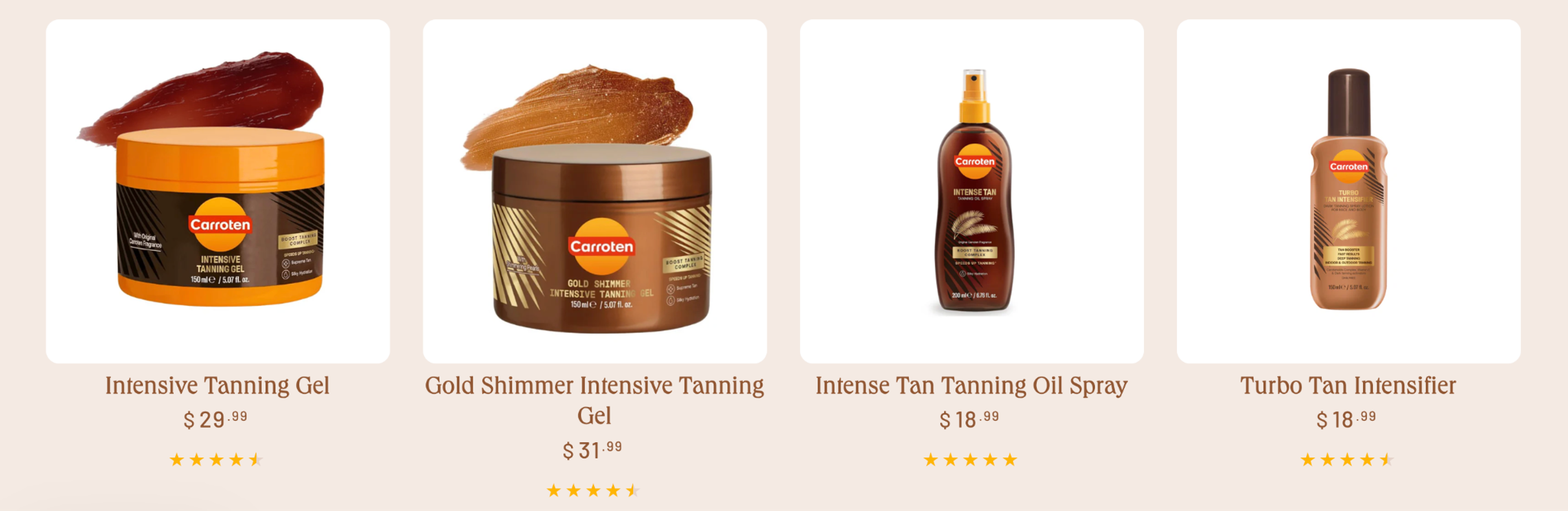
No sunscreen. No color cosmetics. No seasonal fragrance rotation.
The constraint is strategic. A single hero product absorbs the full weight of the brand's TikTok momentum. Every "tan with me" video, every influencer tutorial, every Carroten tanning gel review drives back to one SKU.
When the algorithm pushes that content to millions of people, the purchase decision is simple: one product to try, $29.99, available at Target and Amazon.
The Gold Shimmer variant functions as the natural upgrade:
No decision fatigue. Just an obvious next step for a satisfied customer.
The flywheel compounds: more TikTok views means more branded search, which improves Amazon ranking, which drives more retail reorders, which puts the product in front of more Target shoppers. Focused product strategy and viral content run on the same engine.
Takeaway: The brand that says "here’s one great product, here’s what it does, here’s where to get it" wins the attention of the overwhelmed shopper. Focused lineups don't limit growth, they concentrate it.
Carroten's paid strategy reveals something most beauty brands get wrong: the creative isn't translated from a global template, it's built from scratch for each market. The pattern is visible across two very different markets.
Carroten Australia runs video ads with aspirational lifestyle copy:
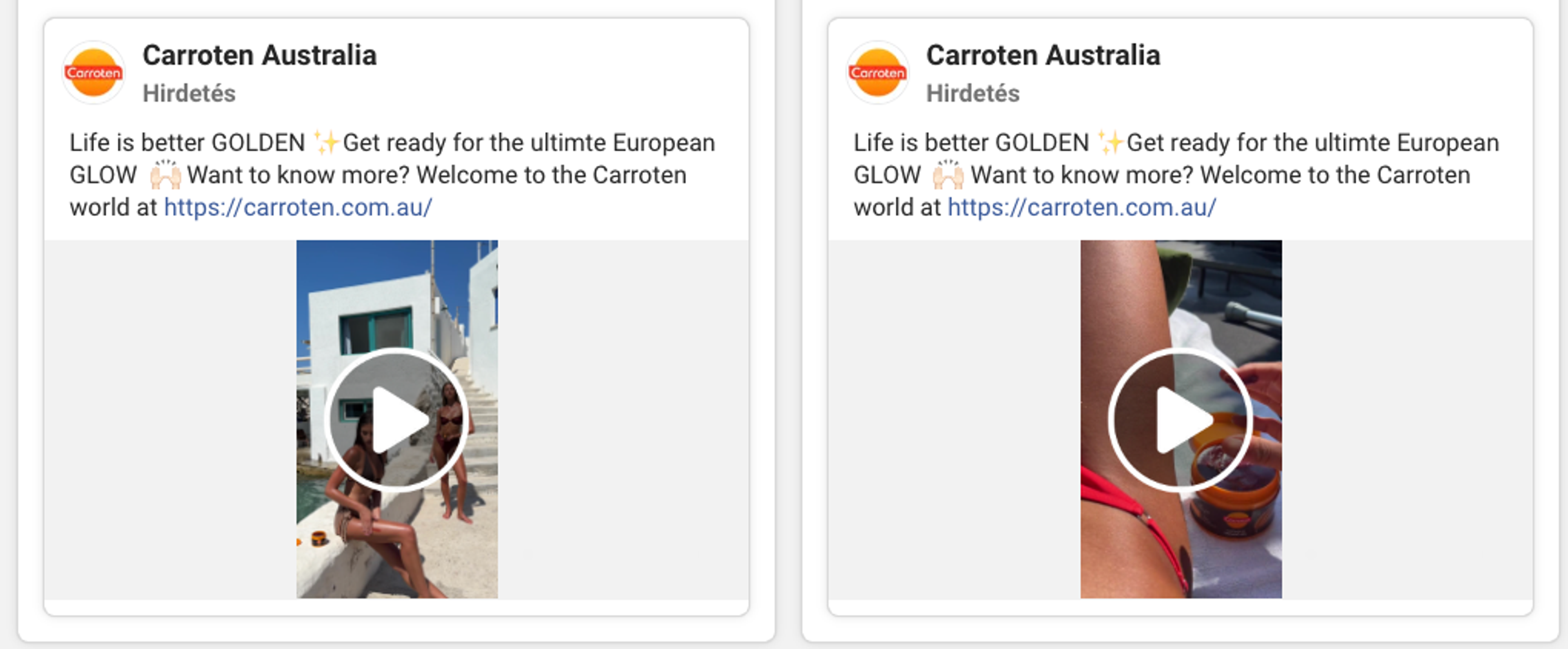
The format is deliberate. Video lets the product demonstrate itself: golden skin, Mediterranean settings, visible results.
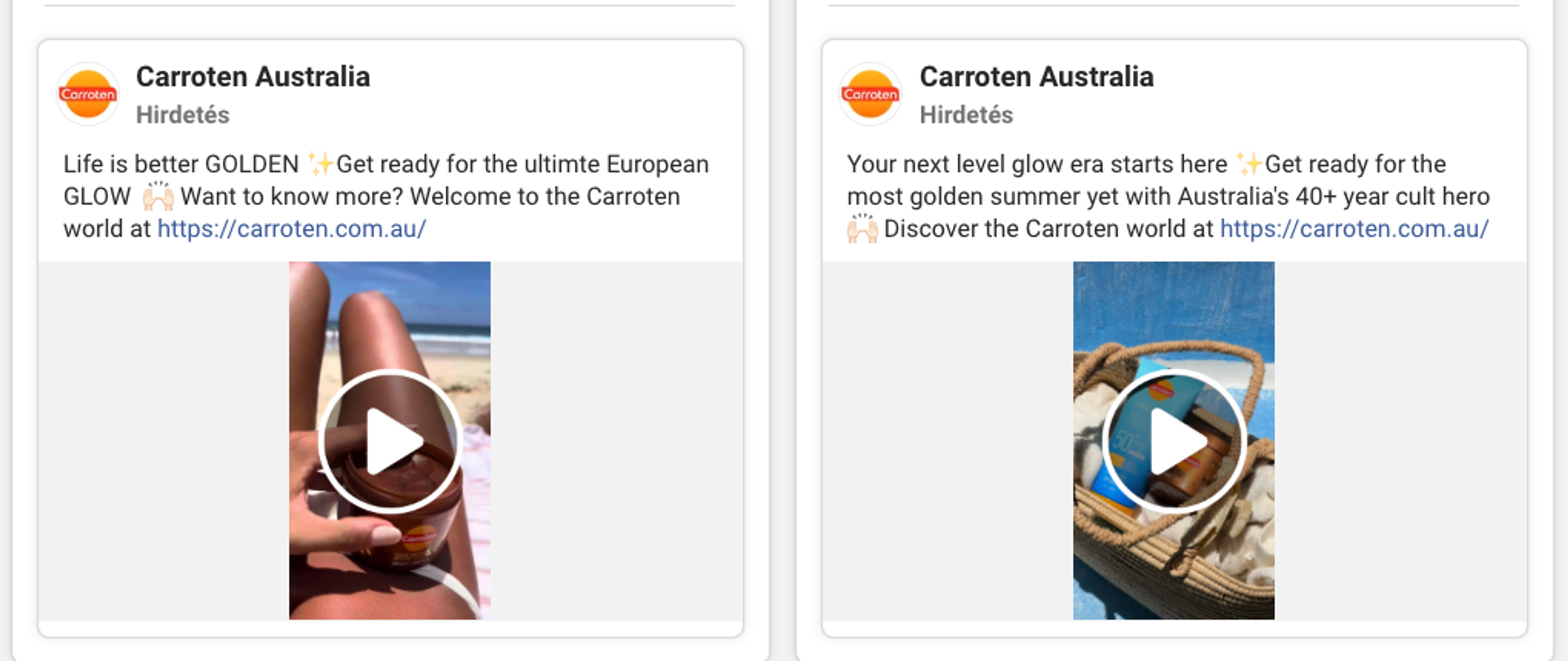
The copy invites curiosity rather than pushing a hard sell — "Want to know more? Welcome to the Carroten world" — treating the ad as an entry point into a brand story rather than a direct conversion moment.
For a market where Carroten has been present for years, awareness isn't the problem. Desire is. Video feeds that.
Carroten Hungary runs a different play entirely. Image ads, shorter copy, retail-specific CTAs:
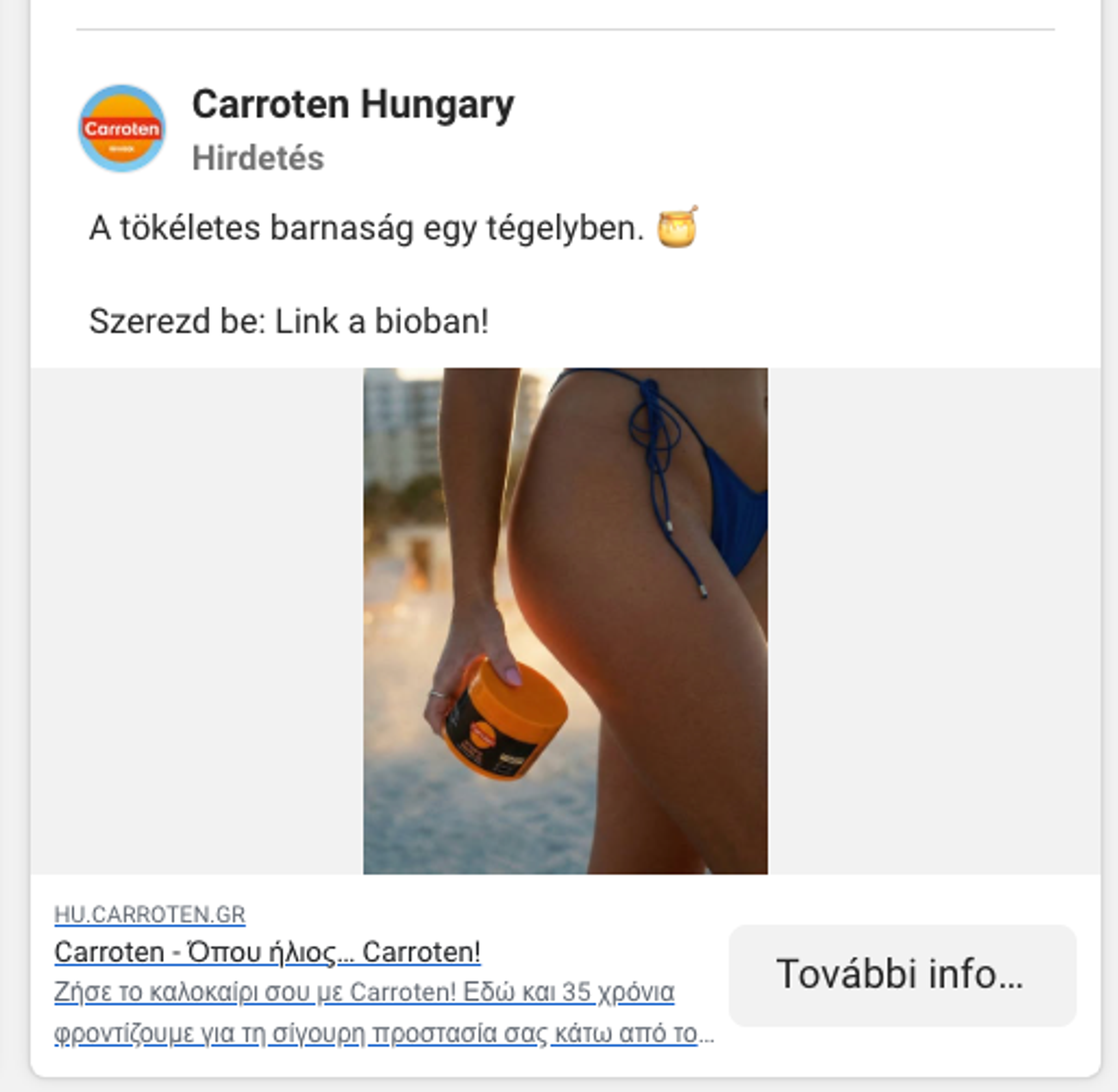
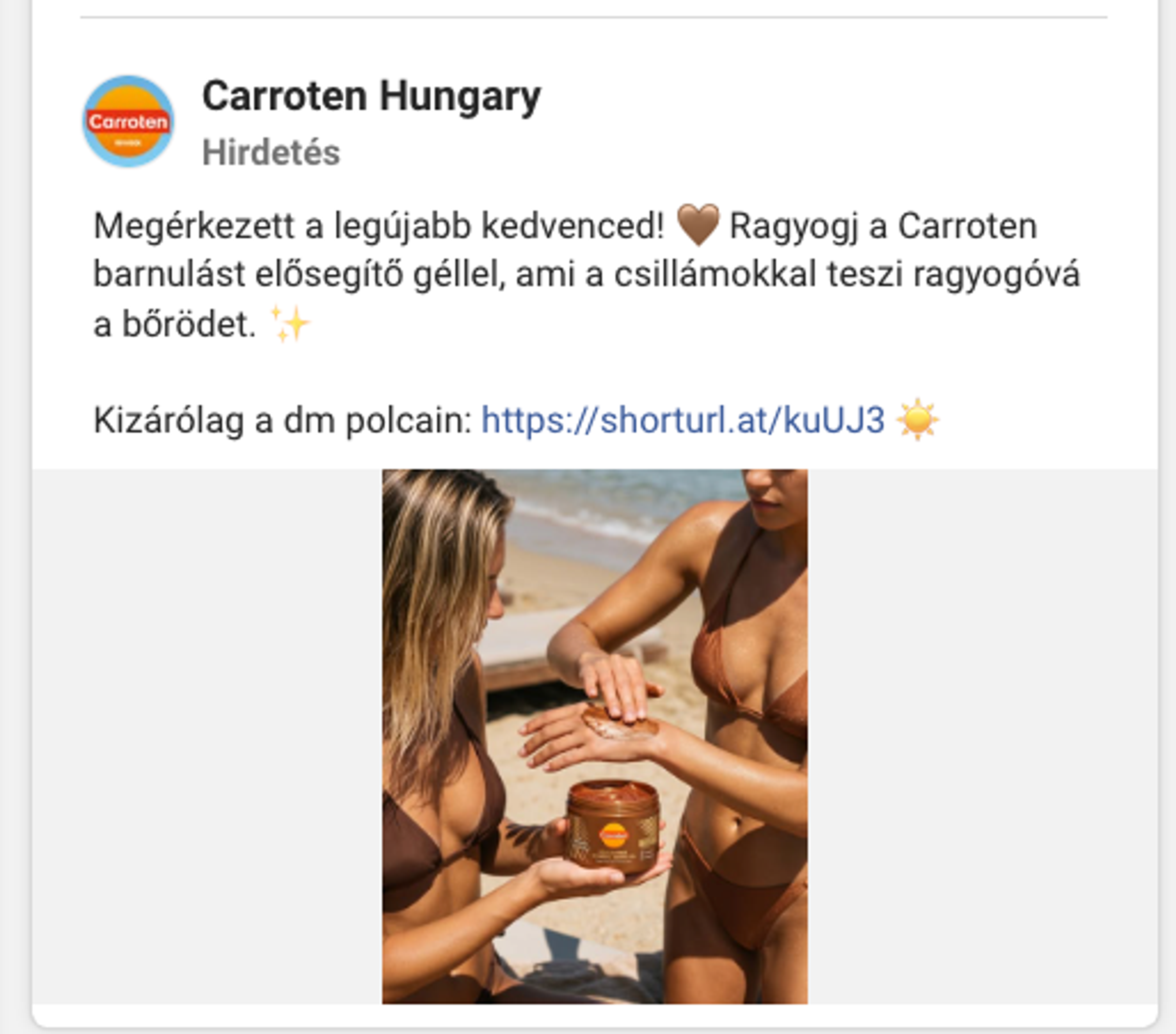
One ad tags DM.hu directly, driving traffic straight to the product listing on Hungary's largest drugstore platform. The creative assumes the viewer already knows what Carroten is. The job isn't to explain, it's to remind and redirect to purchase.
Takeaway: Market-specific creative isn't a production luxury, it's a performance variable. The same product, the same heritage brand positioning, the same formula, but video for a market that needs to be seduced, and image with a retail link for a market that's already convinced. Knowing which one your audience needs is half the strategy.
For a brand where most first-time visitors arrive from TikTok — already curious, already warming — the website's job isn't to generate interest.
It's to answer one specific question before the cart button matters: "Why does this cost so much more than everything else in this category?" The site answers it, systematically, at every scroll depth.
The popup greets visitors immediately — "GET THE GLOW!" — offering 20% off in exchange for an email address.
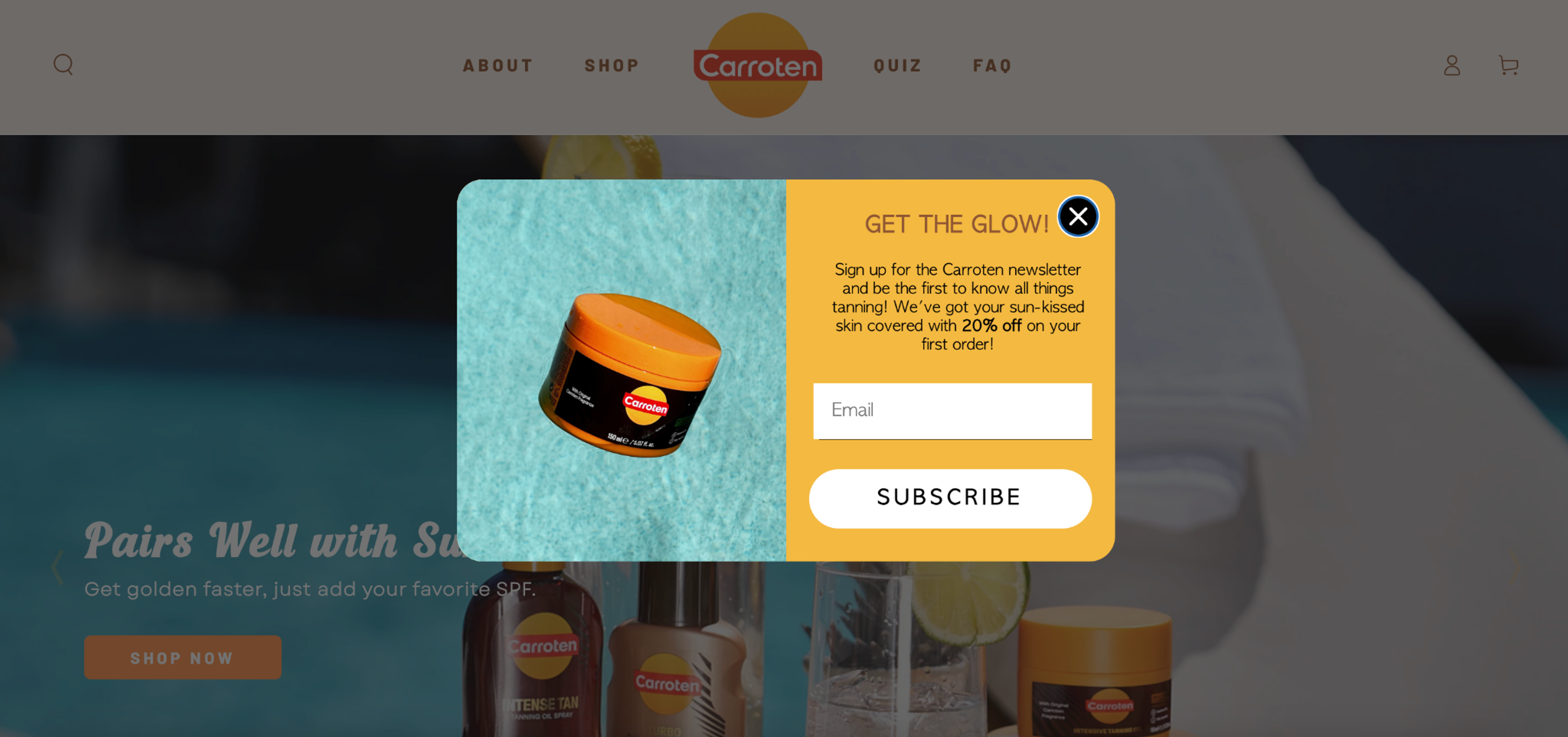
One offer, one action required.
The homepage hero follows with an aspirational lifestyle copy: "Pairs Well with Sunshine" over a poolside image, with a sub-headline that earns it: "Get golden faster, just add your favorite SPF."
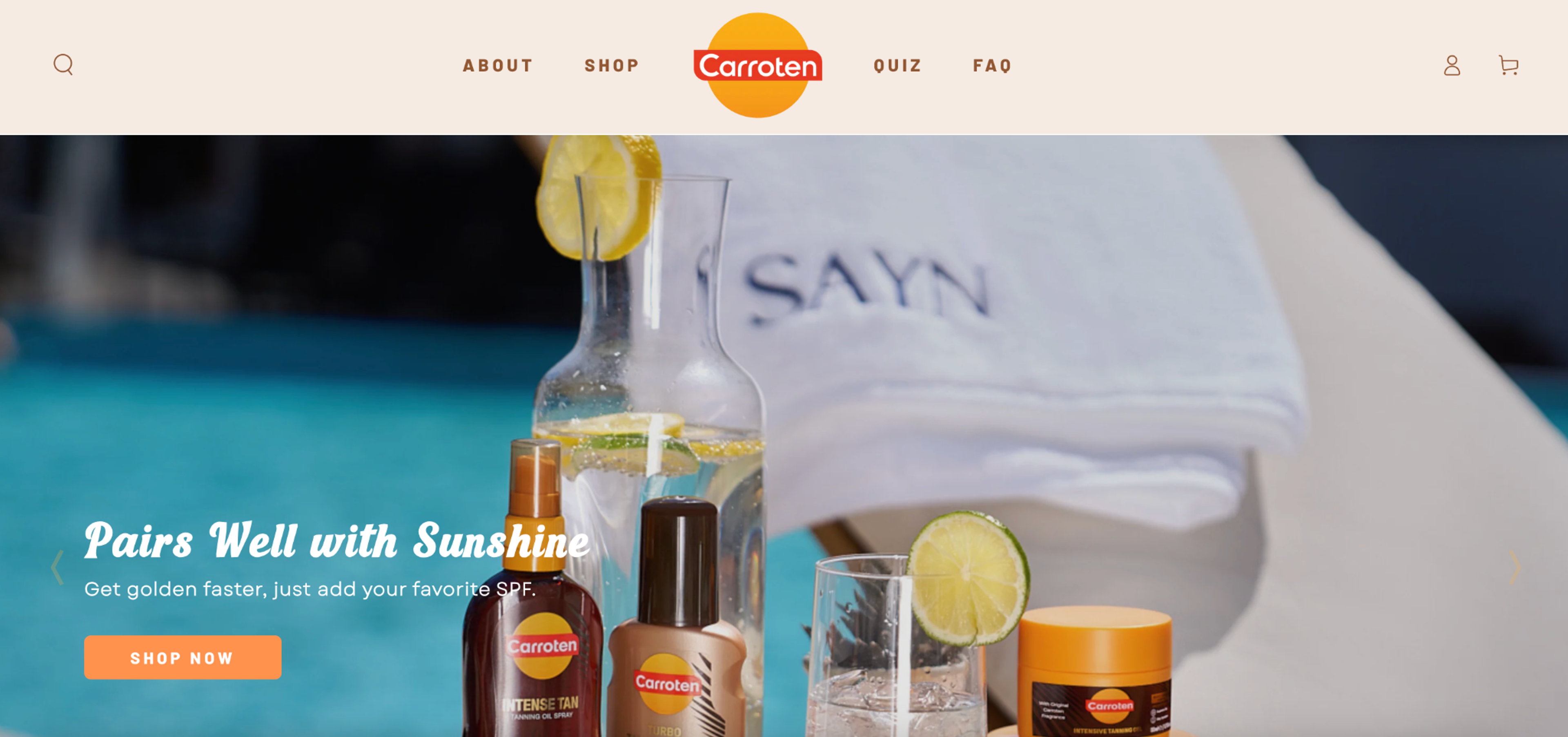
The product grid presents four SKUs with star ratings and direct “Add to Cart” buttons, no click-through required.
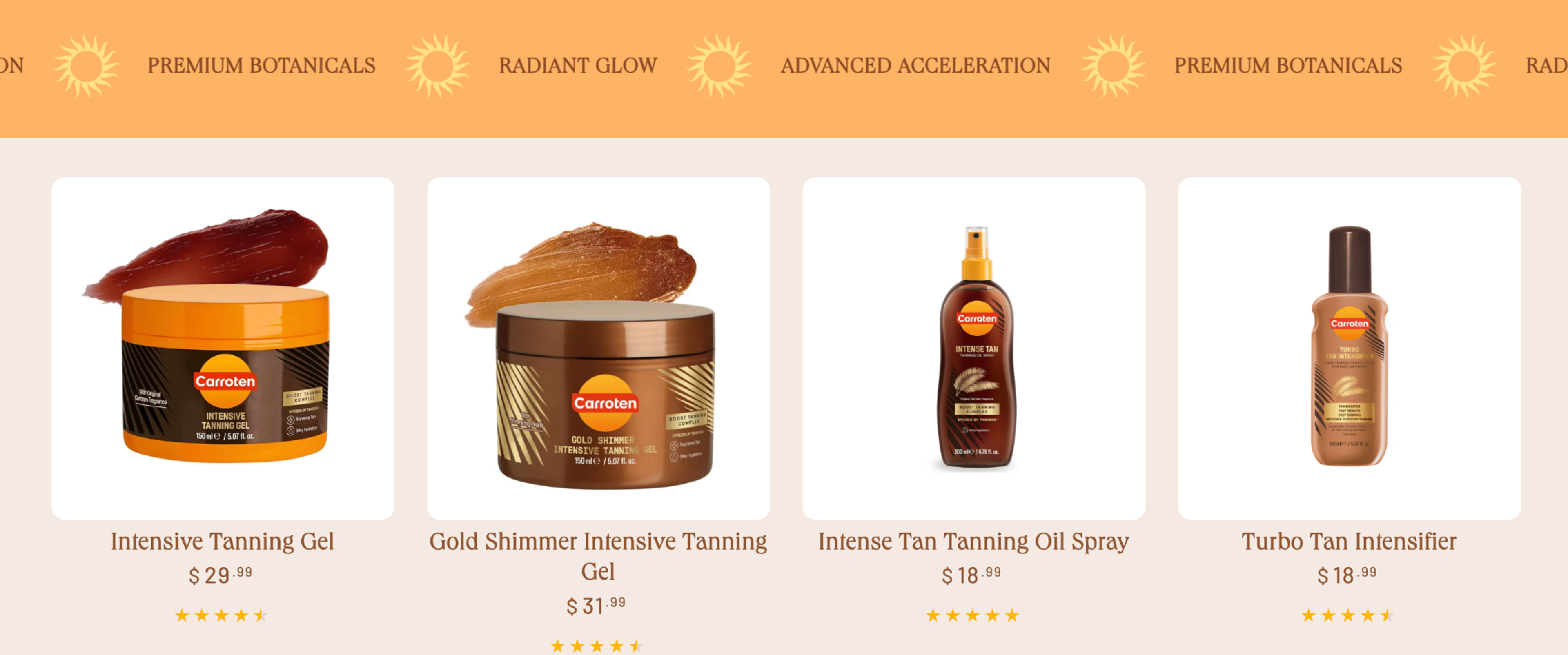
A marquee strip runs the brand's core benefit claims:
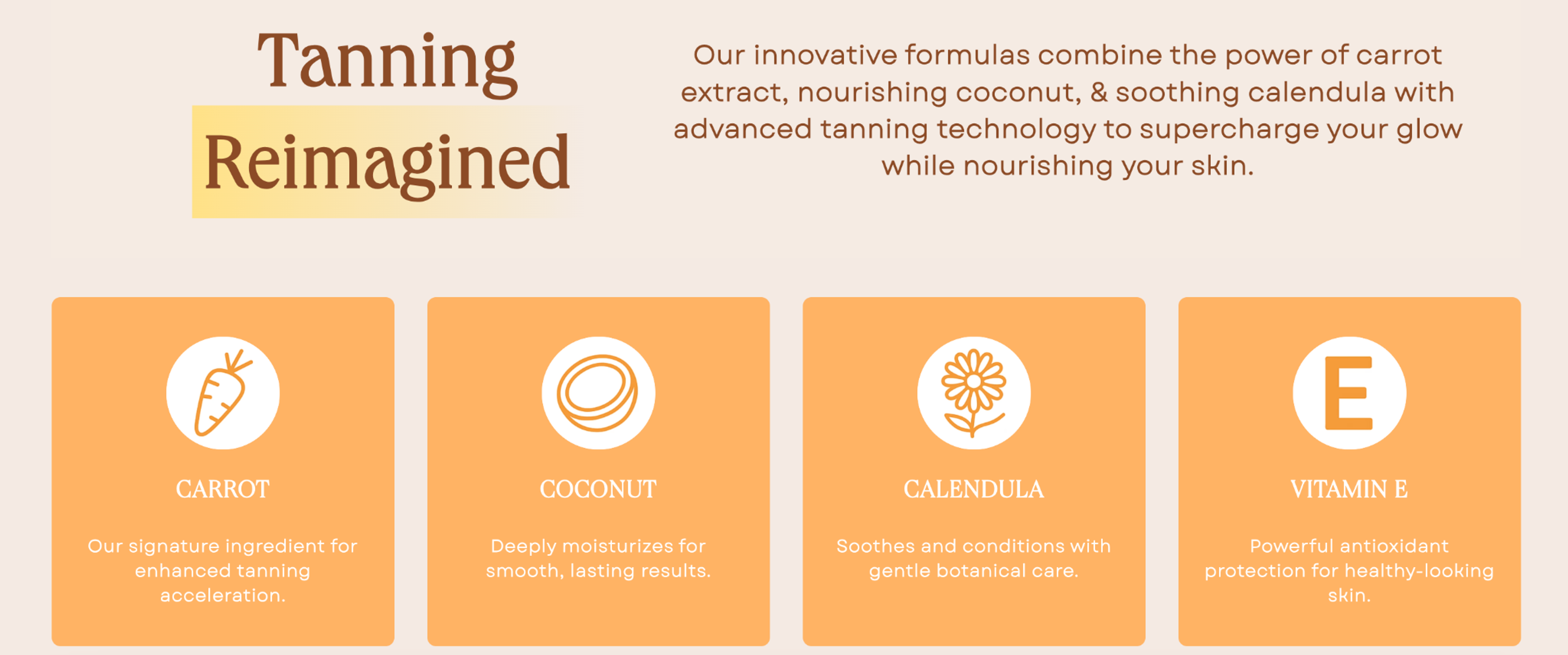
Below the products, an ingredient showcase breaks down carrot, coconut, calendula, and vitamin E with individual benefit cards, making the premium formula legible to a visitor who has never heard of lipoplastidina and needs to understand why this costs $29.99.
The product page leads with trust before price. Star rating directly under the product name. Benefit-rich copy above the fold.
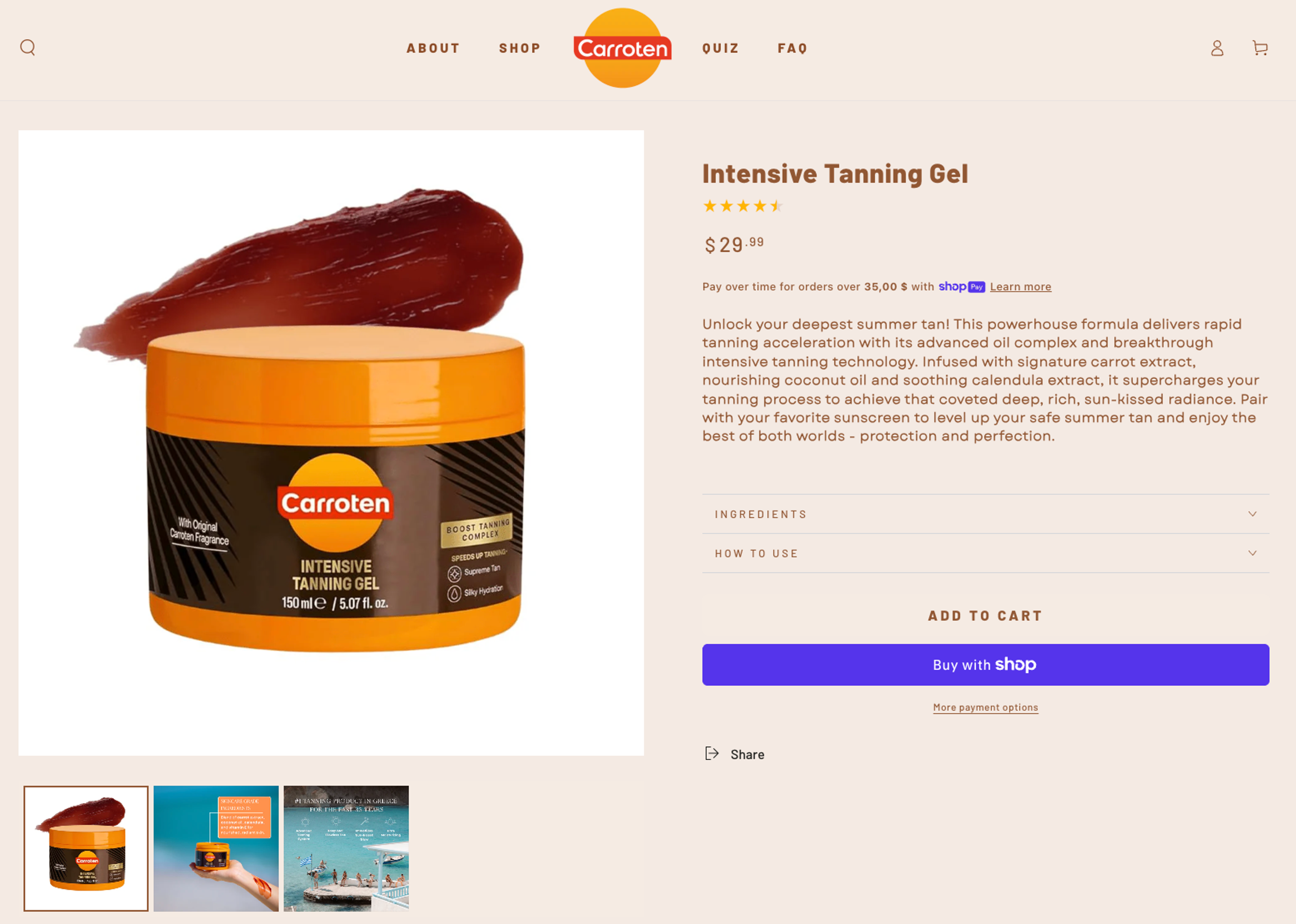
Accordion sections for ingredients and instructions keep the page clean while making every detail available to anyone who wants it.
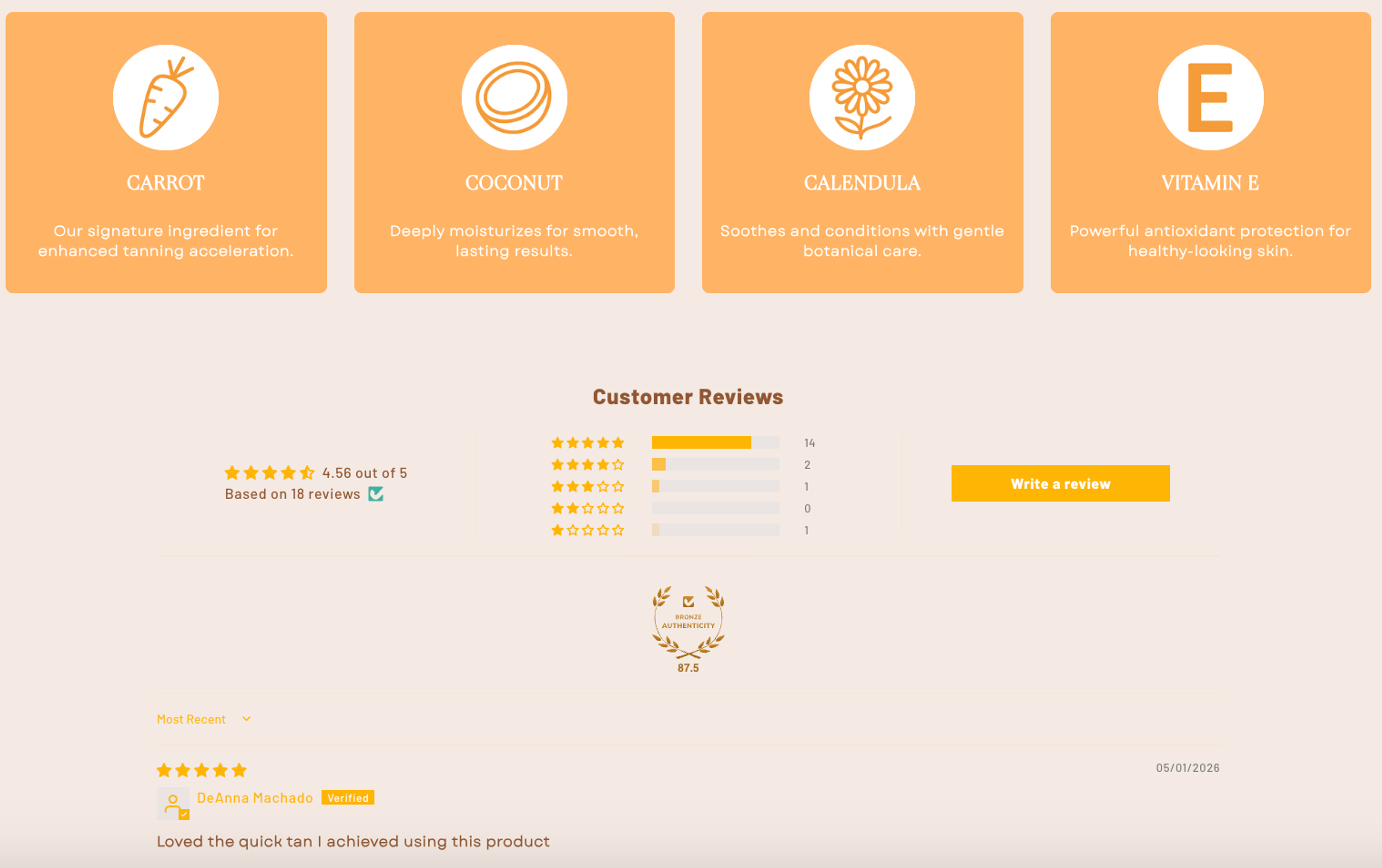
A "Silver Authenticity 94.4" verified badge in the reviews section tells skeptical first-time buyers the social proof is real.
As soon as you add a product to the cart, Carroten doesn't let the session end there. The cart page opens with a product recommendation section — "You May Also Like" — surfacing complementary SKUs at the highest-intent moment in the entire browsing journey. The visitor has already committed to buying. The cost of adding one more item feels small compared to the decision they've already made.
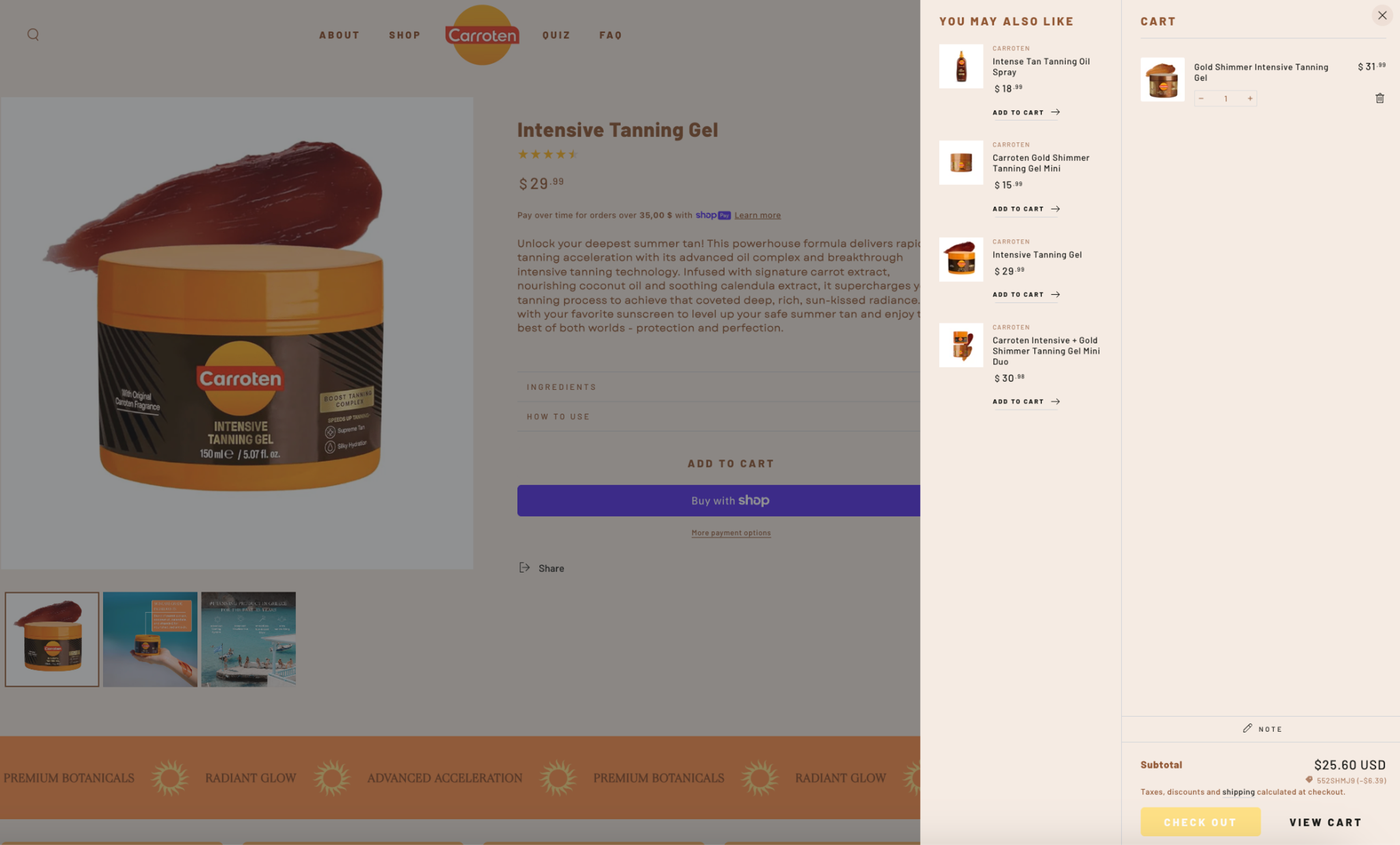
That's not an accident, it's loss aversion working in the brand's favor. The incremental average order value from a well-placed cart recommendation costs nothing to maintain and compounds across every transaction.
The visitor has already committed to buying. The cost of adding one more item feels small compared to the decision they've already made.
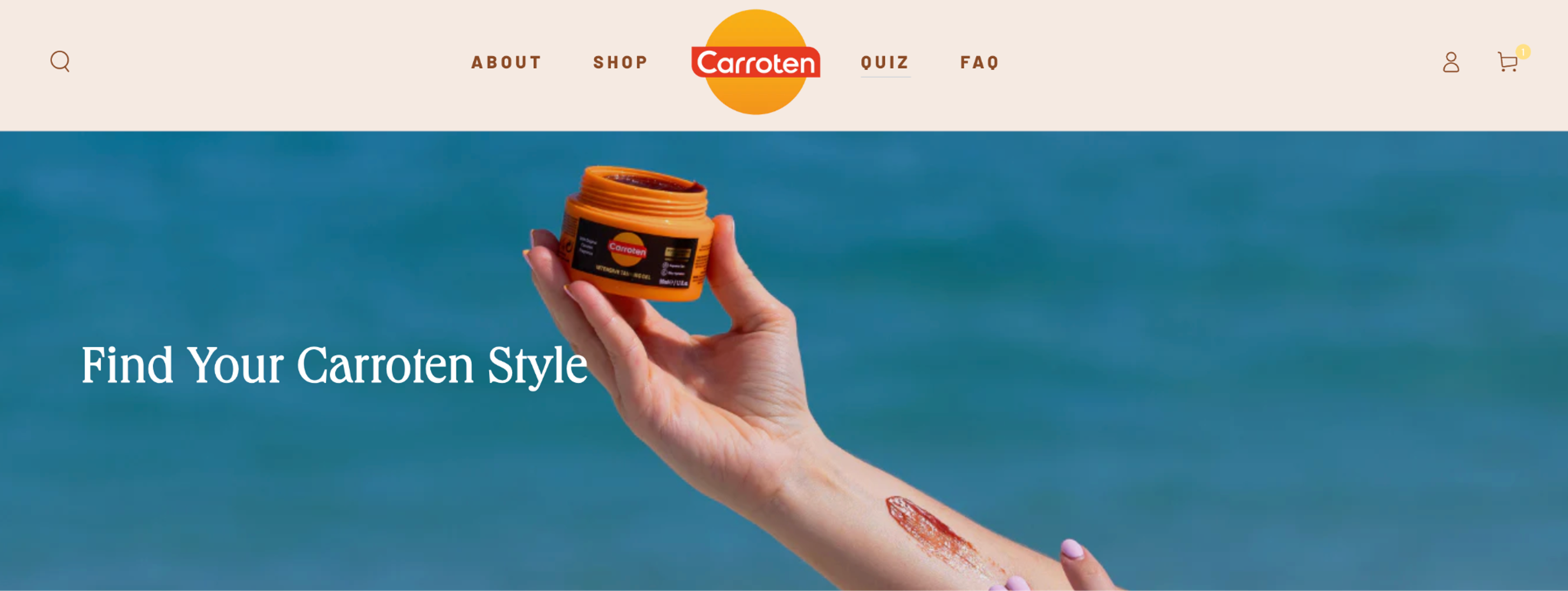
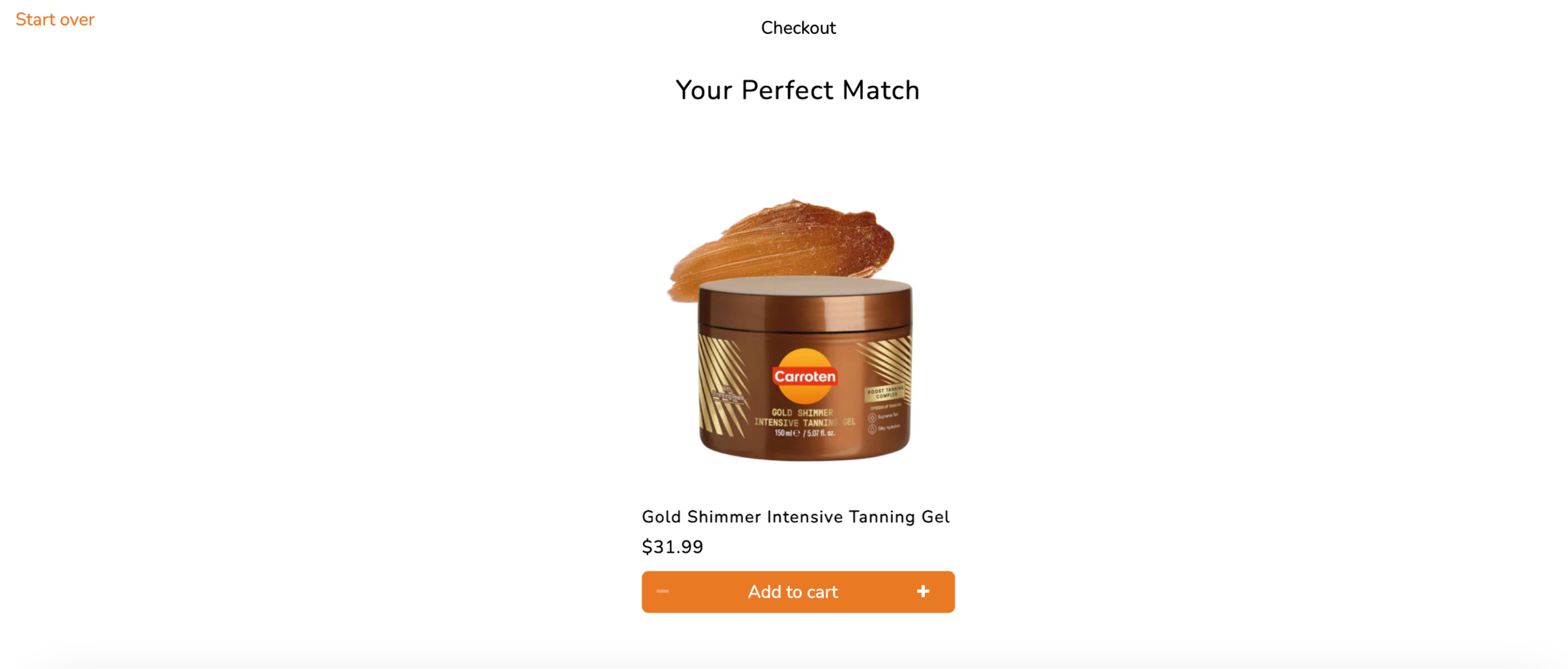
The product quiz deserves equal attention. First-time visitors encounter it in the main menu, hard to miss, deliberately placed before they've had a chance to get lost in the product range.
A few questions about tanning goals, experience level, and preferences, and the quiz surfaces the single product best suited to that specific person.
Takeaway: For a consumer arriving from TikTok already half-convinced, the site's job is to confirm the decision, not manufacture it. The ingredient cards, the benefit headlines, the verified reviews all answer the same question: why does this cost three times more than everything next to it? By the time a visitor reaches the cart button, the site has already answered that. The price doesn't need defending at checkout because the page already did it.
The Carroten marketing strategy comes down to one insight: a brand with real heritage doesn't need to manufacture credibility, it needs infrastructure ready to catch the demand when a platform creates it.
The TikTok-to-Amazon flywheel is the engine. Viral content drives branded search, branded search improves organic ranking, better ranking reduces ad spend, and lower costs fund more creator partnerships, which generate more viral content. Carroten and SAYN understood this creator-led commerce loop before most brands had mapped it.
The Target launch turned the flywheel into a legitimacy machine. A consumer who finds the product on TikTok, buys it on Amazon, and then sees it at Target doesn't just trust the product, they trust it the way they trust established brands. That shift happened in less than a year.
The focused product line kept the message clean. One hero product, one result, communicated in the same language customers were already using to describe it. When the brand's marketing and its customers' word-of-mouth say exactly the same thing, the brand wins.

How Tarte turns founder storytelling, creator trips, TikTok virality, and smart on-site funnels into a repeatable beauty marketing growth engine.
A deep dive into WavyTalk’s marketing strategy, from TikTok Shop and creator-led launches to UGC, cultural moments, and high-converting DTC tactics.
Knix didn’t just launch a product, it created a category. By turning taboo topics into honest conversations and backing it with real performance, it built trust and scaled to a $170M brand.