


Black Friday Marketing Strategy: 30 Ideas for 2026
In this article, we'll share 30 actionable Black Friday marketing ideas for ecommerce businesses to make 2026 your most successful yet.
15 scarcity marketing examples for online stores, plus everyday examples of scarcity and how to use it honestly.
In short
Scarcity means something is limited in time, quantity or access, so people value it more and decide faster. This guide covers everyday examples of scarcity and 15 ecommerce examples (sales that end, limited drops, early access, seasonal products), what regulators say about fake scarcity, and how to test whether it works for your store.
Scarcity means something is limited in time, quantity or access, so people value it more and decide faster.
Everyday examples: concert tickets, seasonal fruit, the last seat on a flight. In marketing: a sale that ends at midnight, a limited-edition drop, early access for subscribers.
It only works, and is only legal, when the limit is real.
In economics, scarcity is the gap between limited resources and unlimited wants. There is not enough time, money, land or water for everything people want, so they have to choose.
In psychology, scarcity is a bias: we place a higher value on things that are hard to get. The European Commission's consumer-law guidance describes the "scarcity bias" in the same way, as the tendency to value scarce things more.
The classic experiment is the "cookie jar" study by Worchel, Lee and Adewole (1975). People rated identical cookies as more desirable when they came from a jar with only two cookies than from a jar with ten.
Scarcity means there is little of something. Urgency means there is little time to get it. The two often appear together: "only 50 made, and the sale ends Sunday."
| Scarcity | Urgency | |
|---|---|---|
| What's limited | Quantity or access | Time |
| Typical message | "Only 3 left", "Limited edition", "Members only" | "Ends at midnight", "Last day to order for Christmas" |
| The shopper thinks | "It may be gone." | "I may run out of time." |
| Honest when | The stock or the access limit is real | The deadline is real and the offer ends |
This page is about scarcity examples. For tips on creating urgency, see our guide to creating a sense of urgency.
You meet scarcity every day, long before any marketer gets involved:
Absolute scarcity means the supply is fixed and can't grow, whatever the price: time, land in a city center or an original painting.
Relative scarcity means something is limited compared with how many people want it, or in one place and time, while more could be made or found elsewhere: concert tickets, a sneaker drop or water in a drought area.
Most scarcity in marketing is relative. A store decides how many units to make, how long a sale runs and who gets access. That is exactly why it has to be honest about those limits.
| Type | What is limited | Example | When it's honest |
|---|---|---|---|
| Time | How long an offer runs | "20% off ends Sunday at midnight" | The deal really ends at that time and doesn't restart |
| Quantity | How many units exist | "Limited edition, 500 made" | You really make that many, and the stock figure comes from your inventory |
| Access | Who can buy, or who can buy first | "Subscribers shop 24 hours early" | The early window or the members' price is real and not open to everyone |
| Seasonal & event | When a product or offer exists | "Easter collection, back next spring" | The product or offer really goes away after the season |
Each example: what it is, why it works and how to keep it honest.
"Our summer sale ends tonight at midnight." The deadline gives a hesitating shopper a reason to decide today instead of "later".
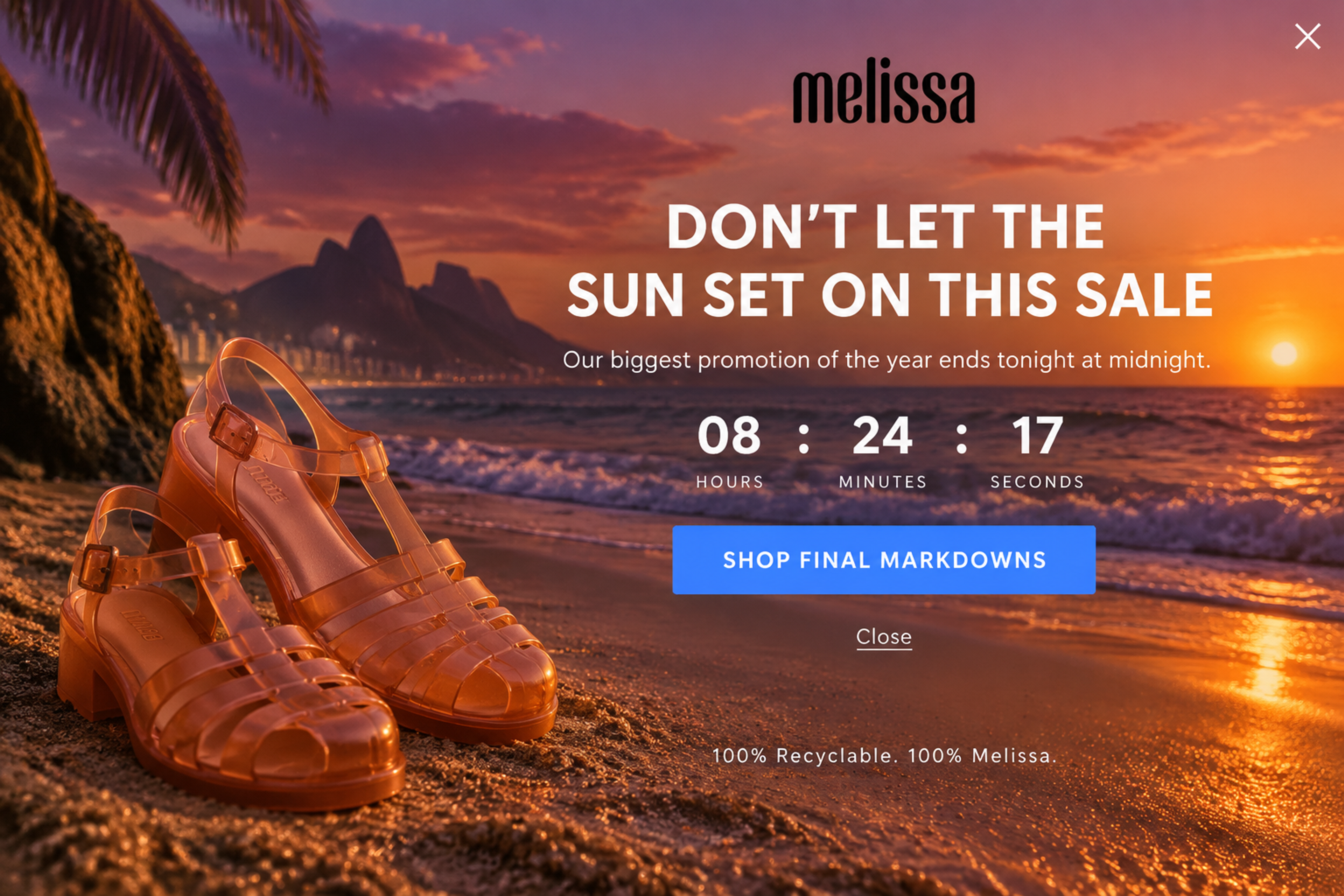
The Immersive Sunset, designed for Melissa: “Our biggest promotion of the year ends tonight at midnight”, with a live countdown to the end of the sale.
Keep it honest: when the clock hits zero, the prices go back up. More on short sales: what is a flash sale.
Black Friday, Cyber Monday and Super Bowl weekend have built-in deadlines. Shoppers expect the deals to end, so a countdown feels natural, not pushy.
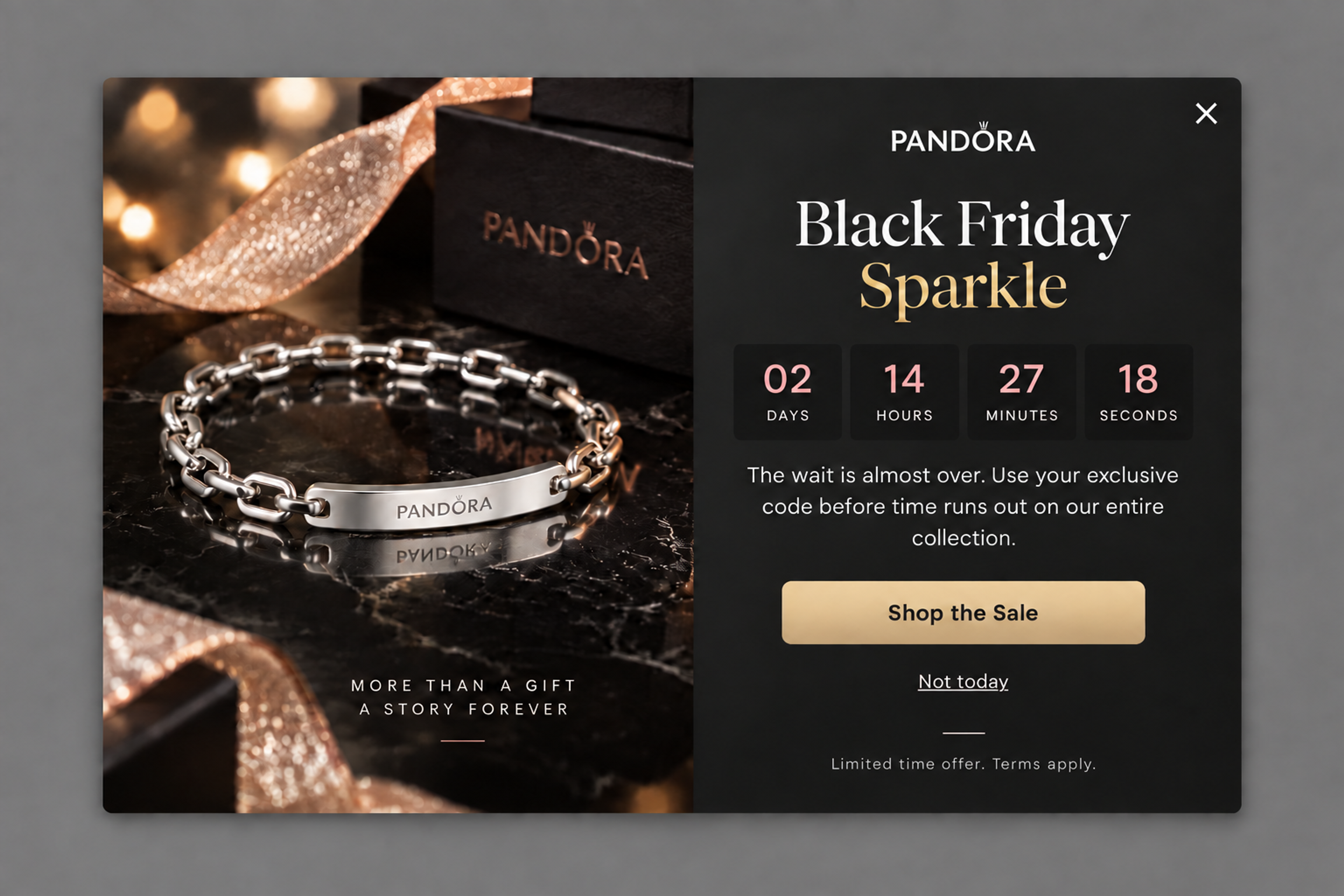
Champagne Midnight Gala, designed for Pandora: “Black Friday Sparkle” with a countdown and “Use your exclusive code before time runs out”.
For a full holiday plan, see our Black Friday marketing guide.
Keep it honest: don't run the "Black Friday" deal for three more weeks under a new name.
"Order by December 18 for delivery before Christmas." This is one of the most honest kinds of scarcity, because the limit is set by the carrier, not by the store.
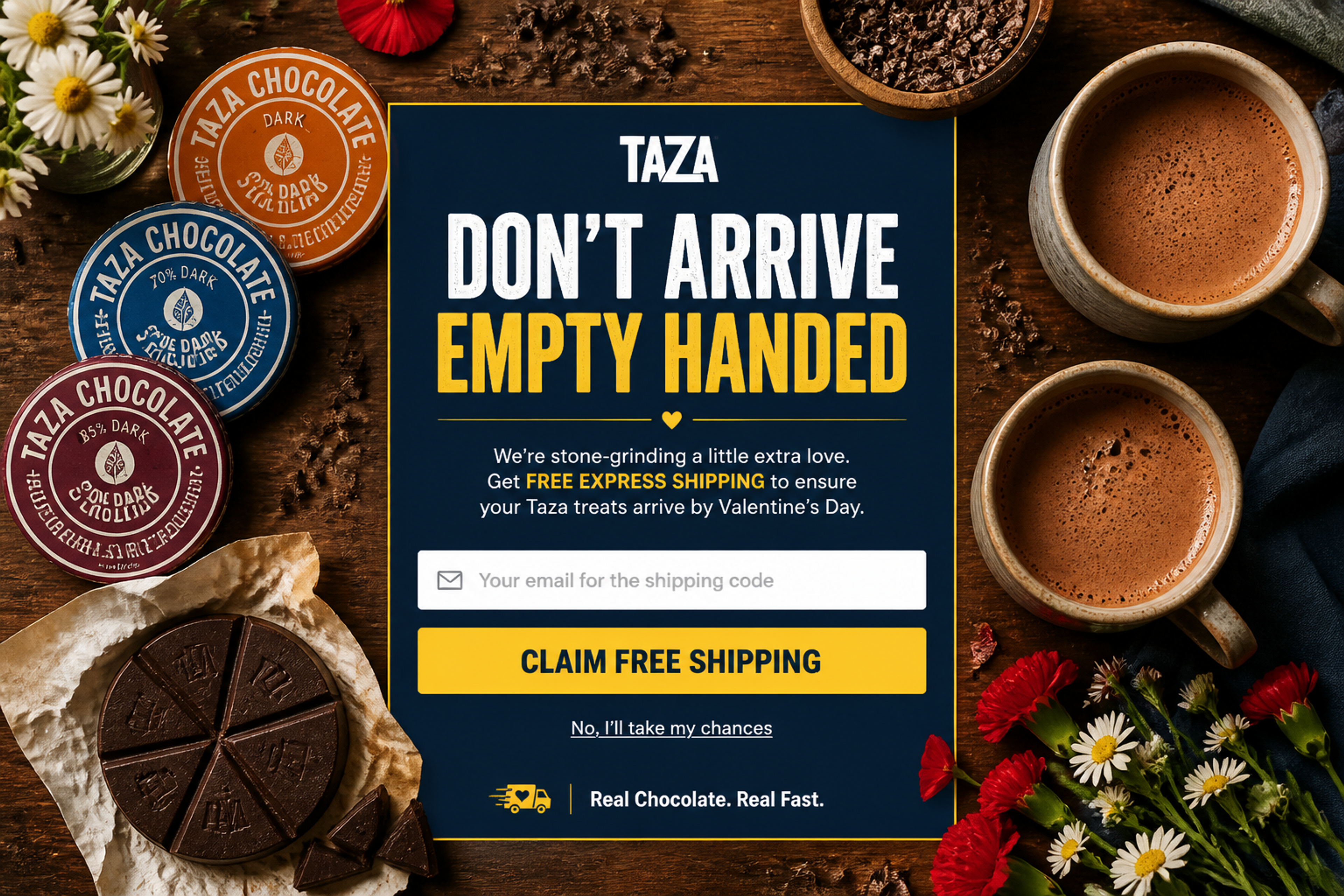
The Fullscreen Reveal, designed for Taza Chocolate: free express shipping so the order arrives by Valentine's Day. The delivery date is the deadline.
Keep it honest: use your carrier's real cutoff, and change the message once it has passed.
"Prices go up on March 1." When costs rise, telling customers in advance gives them a real reason to buy now, and it's a fairer way to raise prices than a silent change.
Keep it honest: only announce a price increase you'll actually make, on the date you said.
A lower price for the first buyers of a new product. Early buyers get rewarded, and you get early sales and an idea of demand.
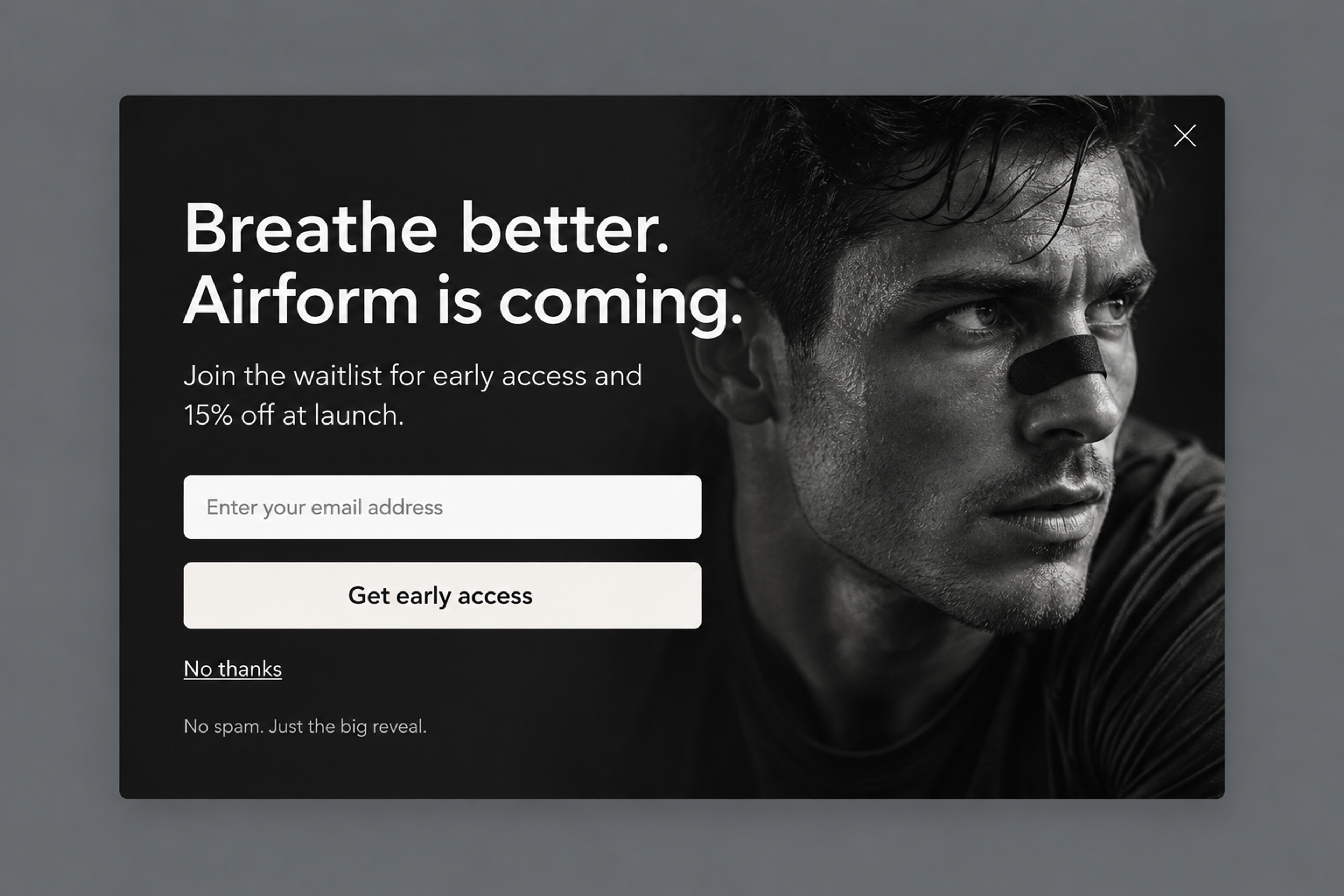
The VIP Waitlist, designed for Airform: “Join the waitlist for early access and 15% off at launch.” The first sign-ups get the launch price.
Keep it honest: say when the early-bird price ends, and end it then.
Amazon shows "Only 2 left in stock, order soon" on product pages when stock runs low. It answers a real question: if I wait, will it still be here?
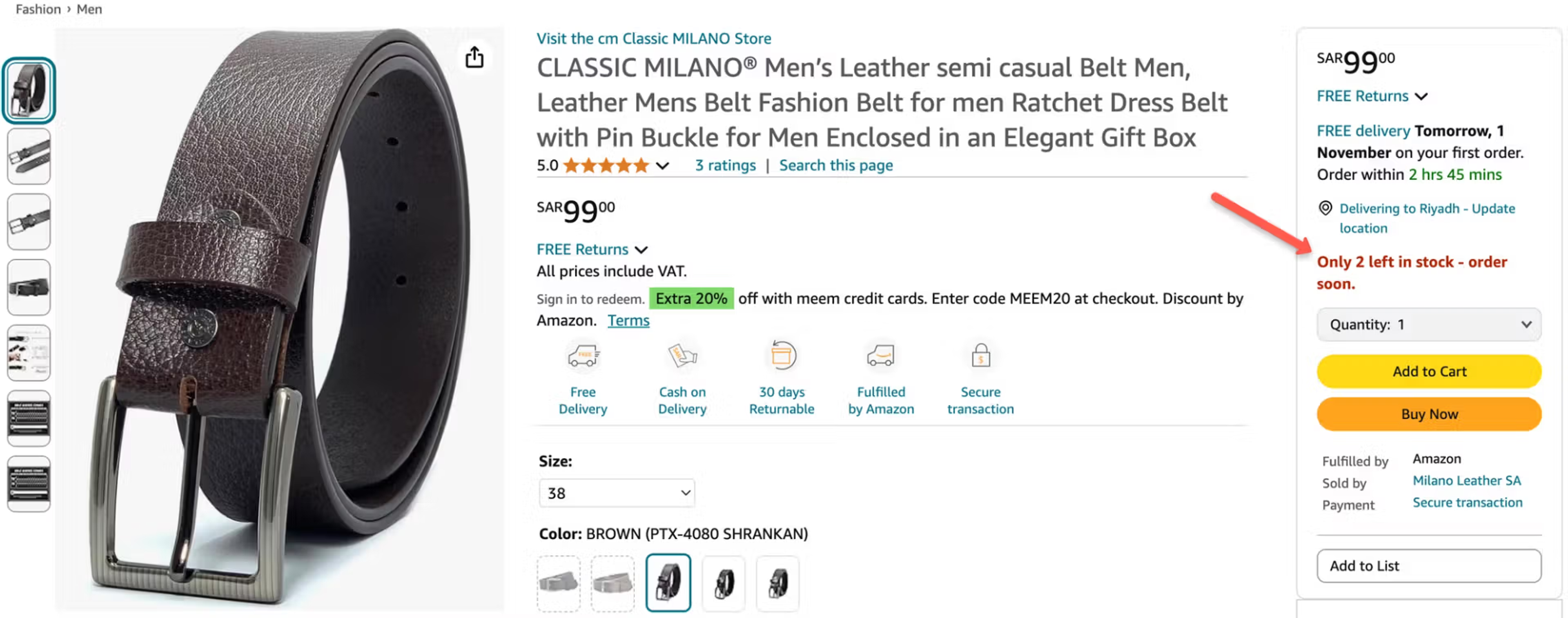
Keep it honest: the number must come from your store's real inventory. The FTC lists "Only 1 left in stock" claims on items with plenty of stock as a dark pattern (see the regulators section below).
A product made in a fixed run and released on a set date. Nike's SNKRS app releases limited sneakers this way, and Stanley announced its limited Barbie x Stanley collaboration in advance with a launch calendar, so fans knew exactly when to be ready.
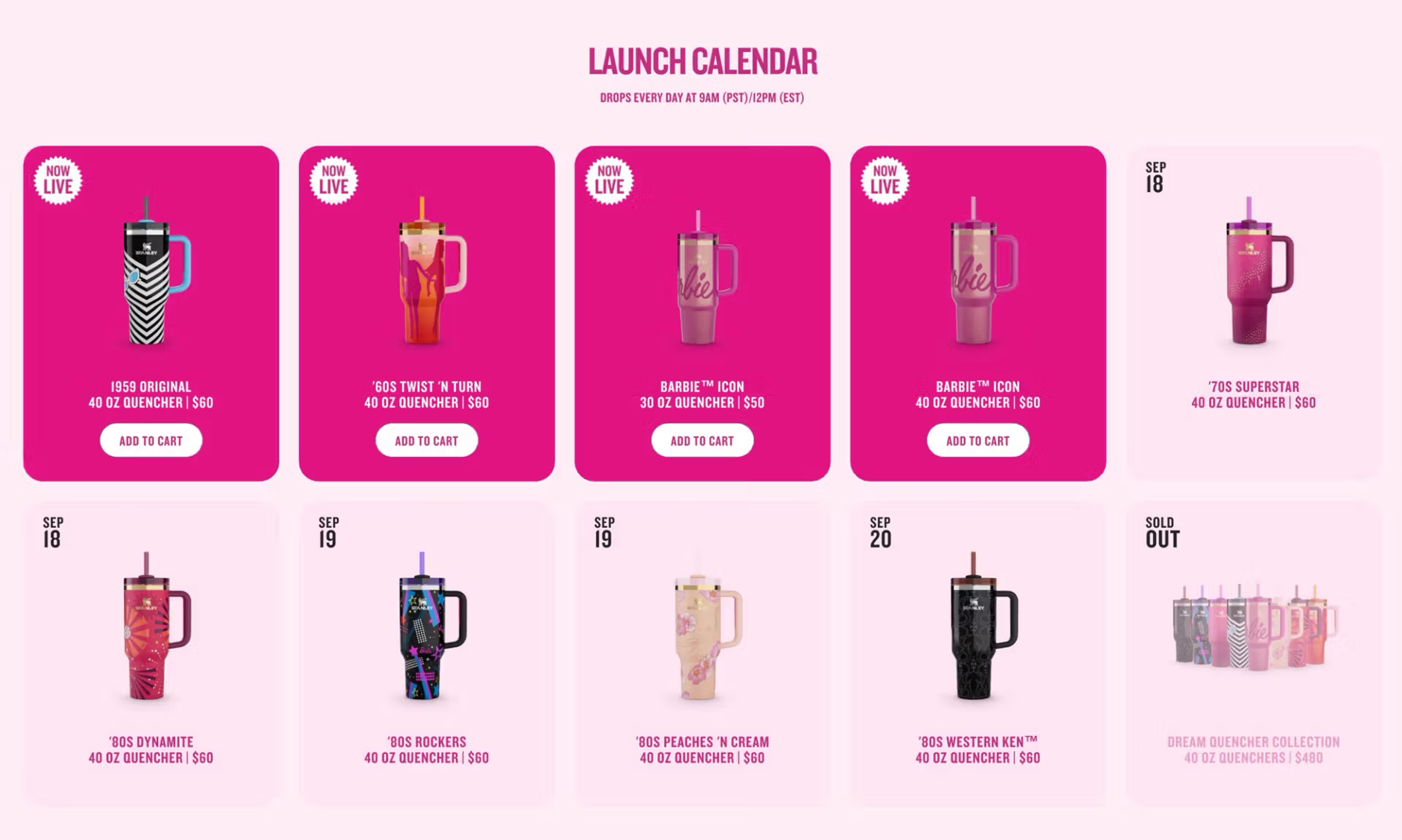
Keep it honest: if you say "won't be restocked", don't restock it a month later.
A seasonal set sold in a limited number. For Halloween, Waterdrop sold a "Wicked Hydration Set" bundle in limited quantities. A bundle also raises the order value, because the shopper buys several items at once.
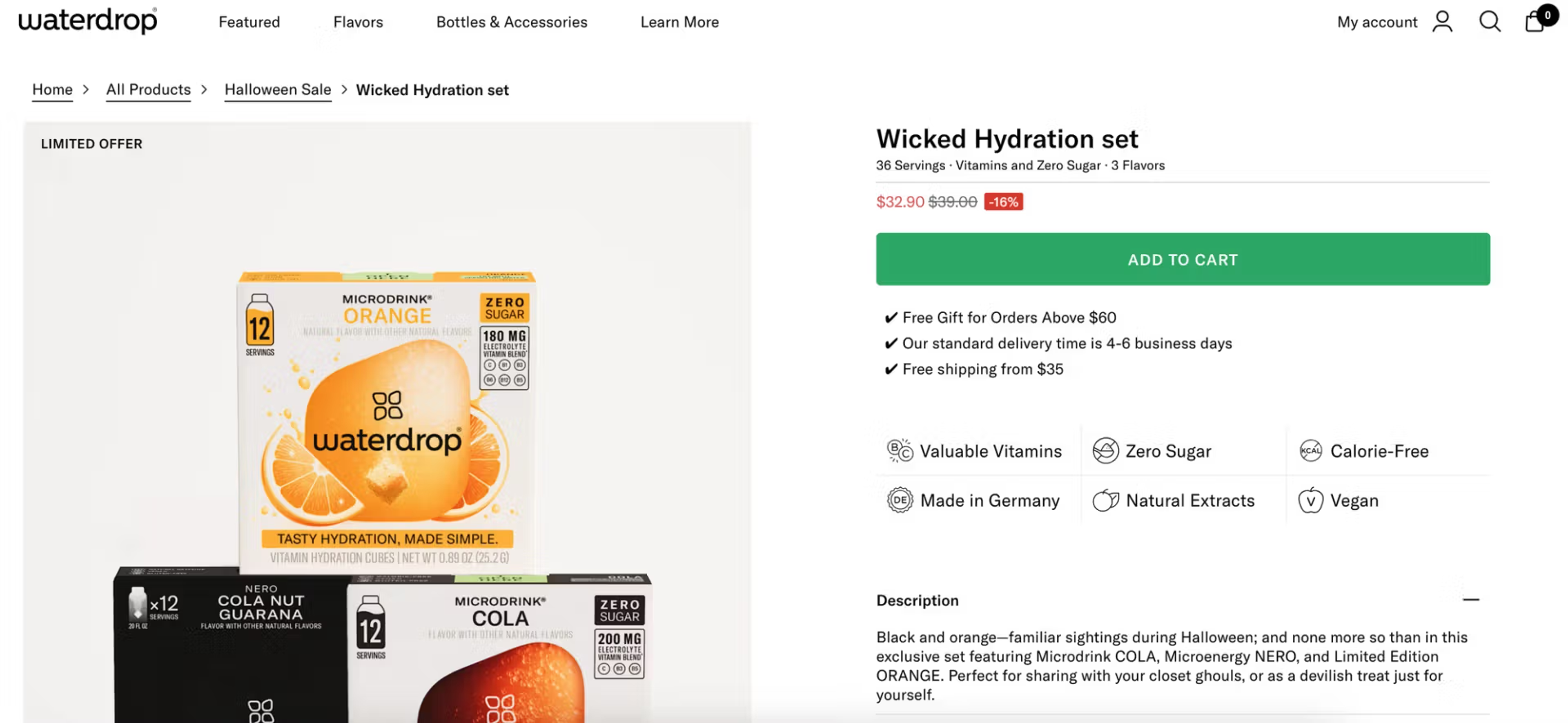
Keep it honest: state the real number of bundles, or say "while this batch lasts" only if the batch really is limited.
"Pre-order now: 300 units in the first shipment." Pre-orders let you sell before the product arrives, and a fixed first batch tells shoppers that later buyers will wait longer.
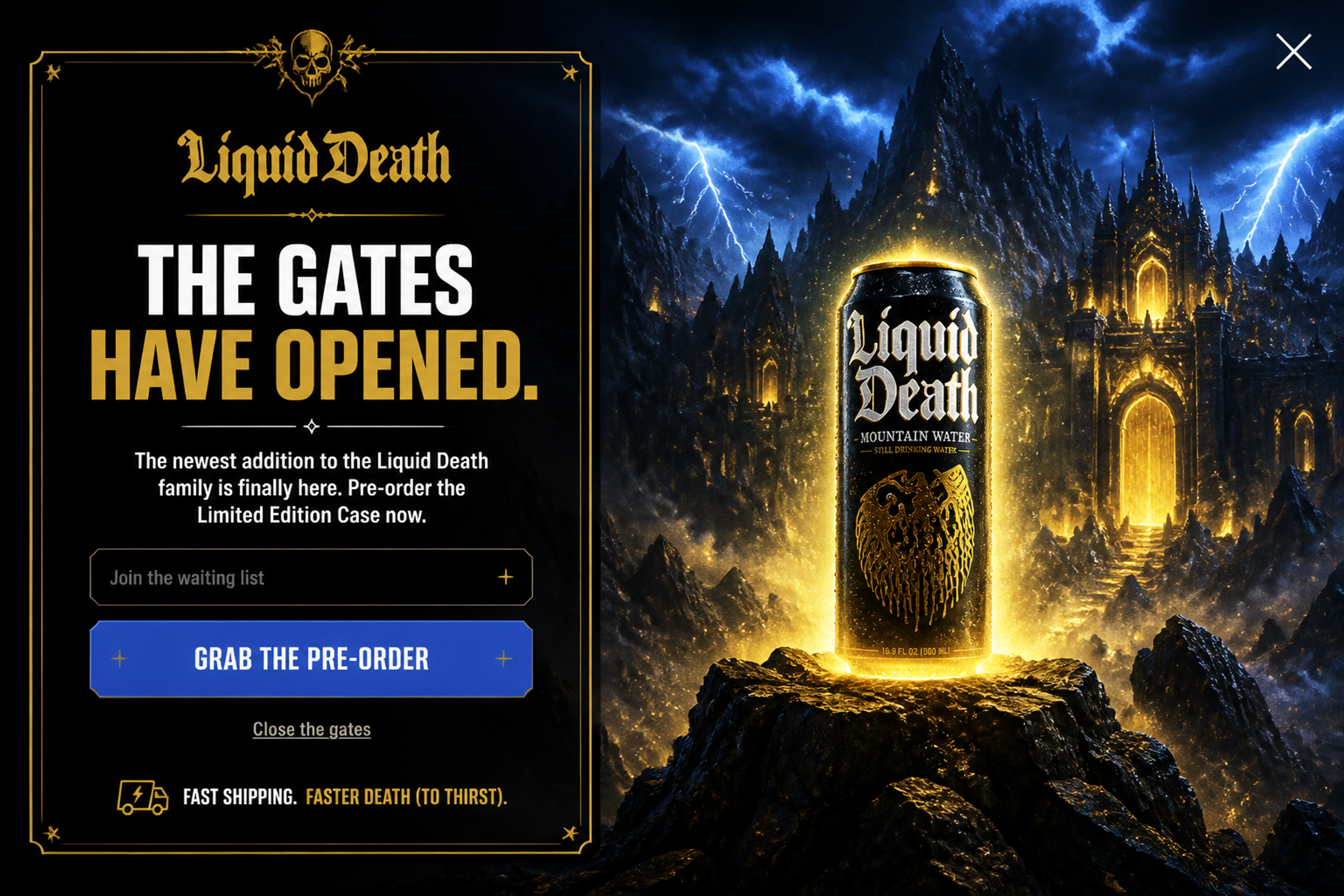
Hellscape Takeover, designed for Liquid Death: “Pre-order the Limited Edition Case now.” A limited case sold on pre-order makes the first batch the one to get.
Keep it honest: give a realistic shipping date and tell pre-order customers if it moves.
Your best customers shop a sale or a new collection before everyone else. Sephora's Beauty Insider program gives its top-tier Rouge members first access to big savings events.
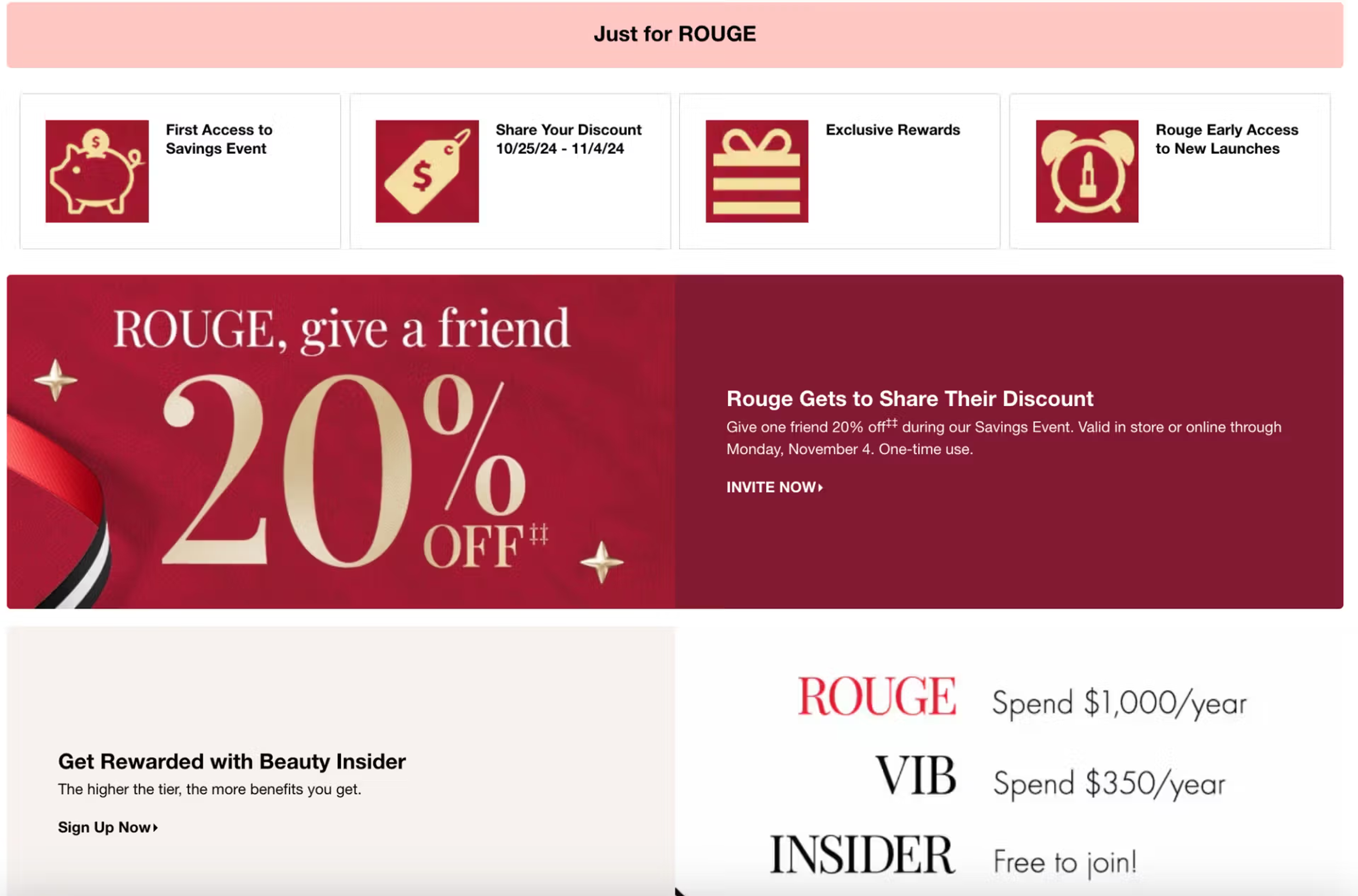
Keep it honest: the early window has to be real, not a public sale with a VIP label on it.
New products go to the email or SMS list first. It's a strong reason to sign up, because the subscriber gets something a visitor can't.
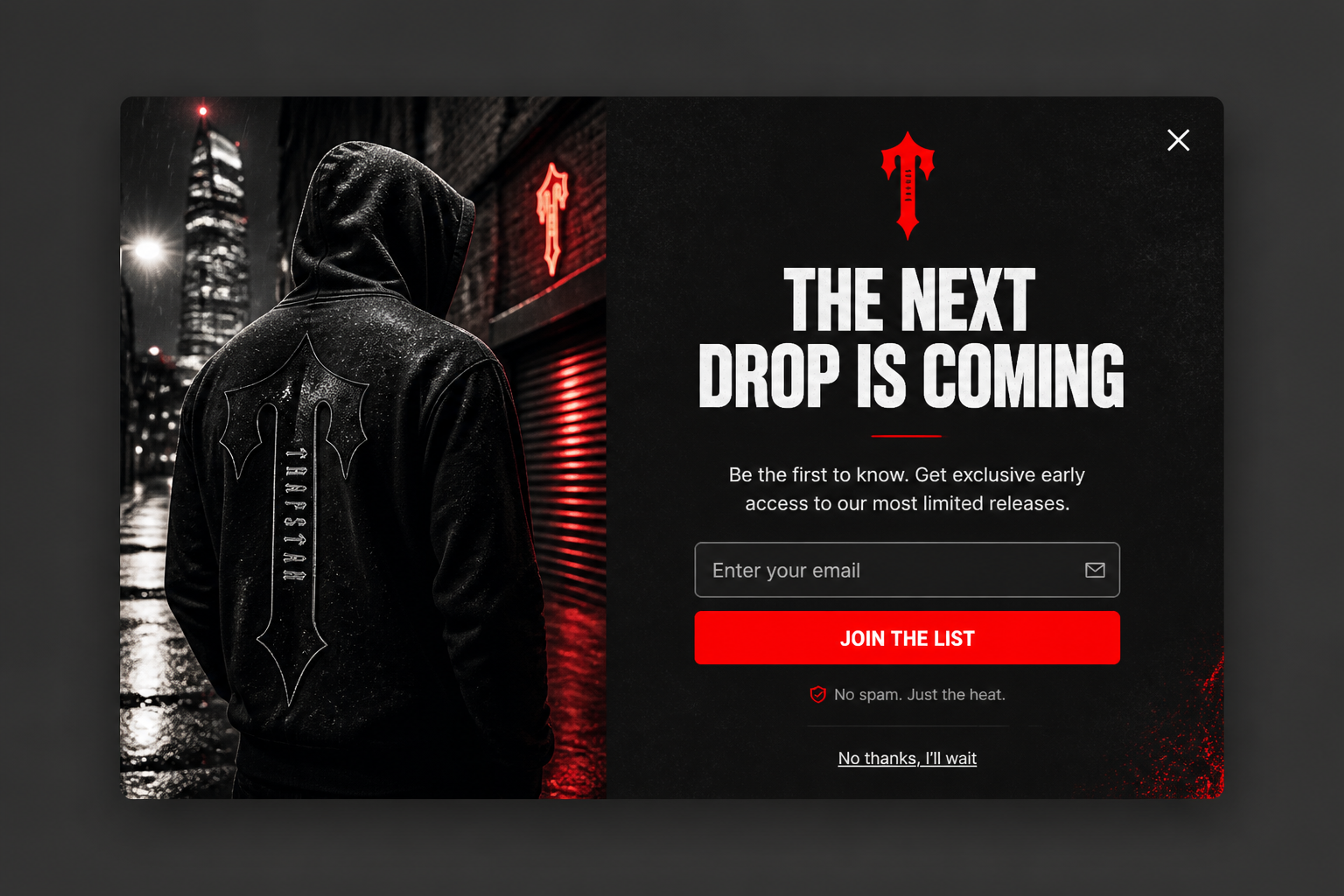
The Editorial Drop, designed for Trapstar: “The next drop is coming. Be the first to know.” Subscribers get early access to the most limited releases.
Keep it honest: send the early link before the public launch, as promised.
A lower price for logged-in members, subscribers or loyalty-program customers. It turns a discount into a reason to join, instead of a price cut for everyone.
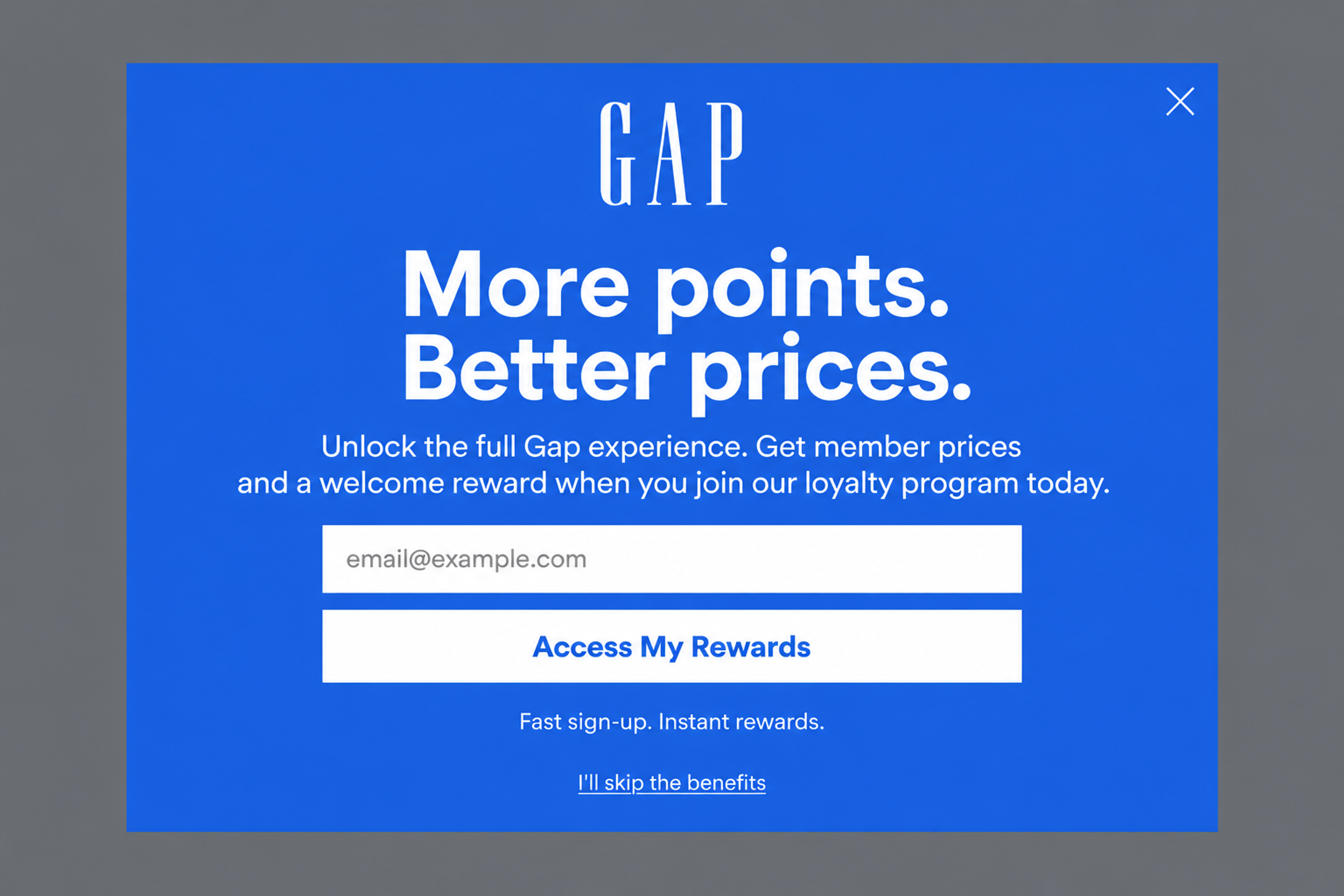
The Modern Minimalist, designed for Gap: “More points. Better prices.” Member prices and a welcome reward are the reason to join.
Keep it honest: don't show the "members' price" as a saving if everyone pays that price anyway.
Products that exist only for a season: Easter chocolate, a summer scent, a holiday flavor. Once the season ends, so does the product, which gives shoppers a natural reason to buy now.
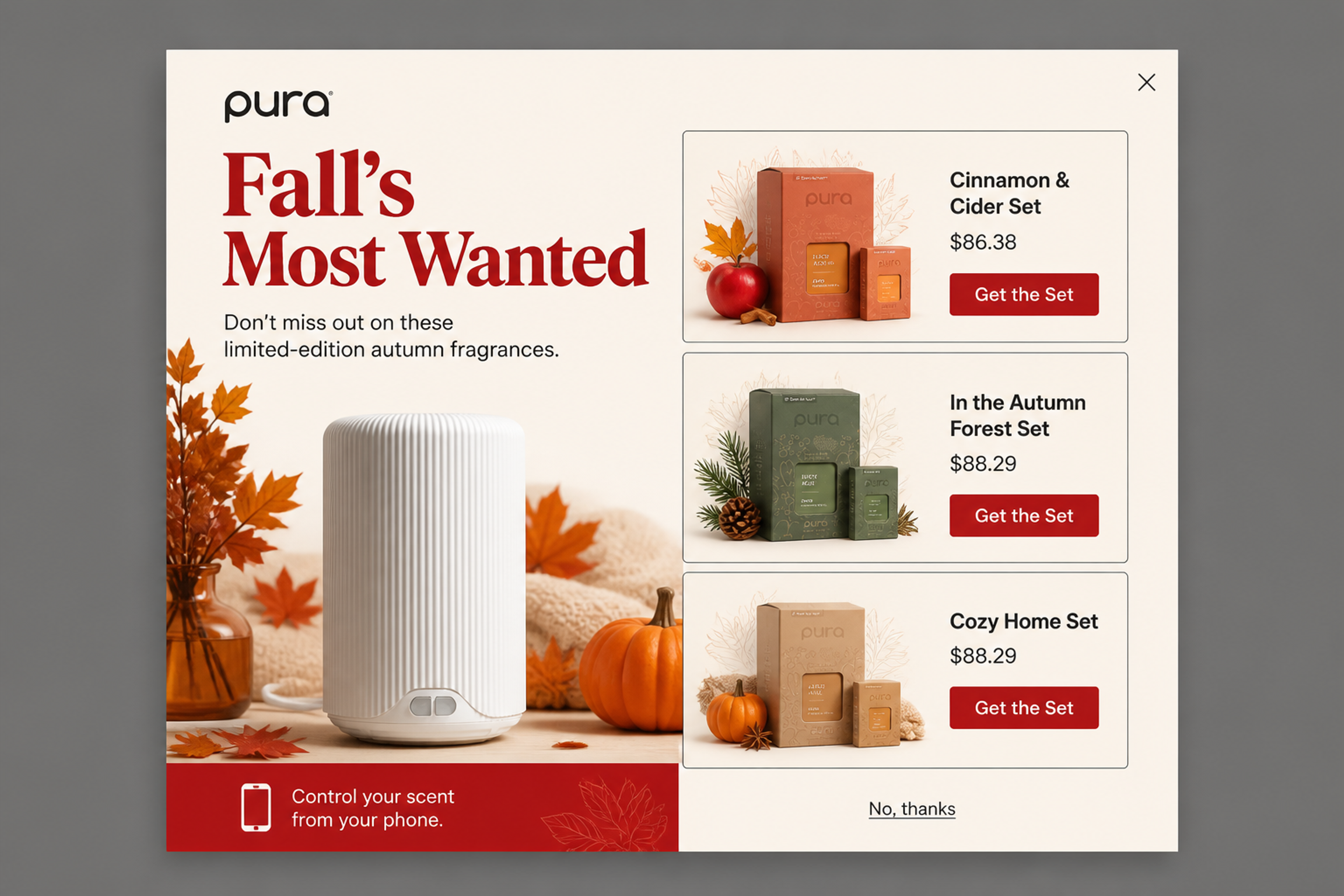
Bold Crimson Accents, designed for Pura: “Fall's most wanted”, limited-edition autumn fragrances that are only around for the season.
Keep it honest: say "back next spring" only if it's coming back, and "gone for good" only if it isn't.
"Free gift with every order over $50 this weekend." The gift adds value without cutting your prices, and the end date gives the shopper a reason to order now.
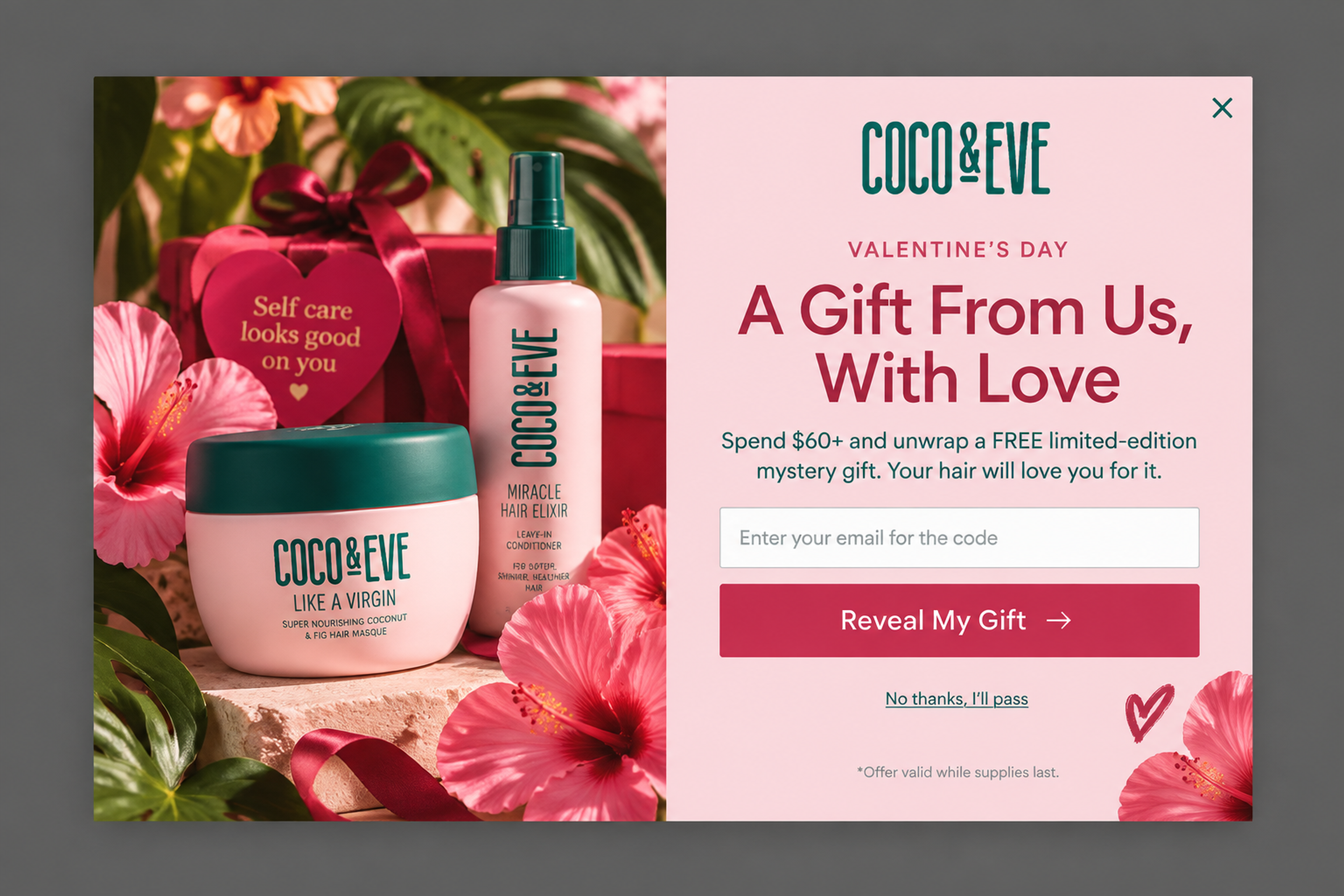
The Romantic Ritual, designed for Coco & Eve: a free limited-edition mystery gift with orders over $60 during the Valentine's promotion.
Keep it honest: if the gifts are limited too, say so ("first 200 orders"), and stop the offer when they run out.
When a popular product sells out, collect emails for a back-in-stock alert. The sold-out label is the scarcity, and the waitlist turns it into a list of people who already want to buy.
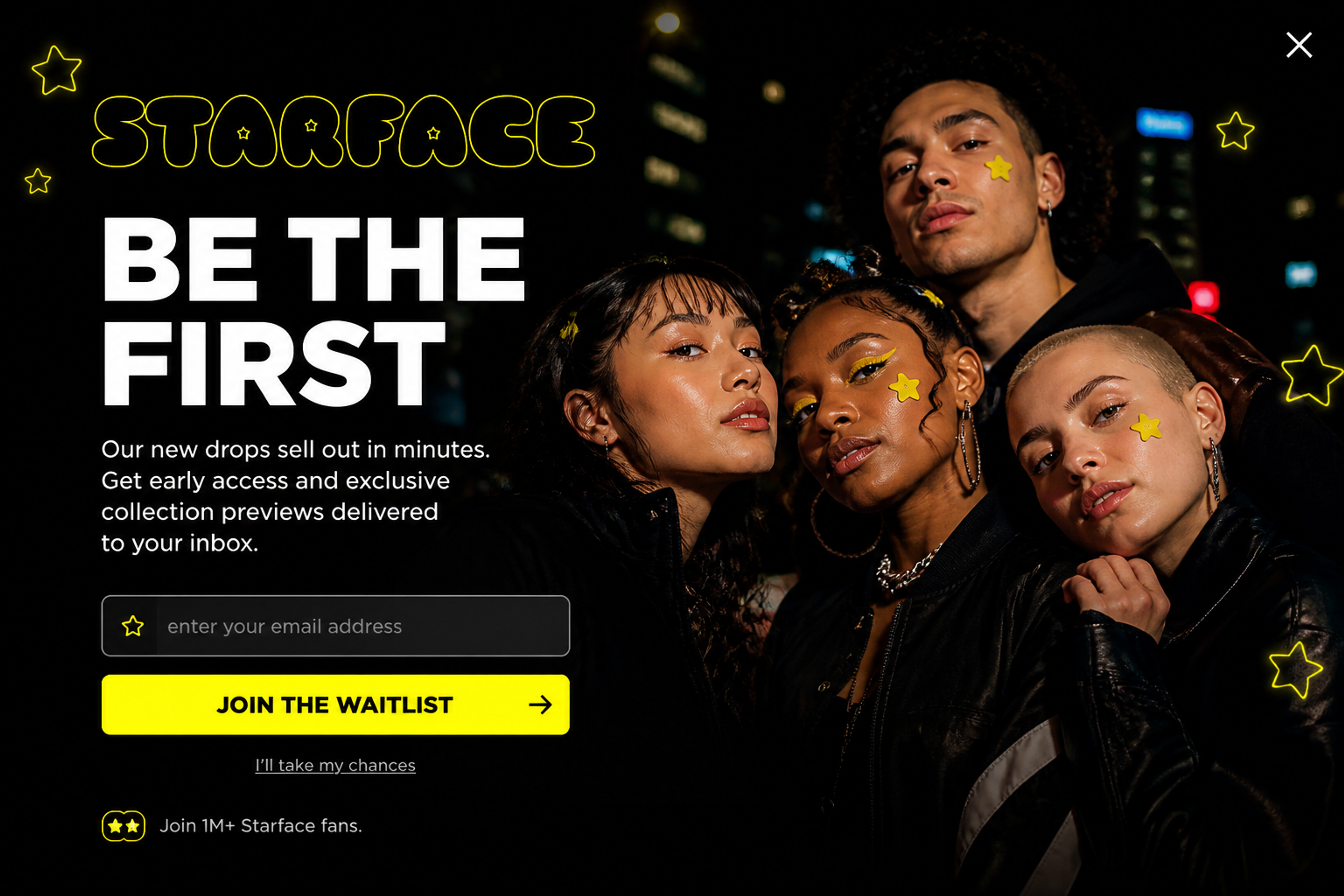
The Editorial Reveal, designed for Starface: “Our new drops sell out in minutes”, with a “Join the waitlist” button for early access to the next one.
Keep it honest: only show "sold out" when the product really is, and email the list when it returns.
For more examples of time-limited deals, see limited-time offers, and for how shoppers judge whether a deal is worth it, customer perceived value.
These popups come from the OptiMonk Popup Library. The OptiMonk agent designed each one for a real store's brand; they are concepts, not the brands' own campaigns. Open any of them to build your own version.
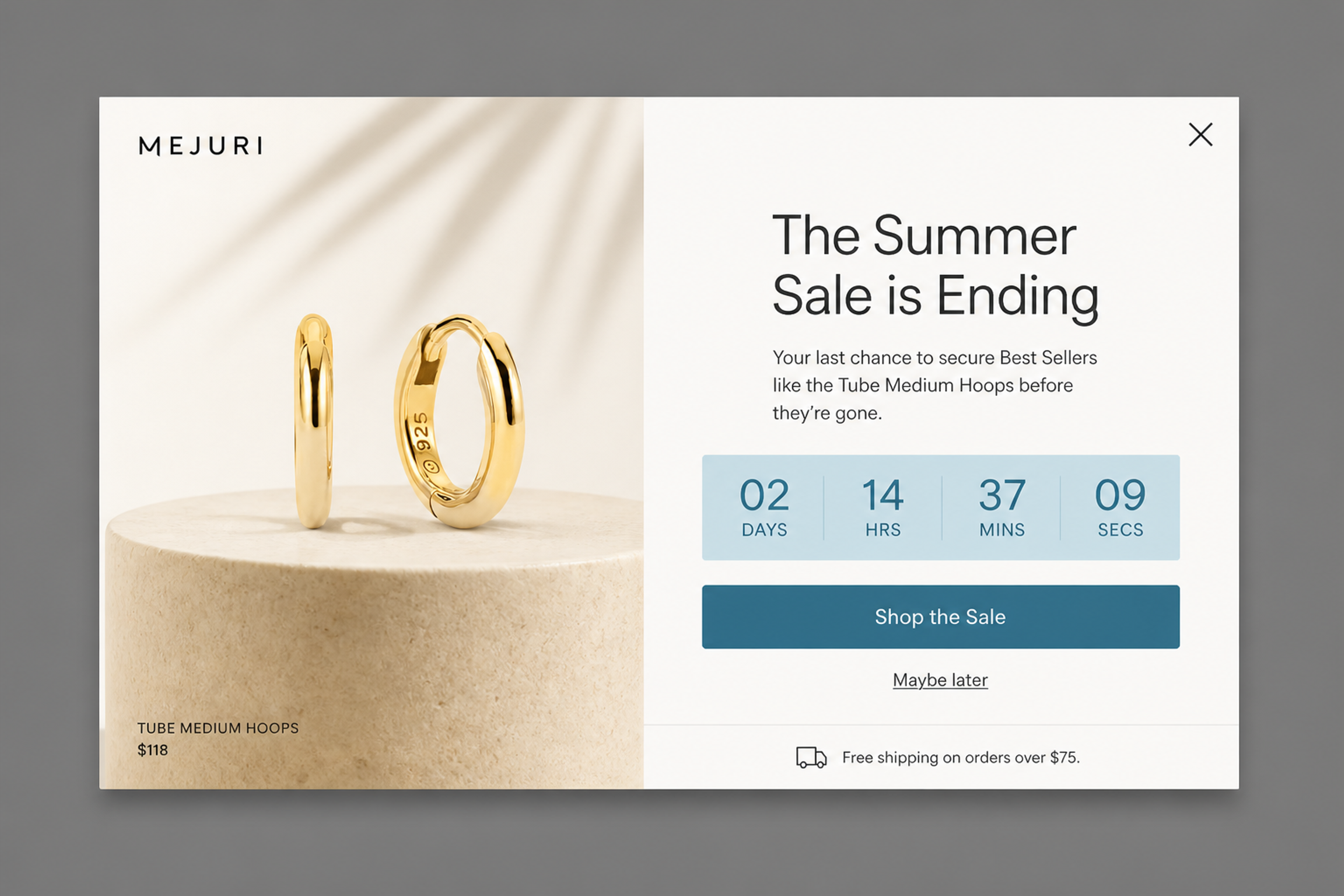
"The Summer Sale is Ending", a countdown and one best seller. No form, just a "Shop the Sale" button, because the goal is the sale.
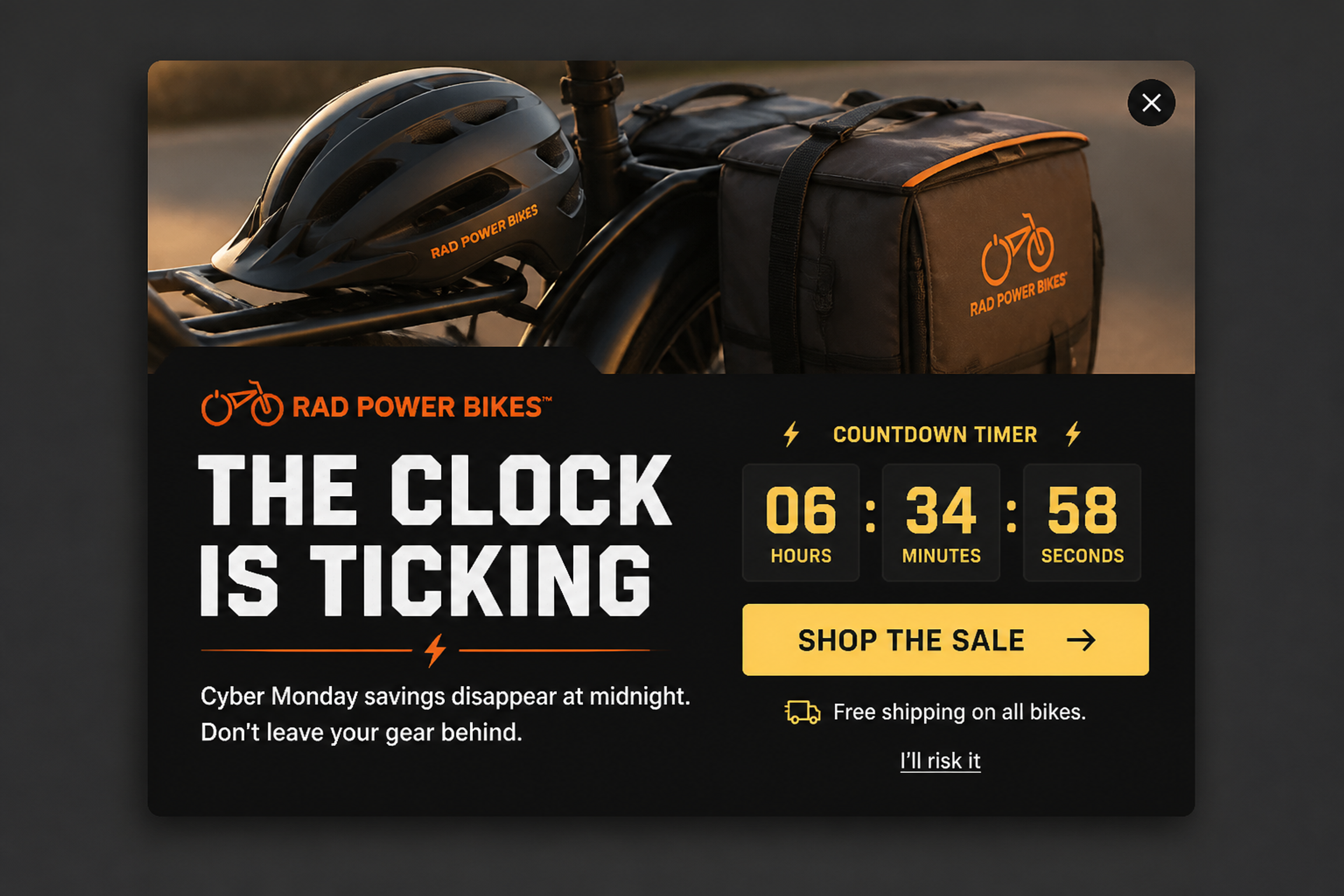
Cyber Monday savings end at midnight. A real event deadline and a direct "Shop the Sale" button.
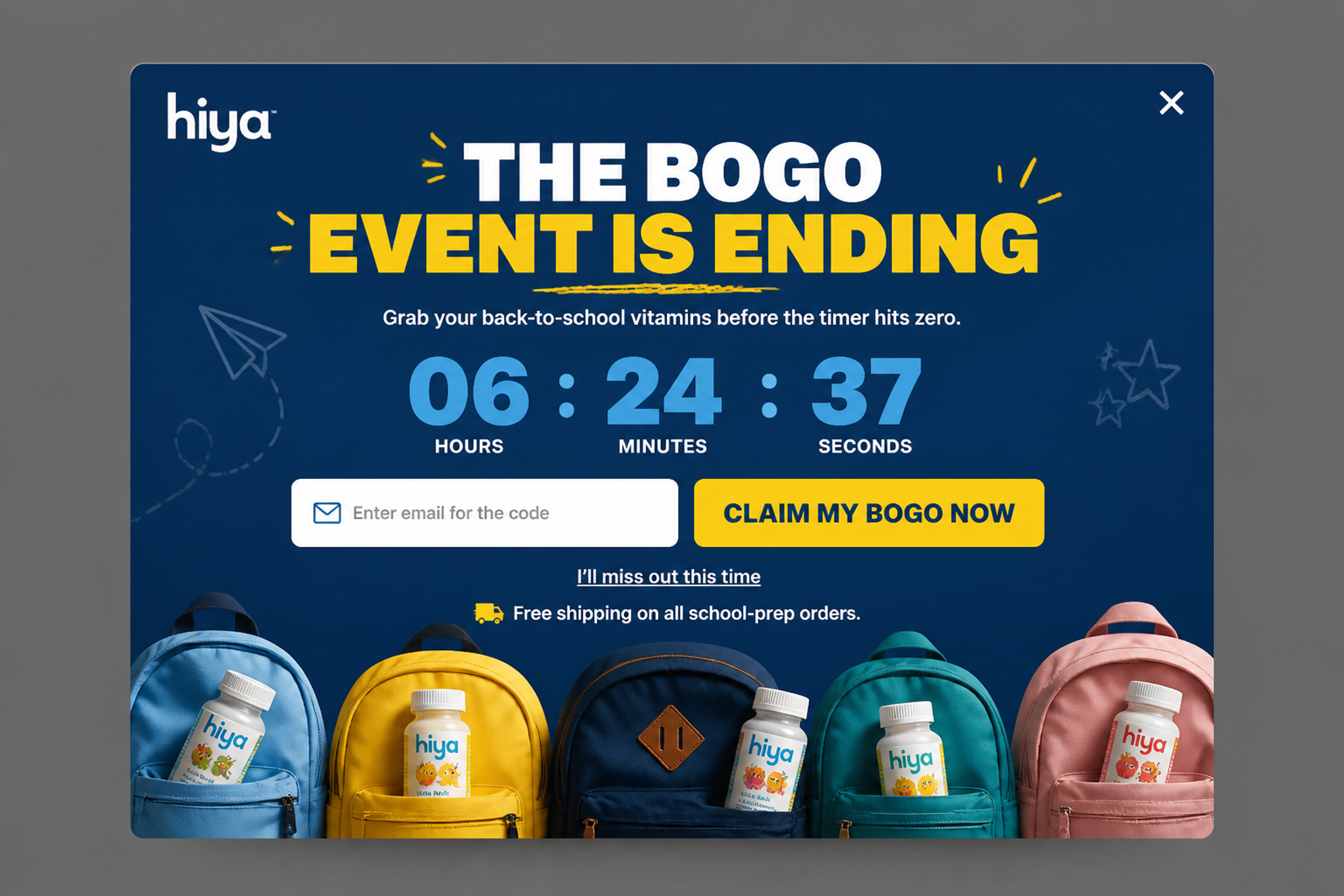
A buy-one-get-one offer with a timer; the email field delivers the code, so every redemption is also a new subscriber.
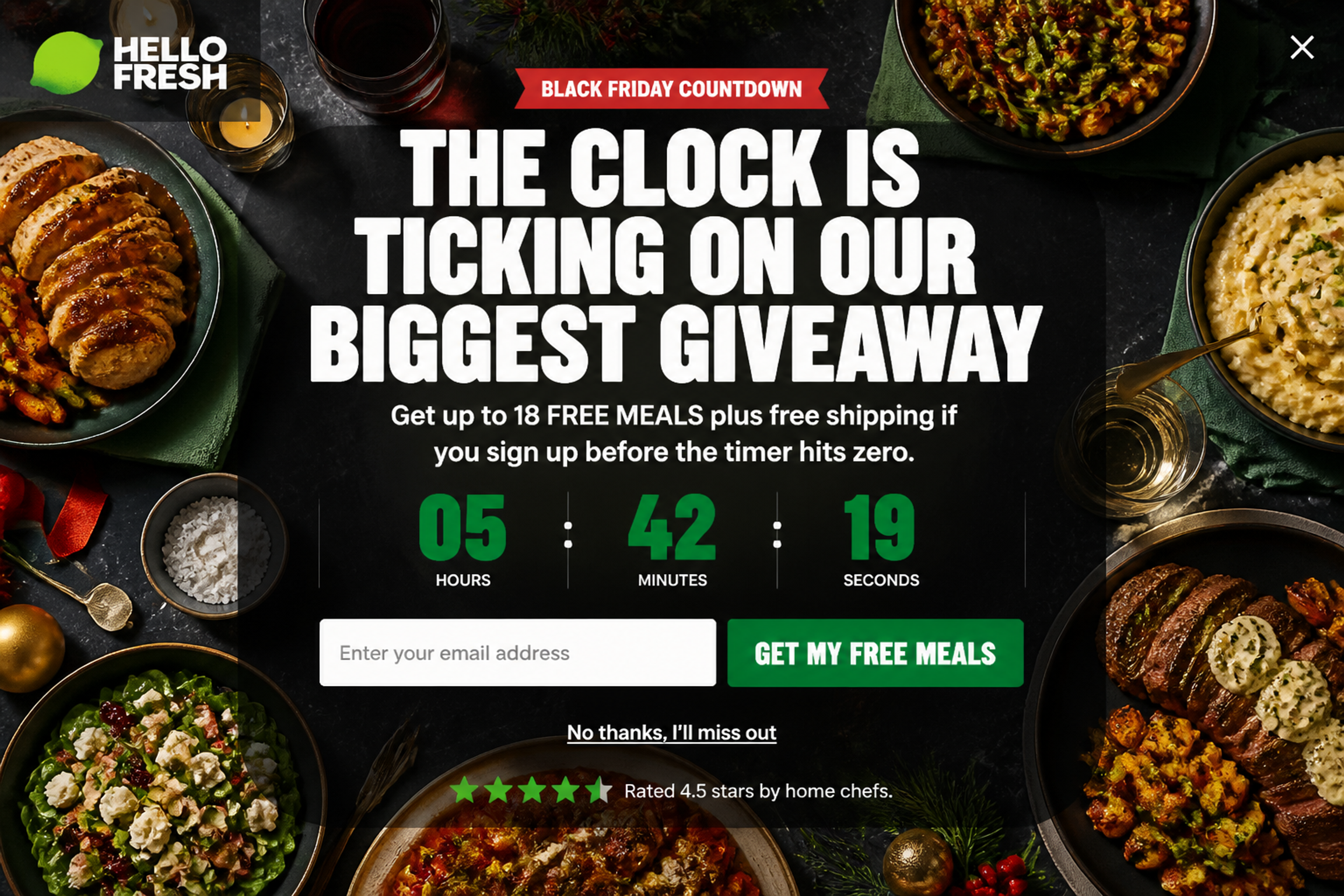
Free meals plus free shipping if you sign up before the timer hits zero. A big offer with a short window suits a sale event.
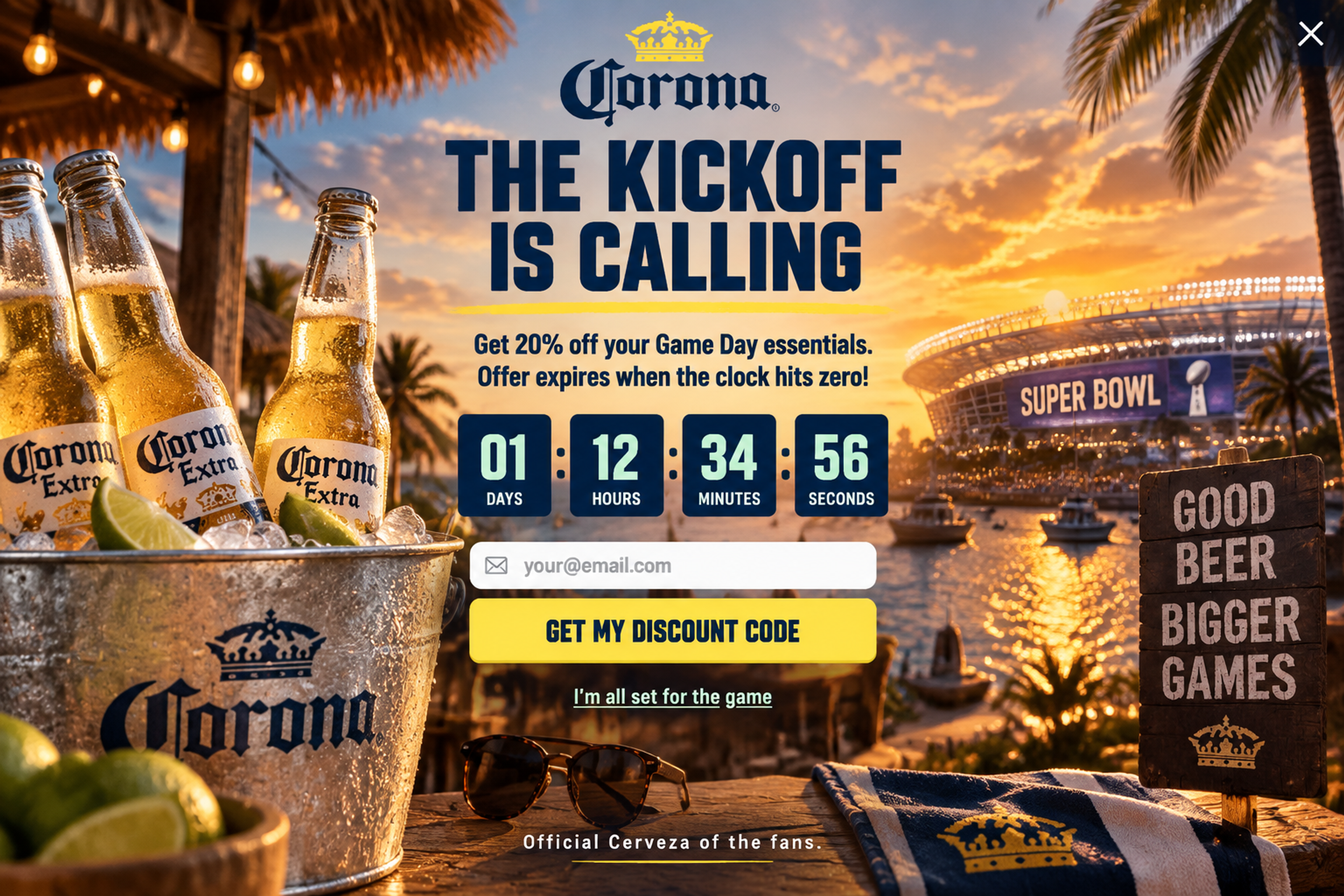
20% off game-day essentials until the clock hits zero. The event sets the deadline, so the timer needs no explanation.
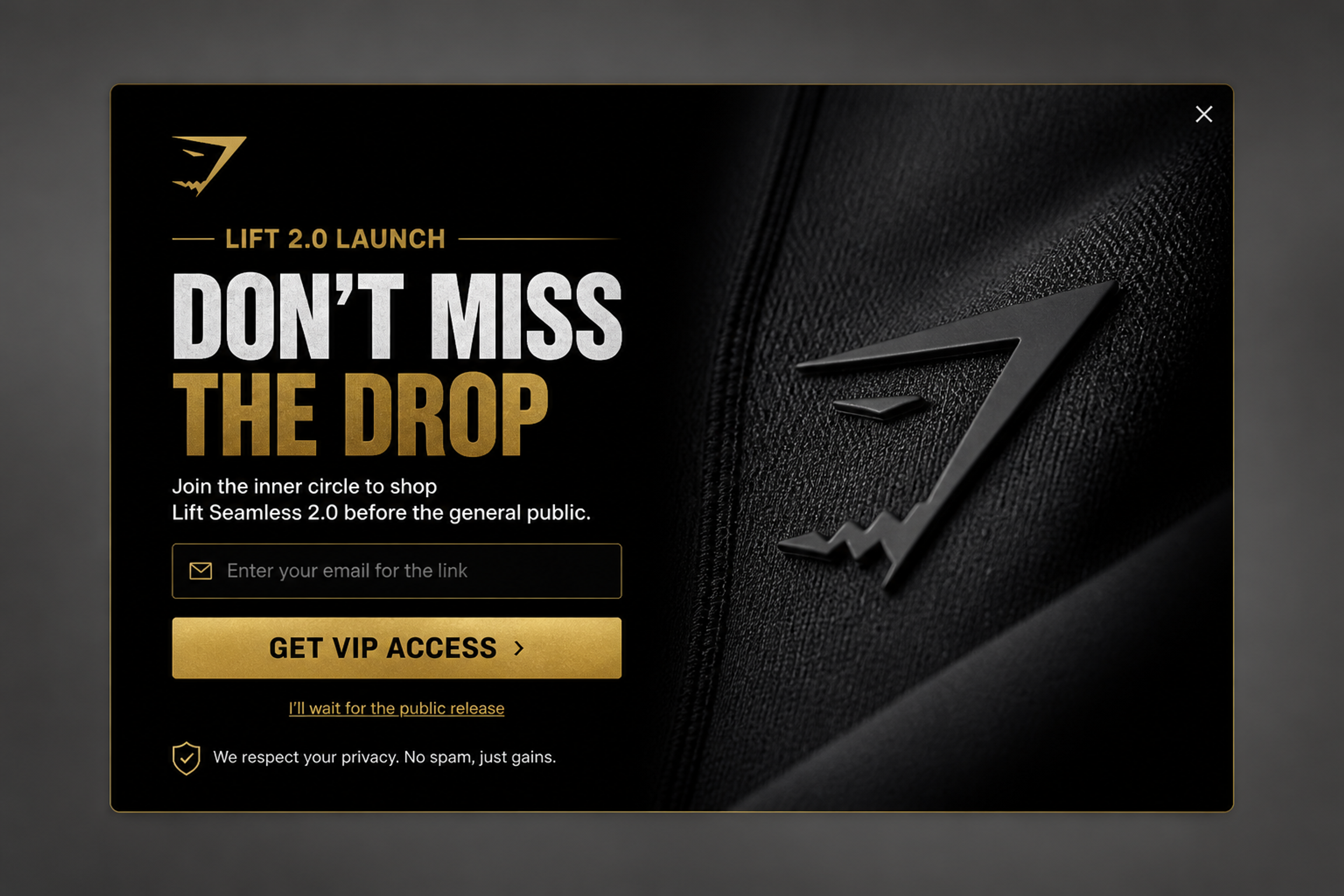
"Don't miss the drop": join the list to shop the new collection before the public. Access scarcity without a discount protects your margin.
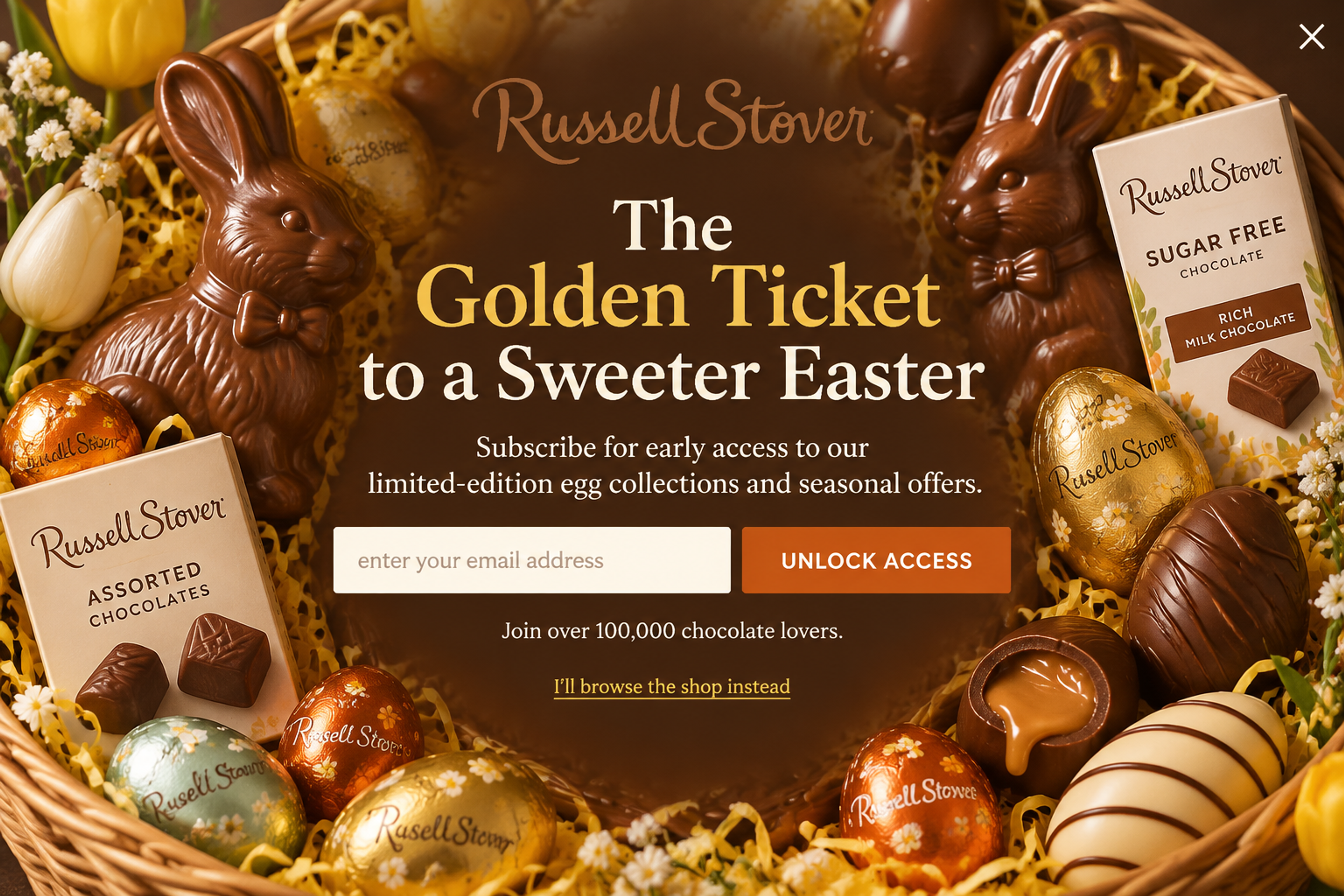
Early access to limited-edition Easter eggs for subscribers: seasonal and access scarcity in one signup.
More timer ideas: countdown timer popup examples.
Regulators in the US and the EU name fake timers and fake "low stock" messages directly. This is a summary of official sources, not legal advice.
United States (FTC). The FTC's 2022 staff report Bringing Dark Patterns to Light groups these practices under "design elements that induce false beliefs". It mentions countdown timers on offers that are not actually time-limited, and claims that an item is almost sold out when there is plenty of supply. Its list of common dark patterns includes:
European Union (UCPD). The Unfair Commercial Practices Directive 2005/29/EC lists practices that are unfair in all circumstances. Point 7 of Annex I bans "falsely stating that a product will only be available for a very limited time, or that it will only be available on particular terms for a very limited time, in order to elicit an immediate decision and deprive consumers of sufficient opportunity or time to make an informed choice."
The European Commission's 2021 guidance on the directive (OJ C 526/2021) says this point "includes fake timers and limited stock claims on websites". It also says traders should only present offers as time-limited "if they will not be available at the same price afterwards".
Before you put a timer or a stock message on your store, check that:
Scarcity doesn't work the same way in every store, so test it on your own traffic.
If honest scarcity doesn't win the test, don't push it harder. Try a different offer, or a different moment, such as exit intent or the cart page.
A real example: Obvi tested a discount popup for visitors who left a product page without buying, with and without a countdown timer. The variant with the countdown converted 7.97% better than the one without.
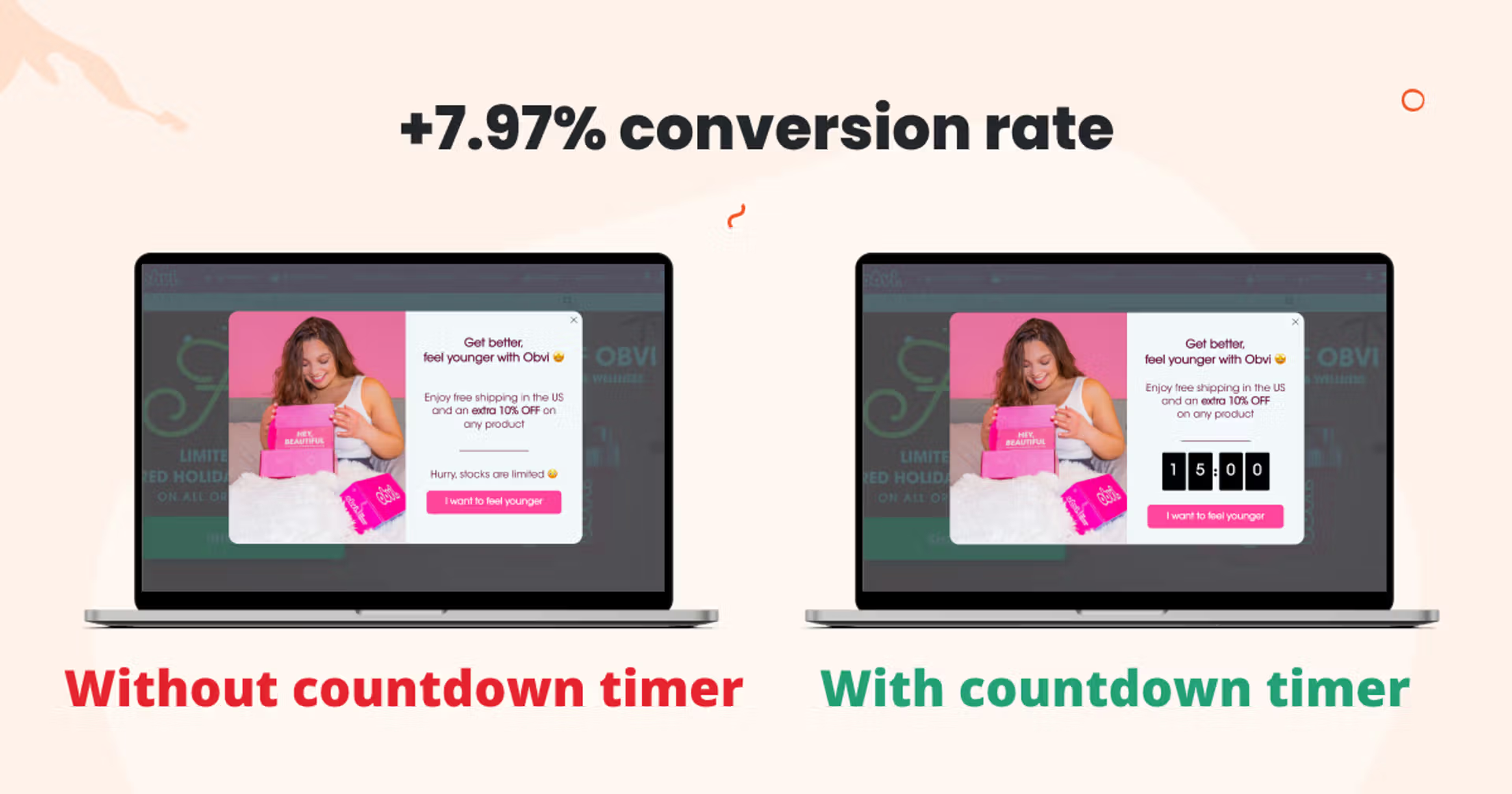
Read the full Obvi case study.
With OptiMonk, you describe the popup in one sentence, for example:
"A countdown popup for our Black Friday sale that ends Sunday at midnight, 20% off."
The agent designs it in your brand's colors, fonts and logo, writes the copy and builds a separate mobile version. It sets the targeting, such as exit intent, cart value, returning visitors.
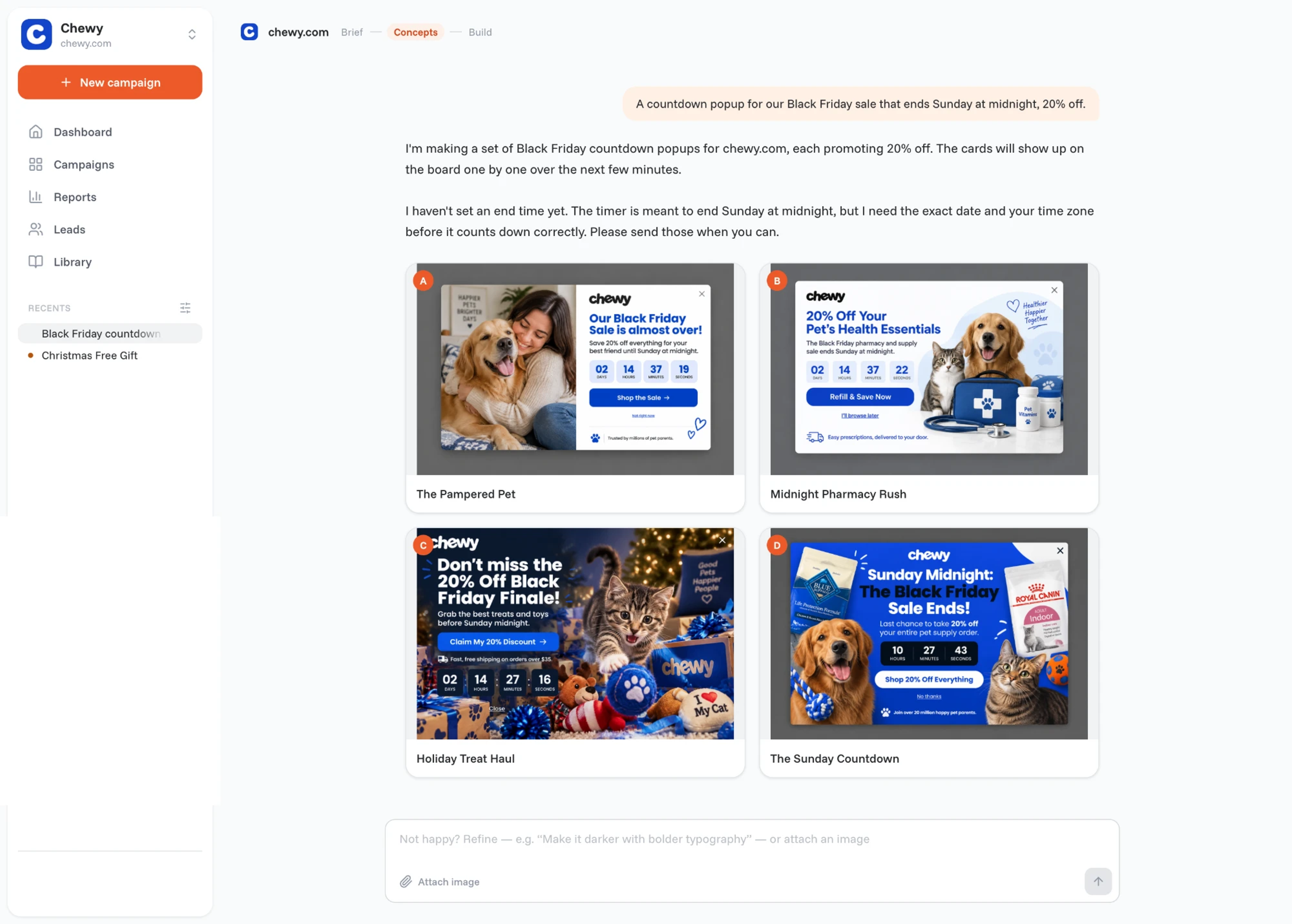
After publishing, the same conversation keeps working: it runs A/B tests and offers to roll out the winner. See the countdown feature, or use scarcity as one part of your ecommerce personalization, with different offers for new visitors, returning visitors and subscribers.
A concert that sells out in minutes: the venue has a fixed number of seats. In marketing: a sale that ends at midnight, a limited-edition drop or early access for email subscribers.
Scarcity means there is little of something (quantity or access). Urgency means there is little time (a deadline). Many campaigns use both, for example a limited edition sold during a weekend sale.
A scarcity marketing strategy limits an offer by time, quantity, access or season to give shoppers a reason to decide now. It works best when the limit is real, stated clearly (a date, a number) and tied to an event shoppers already expect, such as a holiday sale or a product launch. For the FOMO side, see FOMO marketing.
In the EU, falsely stating that an offer is only available for a very limited time is banned in all circumstances under Annex I, point 7 of the Unfair Commercial Practices Directive, and the European Commission's guidance names fake timers as an example. In the US, the FTC lists baseless countdown timers as a dark pattern. This is not legal advice; check the rules in your market.
No. It works best for limited products, real sale events and seasonal offers, and it can backfire if shoppers see the same "last chance" message every week. Test it with an A/B test or a holdout test before you rely on it.
Pick a real limit from this page, a sale that ends, a limited drop or early access for subscribers, and describe the popup in one sentence. The agent designs it for your brand, writes the copy, builds a mobile version and ends it when the offer ends.
Free to start. No credit card.

In this article, we'll share 30 actionable Black Friday marketing ideas for ecommerce businesses to make 2026 your most successful yet.
Learn about email marketing frequency for ecommerce stores. Most send 1-3 emails per week, with frequency adjusted by subscriber engagement and store type.
Let's take a look at the 21 best lead generation software for 2026 and discuss the features that any lead generation tool should have.