


Black Friday Marketing Strategy: 30 Ideas for 2026
In this article, we'll share 30 actionable Black Friday marketing ideas for ecommerce businesses to make 2026 your most successful yet.
Let's dive into the world of e-commerce email marketing tips and explore how you can transform your online store with email marketing.
In short
Unlock the potential of ecommerce email marketing with a strategic approach that enhances customer engagement and boosts ROI. Discover key email types like welcome, transactional, and promotional emails, and learn how personalization, segmentation, and automation can elevate your campaigns. Master the ecommerce email marketing funnel to drive conversions and retention, ensuring long-term success for your online store.
In today's competitive world, having a strong ecommerce email marketing strategy is crucial for the success of your online store.
Email marketing allows you to stay in touch with your customers and potential customers, showcase new products, offer special deals, and create an engaging experience for your audience.
In fact, email is a whopping 40 times more profitable than social media channels, making it an indispensable tool for any ecommerce business. When executed well, you can expect a staggering ROI of $36 for every $1 spent on ecommerce email marketing.
Are you ready to unleash the full potential of email marketing for ecommerce? Let's dive into the world of ecommerce email marketing tips and explore how you can transform your online store into a thriving, successful enterprise!
When you build an email marketing strategy for your online store, it helps to think in terms of several core email types, each with its own purpose, timing, and goal.
Here’s a breakdown of the most important kinds you might want to include.
Sent immediately after someone subscribes or creates an account, welcome emails are your first handshake.
They set the tone for future communication. You can thank new subscribers, introduce your brand values, highlight bestsellers, or deliver a first‑time offer or coupon.
These are automated and action‑triggered, not marketing emails in the classic sense, but absolutely essential.
Think order confirmations, shipping notices, payment receipts, account creation confirmations, password resets, etc. They keep customers informed, build trust, and often get higher open rates than promotional emails.
A big money‑saver for ecommerce stores.
If a shopper adds products to their cart (or browses certain products) but leaves before checking out, these emails act as gentle reminders — sometimes with additional incentives (discounts, free shipping, urgency cues) to nudge them back to complete the purchase.
These are your classic marketing pushes: new product launches, seasonal campaigns, flash sales, discounts, exclusive offers, or member‑only deals. Their goal is to drive immediate action or purchases.
Because people receive many such emails daily, you need to balance frequency and creativity to stay effective.
These emails aim to build a long‑term relationship, provide value, and position your brand as helpful or authoritative.
They can include blog posts, product tips, use‑case stories, reviews, educational content, or curated product picks. Perfect for nurturing loyalty and keeping subscribers engaged.
Over time, some subscribers will go quiet — they stop opening emails or buying.
Re‑engagement emails are tailored to “wake them up”: special offers, updates, reminders, or personalized recommendations. They help re‑activate dormant contacts and clean up your mailing list.
To create successful ecommerce email campaigns, you need to focus on three essential components:
These components enable you to target your customers with highly relevant messages, increasing the likelihood of engagement and conversion.
Let's delve deeper into each of these components and learn how they can elevate your email marketing strategy.
Personalization in ecommerce email marketing involves tailoring the content of your emails to each audience segment based on their past behavior and preferences.
By personalizing your emails, you can significantly boost open rates, clicks, and engagement, while reducing bounces, unsubscribes, and spam reports.
There are three main categories of personalized marketing:
By combining different types of personalized marketing, you can create more tailored, successful email campaigns.
For instance, you could send product recommendations based on a customer's browsing history.
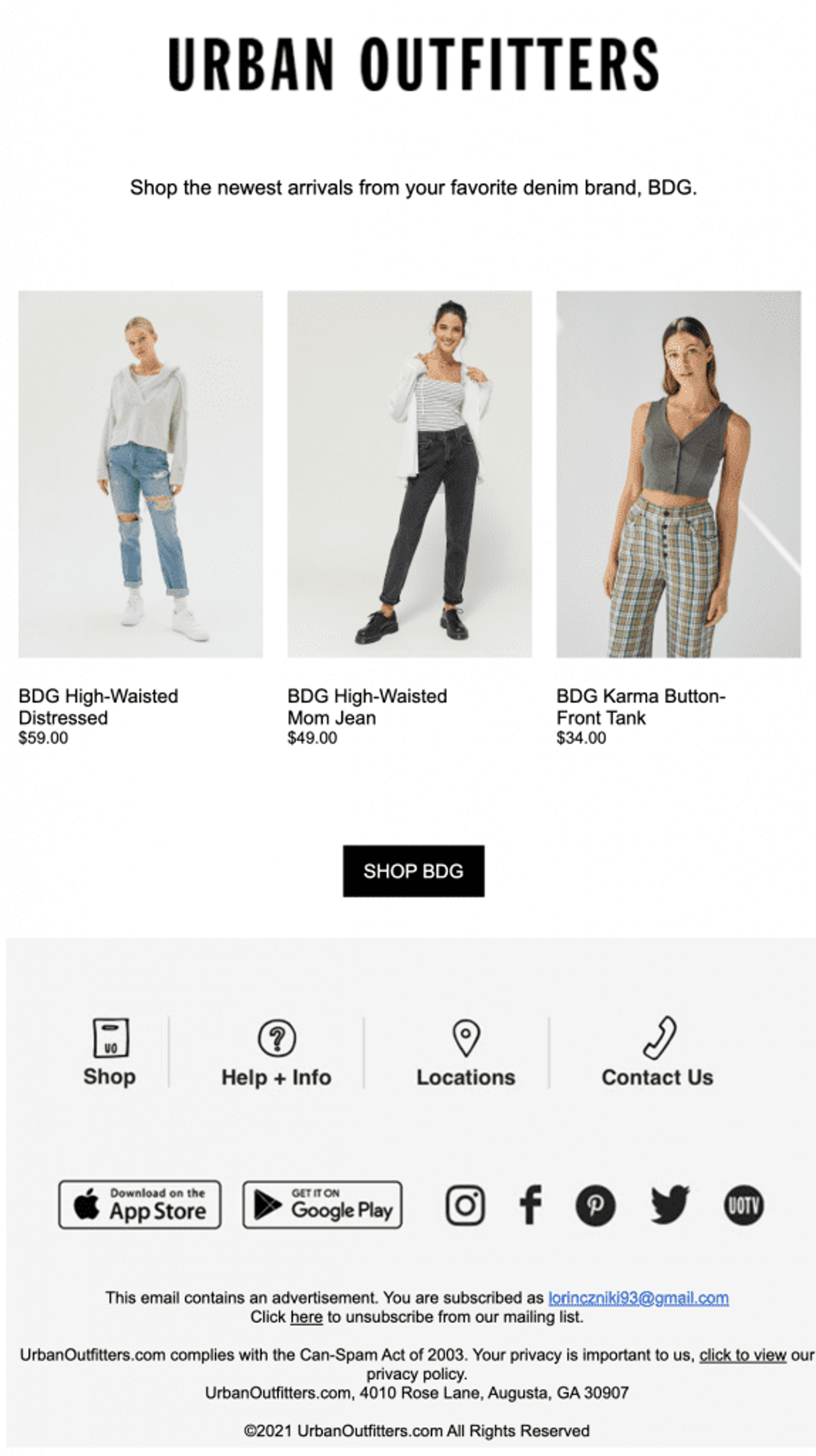
Segmentation is the process of dividing your customer base into groups based on common traits, such as interests, preferences, and past actions.
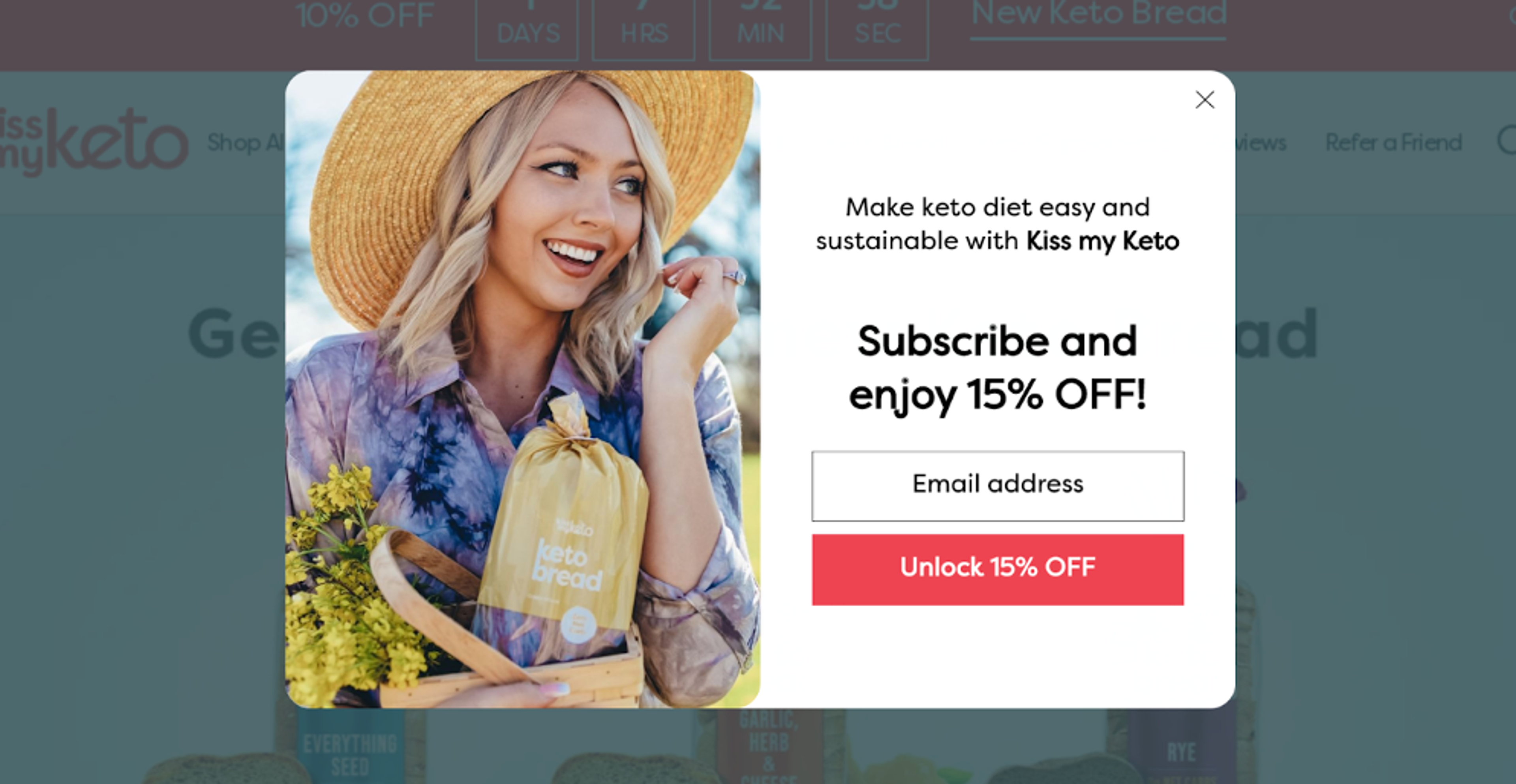
For example, you could easily segment customers based on interest. All you need to do is to add an extra step to your email popup.
Check out an example from KissMyKeto. First, they show a regular welcome email popup:
And in the second step, they ask a segmentation question.
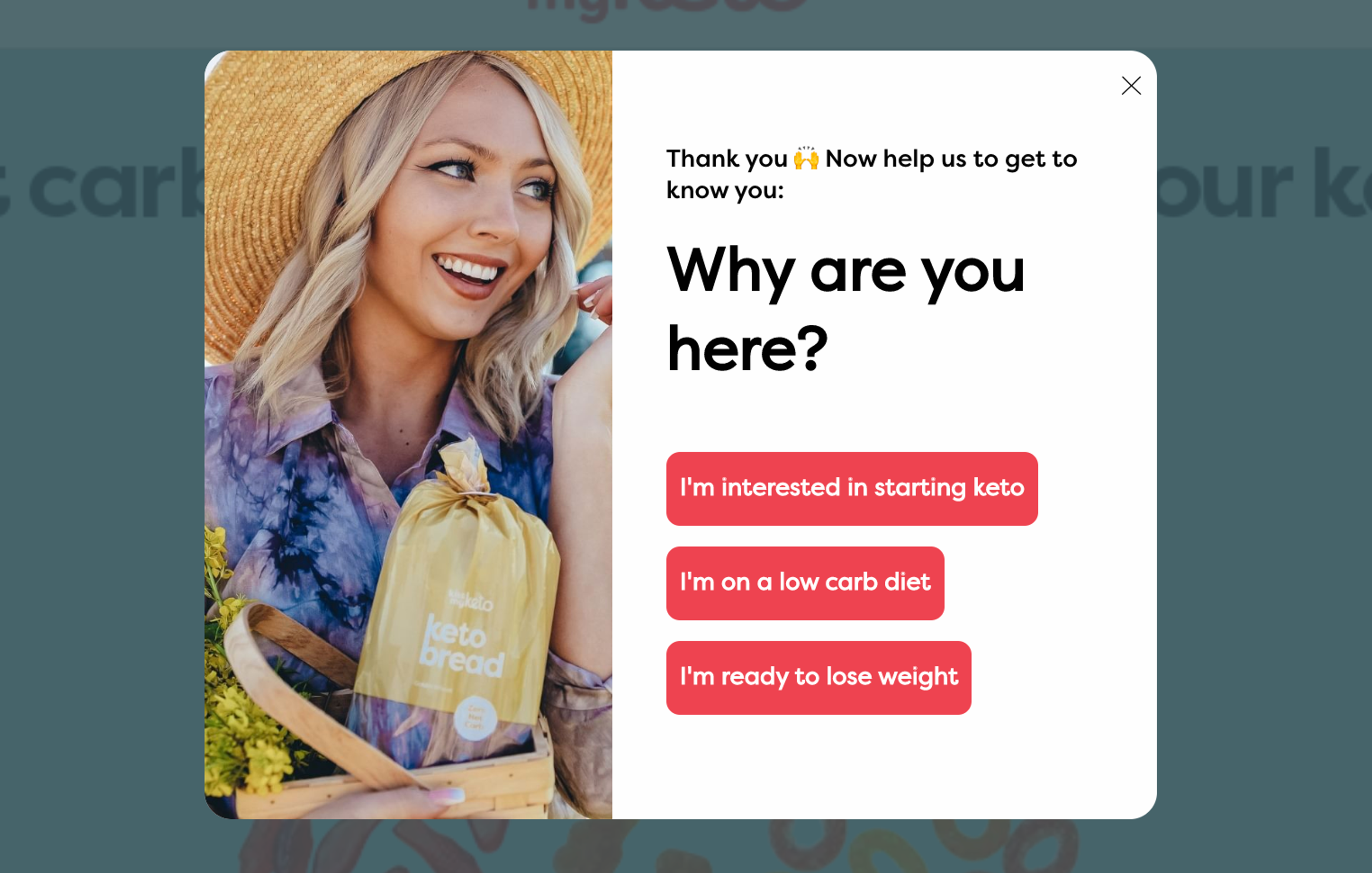
You could send this data to your email service provider and then segment subscribers based on this information.
Segmentation not only allows you to target specific customer groups based on interest, but it also helps you reward loyal customers and make your emails more personal.
Automation in ecommerce email marketing refers to the process of setting up automated emails that are triggered based on specific actions your customers take, like signing up for your newsletter or abandoning their shopping cart.
Automated emails can significantly increase revenue, as they generate 320% more revenue than non-automated emails.
Examples of automated email campaigns include:
Incorporating automation into your ecommerce email marketing strategy not only saves you time and effort, but also ensures that your customers receive timely, relevant messages based on their actions.
To build an effective ecommerce email marketing funnel, you need to focus on four key stages:
By addressing each of these stages, you can create a comprehensive email marketing strategy that not only attracts new customers but also nurtures existing ones, turning them into loyal, repeat customers.
Let's explore each stage of the funnel and discover how to optimize your email marketing efforts for maximum success.
The awareness stage involves capturing the attention of potential customers and building your email list.
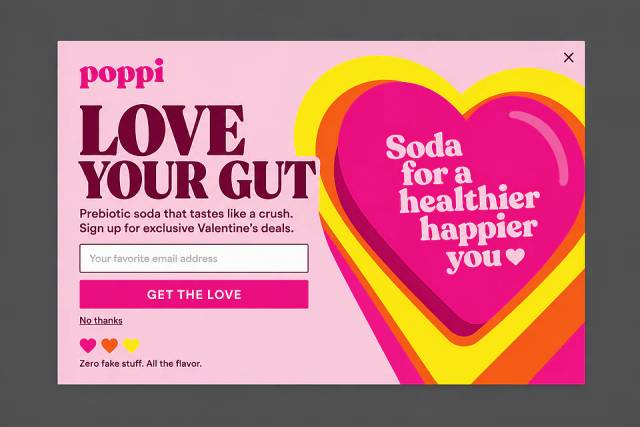
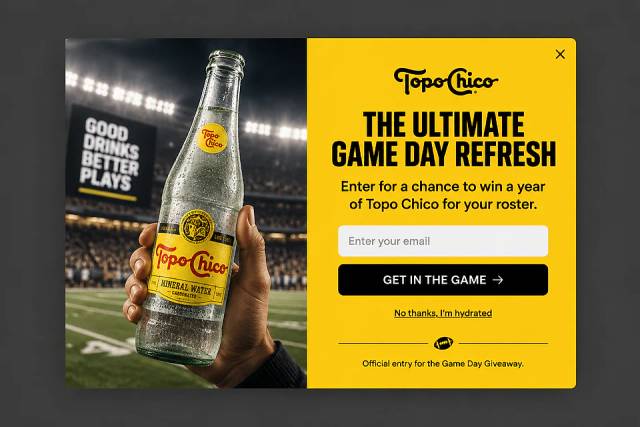
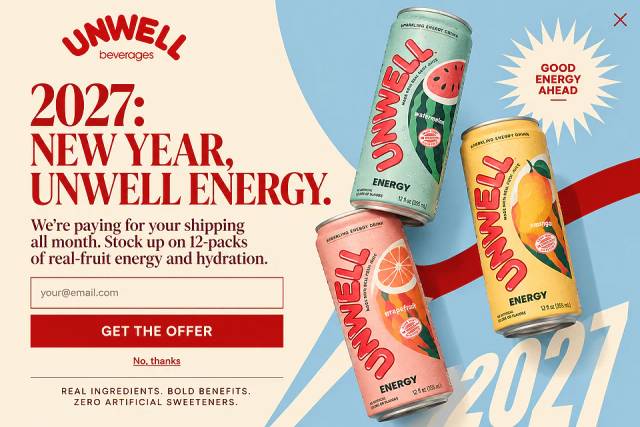
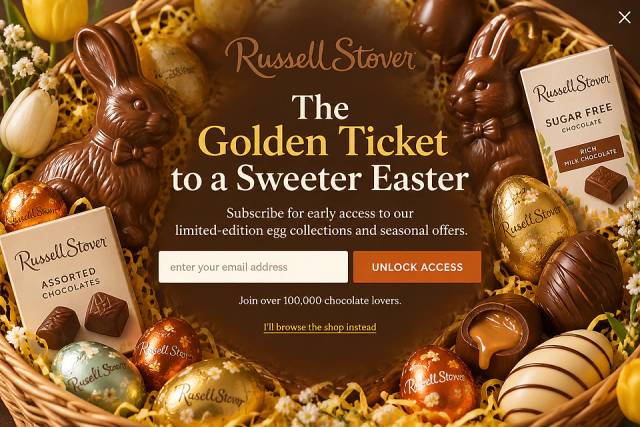
One way to achieve this is by setting up an email popup for new visitors. This helps you build an audience of potential customers who are interested in what you have to offer.
You can get started with these email popup ideas in just a few minutes:
Once you have new subscribers, it's essential to build trust and introduce them to your products. After that, you’ll want to encourage them to make their first purchase.
This can be achieved through a well-crafted welcome email series, which provides valuable information about your brand and offers incentives, such as discounts or exclusive content, to entice new subscribers to become paying customers.
The engagement stage focuses on building a strong relationship with your customers.
Engagement emails, such as product recommendations or promotional offers, are designed to grab your customers' attention and deliver relevant messages based on their level of engagement.
For customers who have yet to make a purchase, your engagement emails should focus on building trust in your brand and offering discounts or incentives to minimize the perceived risk of buying from your online store.
On the other hand, for customers who have already converted, your engagement emails should aim to maintain their interest by providing personalized content, exclusive offers, and opportunities for further engagement with your brand.
One effective way to drive conversions is through the use of abandoned cart emails, which are triggered when customers add items to their cart but do not complete the purchase. These emails can help recover approximately 15% of potentially lost revenue.
Another powerful tool for driving conversions is the use of back-in-stock emails. These emails inform customers when a previously out-of-stock product becomes available again, prompting them to complete their purchase.
In addition to abandoned cart and back-in-stock emails, incorporating customer reviews into your email marketing strategy can help move customers further down the sales funnel. Reviews provide social proof and build trust, helping address any hesitations your potential customers might be feeling.
The retention stage focuses on keeping your existing customers engaged and encouraging them to make repeat purchases.
Customer retention is crucial for building customer loyalty, increasing customer lifetime value, and reducing customer acquisition costs.
To retain your customers, you’ll want to use the strategies above (personalizing emails, segmenting your customer base, and automating email campaigns). You’ll also want to make sure you’re always creating compelling content.
There are many different email marketing tools available to help you create, manage, and optimize your email campaigns.
Most of these platforms offer a range of features, such as email templates, automation capabilities, and analytics, which can help you streamline your email marketing efforts and achieve better results.
Let's take a look at three of the most popular tools!
Mailchimp is a widely used email marketing tool that allows businesses and individuals to create, send, and track email campaigns.
It offers a user-friendly interface and a range of features to help users build and manage their email lists, design visually appealing emails, and automate email workflows.
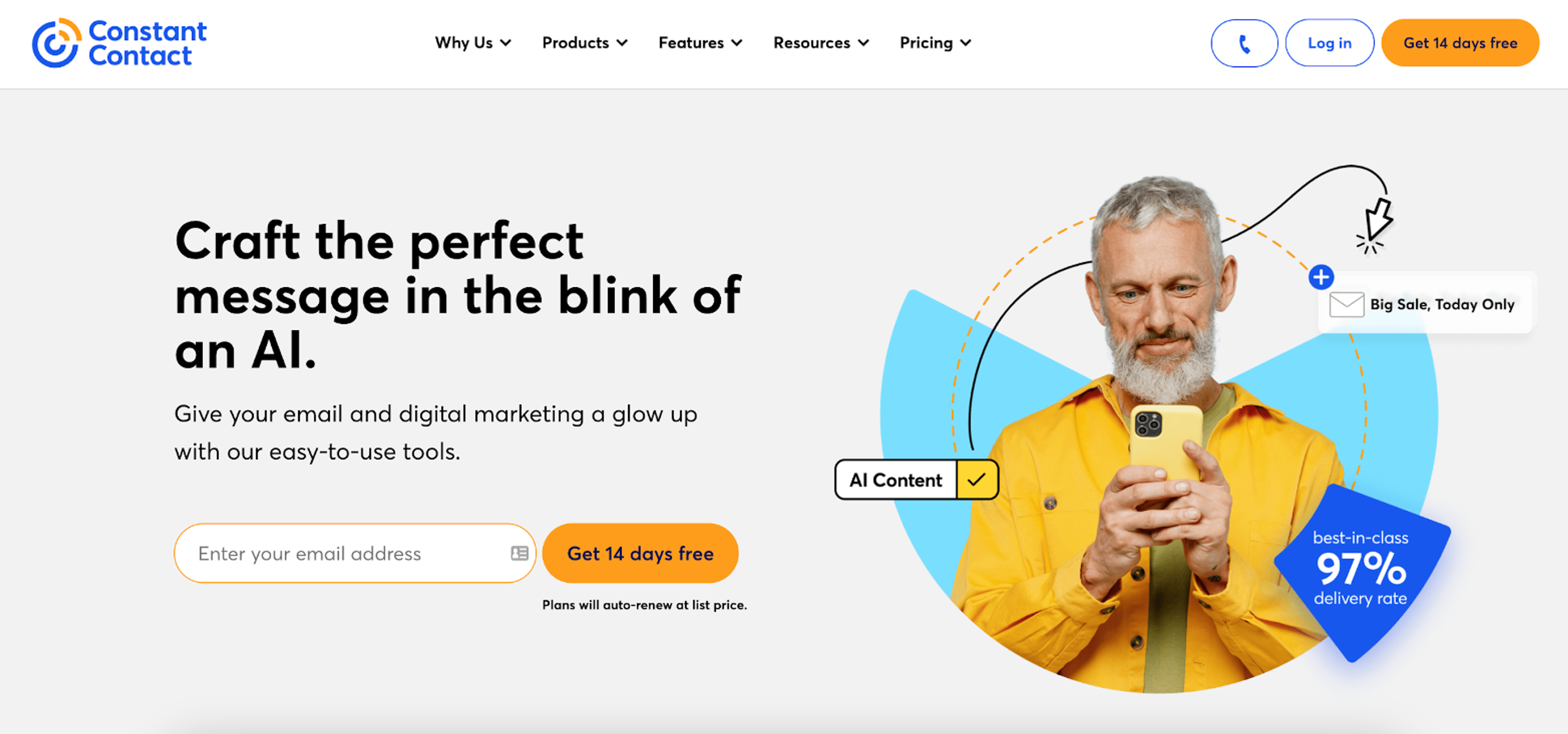
One of the key features of Constant Contact is its wide selection of customizable email templates, which allows users to create visually appealing, engaging emails without extensive design skills.
For those just starting out with email marketing, Constant Contact is an excellent choice, as it offers comprehensive support and a wealth of features to help you get started.
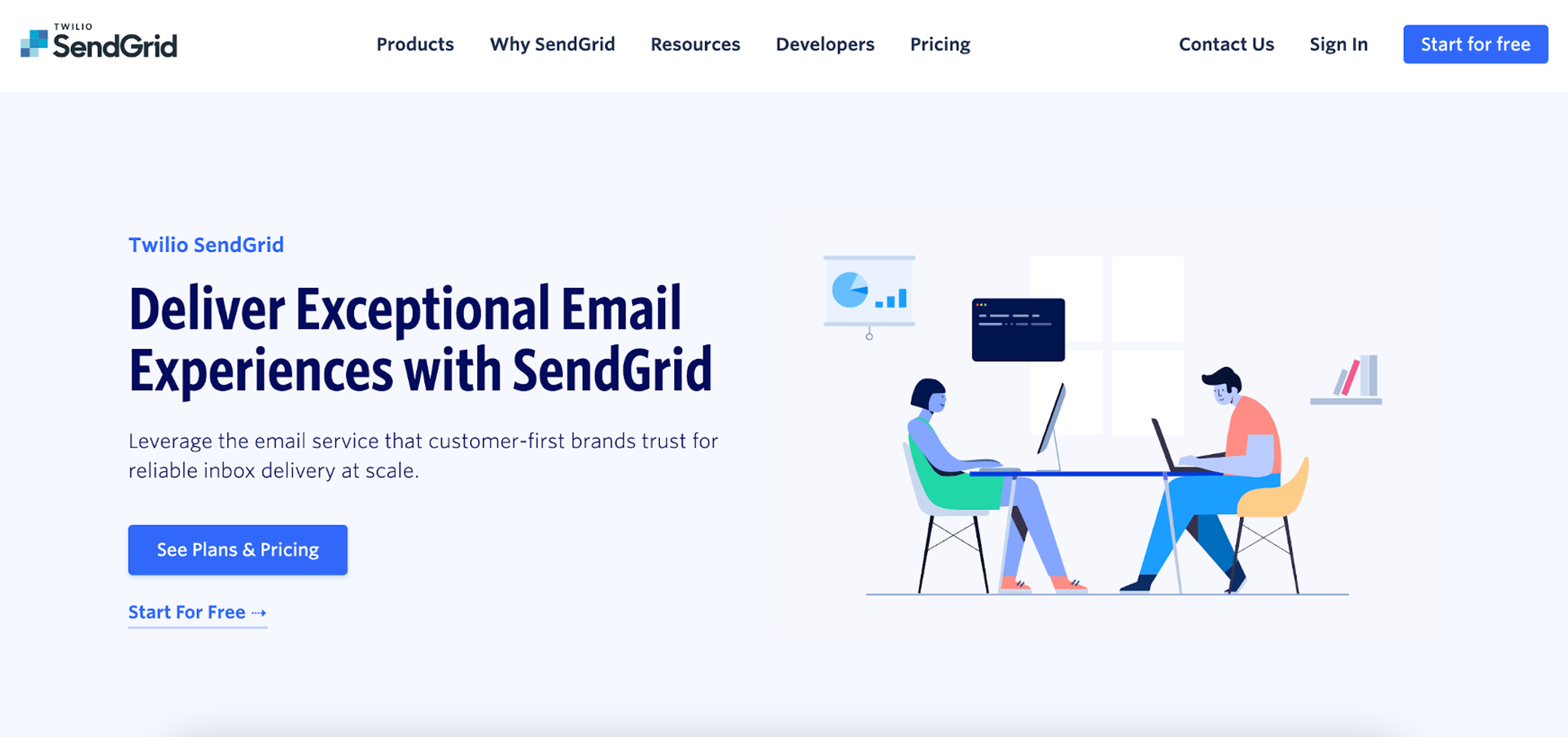
SendGrid is a powerful email marketing tool designed to deliver exceptional email experiences.
With its robust features and reliable infrastructure, SendGrid enables users to effectively engage with their audience through personalized and targeted email communication.
In order to determine the success of your email marketing campaigns, it's essential to track key metrics such as:
Monitoring these metrics will help you identify areas for improvement and optimize your email marketing strategy for better results.
Another important metric to consider is customer lifetime value, which measures the total revenue a customer generates over the course of their relationship with your ecommerce store.
By increasing customer lifetime value, you can maximize the profitability of your email marketing efforts. In fact, email marketing can account for around 20% of a store's total revenue, making it a critical component of your ecommerce marketing strategy.
There are tons of examples of successful email campaigns that you can draw inspiration from.
For instance, Amazon's emails with personalized product recommendations leverage customer data to deliver highly relevant content, driving sales and customer satisfaction.
Similarly, Sephora's loyalty program effectively rewards loyal customers while encouraging them to make repeat purchases, fostering long-term customer relationships and boosting revenue.
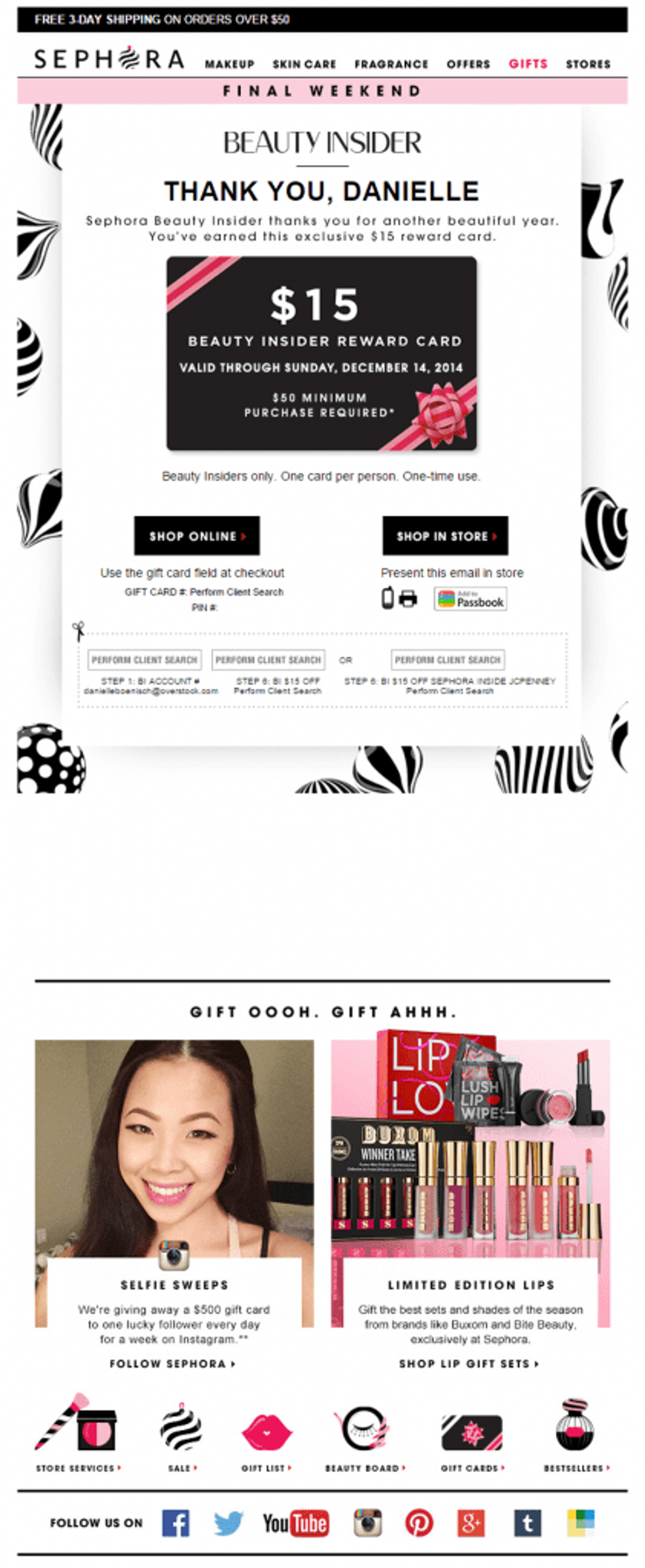
These real-life examples demonstrate the power of a well-executed email marketing strategy.
By implementing the strategies and techniques discussed throughout this article, you can create your own highly effective email campaigns that drive engagement, conversions, and customer loyalty.
Ecommerce email marketing is an effective way to stay in touch with customers and prospects by sending out messages about sales, new products, discounts, and other promotions. It's an efficient way to build brand loyalty and drive more sales.
Yes, email marketing definitely works for ecommerce! As mentioned above, it's a powerful tool that can be used to reach customers, drive sales, and build brand loyalty. With its low cost and high ROI, email marketing is one of the best ways to generate revenue and increase customer engagement.
Email marketing can be broadly broken down into four main “types”: welcome emails, promotional emails, transactional emails, and automated emails. Each of these categories serves a different purpose and has its own set of best practices, so it's important to understand how they work together to get the best results.
For example, welcome emails are a great way to introduce new customers to your brand and build relationships, while promotional emails are used to drive sales and increase conversions.
Ecommerce email marketing campaigns are a powerful and essential tool for driving sales and customer loyalty in your ecommerce store. Today, you simply can’t skimp on your email marketing… customers expect to receive relevant, engaging content directly to their inboxes, and you need to deliver!
By focusing on personalization, segmentation, automation, and compelling content, you can create highly effective email campaigns that resonate with your audience and help you achieve your goals.

In this article, we'll share 30 actionable Black Friday marketing ideas for ecommerce businesses to make 2026 your most successful yet.
Learn about email marketing frequency for ecommerce stores. Most send 1-3 emails per week, with frequency adjusted by subscriber engagement and store type.
Let's take a look at the 21 best lead generation software for 2026 and discuss the features that any lead generation tool should have.