


40 Welcome Message Examples for Your Website (Copy and Paste)
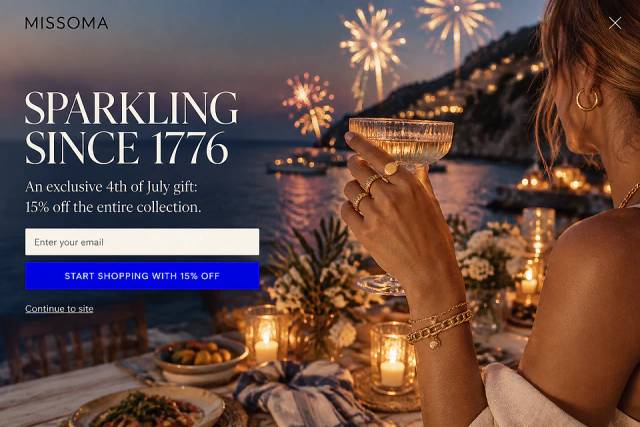
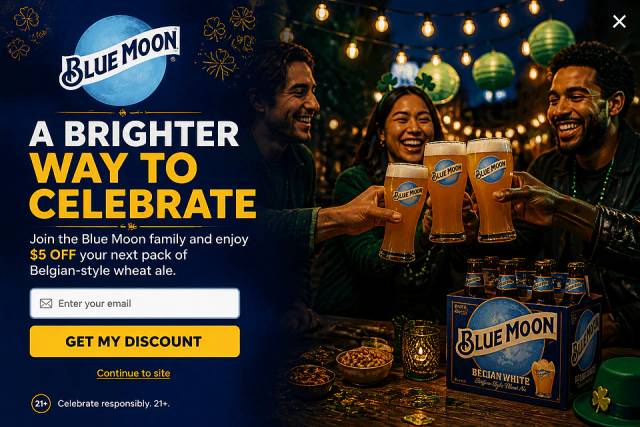
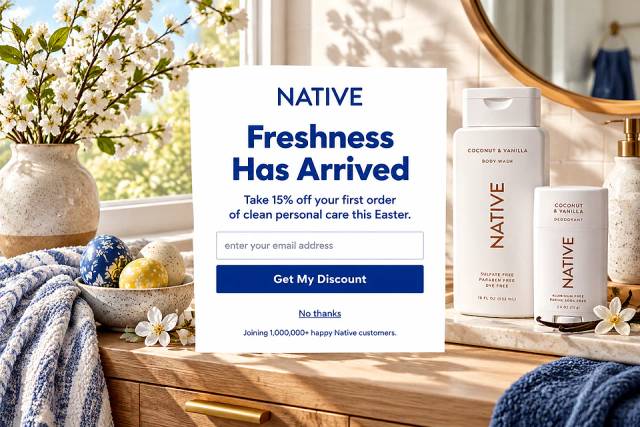
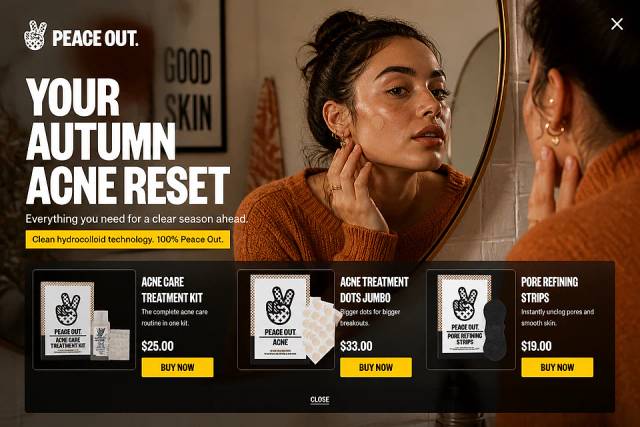
40 website welcome message examples for online stores, grouped by situation and industry, ready to copy into a welcome popup.
We surveyed marketers, ecommerce store owners, and everyday users to understand how popups are perceived today.
In short
Discover how website popups are viewed in 2026, balancing between a powerful lead generation tool and a potential user experience disruptor. Industry experts and real users weigh in on the strategic use of popups, emphasizing behavior-based triggers and non-intrusive formats for optimal conversion rate optimization. Learn how to effectively implement popups to enhance engagement and conversions.
Here are the results.
When asked about their stance on popups, respondents offered a mixed yet insightful perspective:
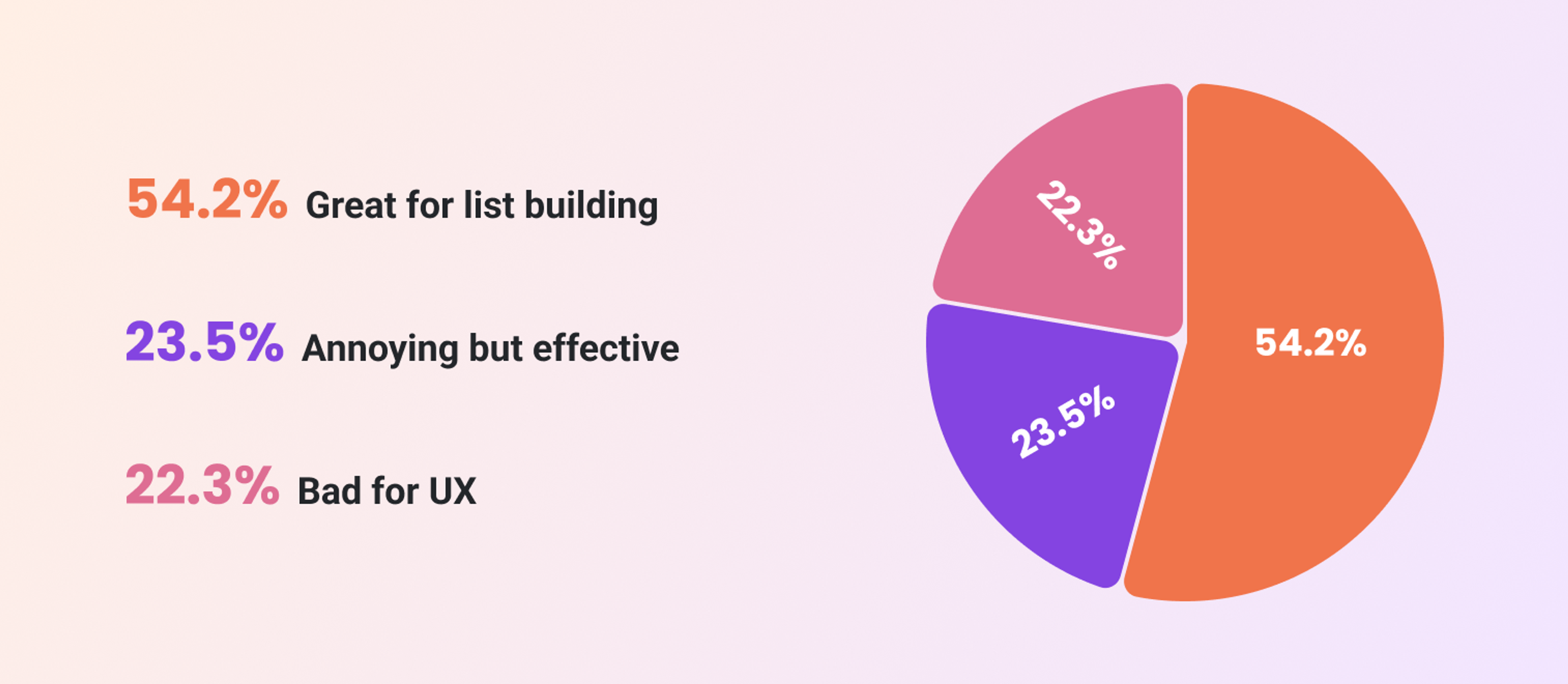
While more than half of respondents appreciate popups for their ability to capture leads, a significant portion still acknowledges their downsides.
The key takeaway? Popups aren’t inherently bad, but the way they’re implemented matters.
While the data reveals a divided opinion on popups, industry professionals offer deeper insights into why they remain a crucial marketing tool.
Let’s dive into their perspectives.
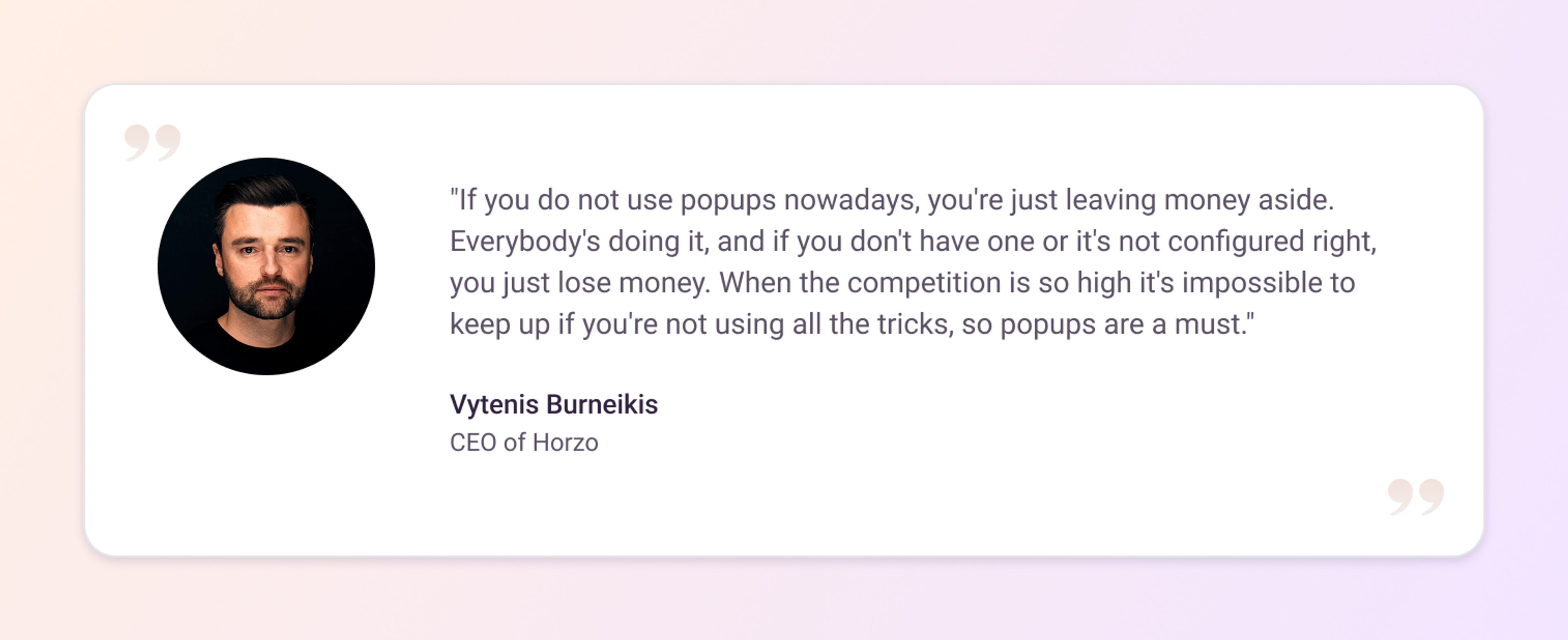
According to Vytenis Burneikis, CEO of Horzo, not using popups is simply leaving money on the table—particularly in a competitive market:
"If you do not use popups nowadays, you're just leaving money aside. Everybody's doing it, and if you don't have one or it's not configured right, you just lose money. When the competition is so high it's impossible to keep up if you're not using all the tricks, so popups are a must."
His straightforward assessment underscores a shift in mindset: popups have become a “must” in many marketing playbooks.
From this perspective, the potential revenue gained often outweighs any perceived drawbacks—as long as the popups are configured properly and deployed with the user in mind.
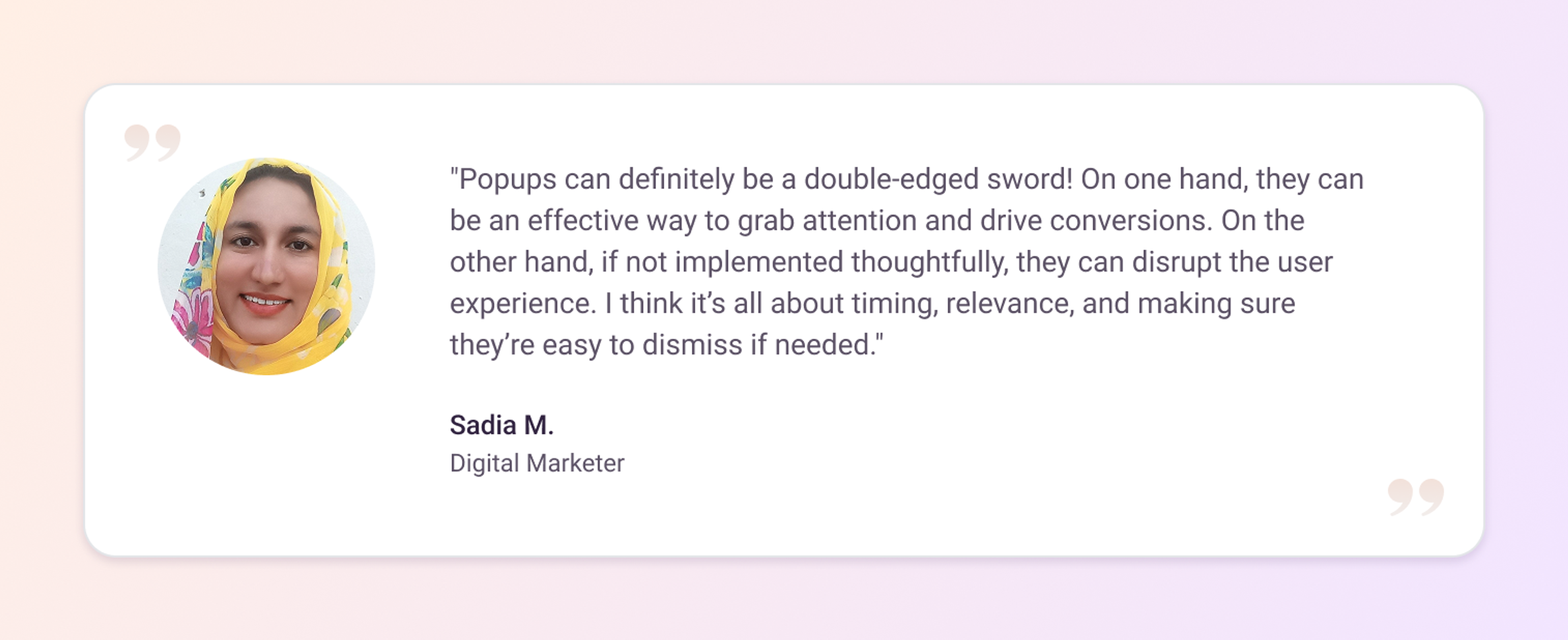
Sadia M., a seasoned digital marketer and email marketing strategist, believes that while popups can be effective, they need to be used thoughtfully:
"Popups can definitely be a double-edged sword! On one hand, they can be an effective way to grab attention and drive conversions. On the other hand, if not implemented thoughtfully, they can disrupt the user experience. I think it’s all about timing, relevance, and making sure they’re easy to dismiss if needed."
Her perspective aligns with a growing industry trend: popups must be strategically placed to avoid frustrating users while capturing valuable leads.
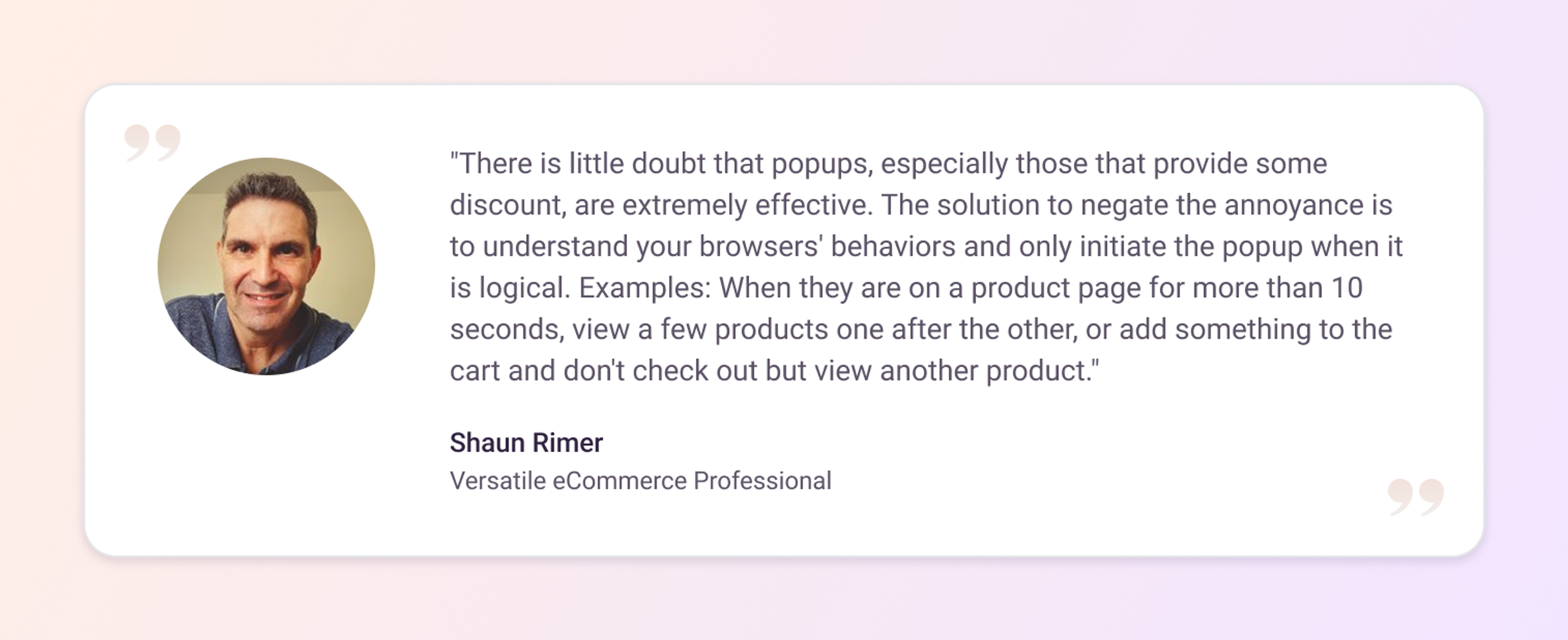
Shaun Rimer, an experienced ecommerce professional, emphasizes the importance of understanding user behavior:
"There is little doubt that popups, especially those that provide some discount, are extremely effective. The solution to negate the annoyance is to understand your browsers' behaviors and only initiate the popup when it is logical. Examples: When they are on a product page for more than 10 seconds, view a few products one after the other, or add something to the cart and don't check out but view another product."
Rimer suggests that well-timed popups can feel less intrusive and more like a helpful nudge rather than an interruption.
He also mentions alternative approaches, such as discreet floating banners, which display offers without obstructing the user experience.
Reddit, the home of brutally honest opinions, has plenty to say about website popups.
Here are the main takeaways from user discussions:
Many users express frustration with intrusive popups, complaining that they can disrupt the browsing experience and deter engagement.
In one discussion, a user lamented the overuse of popups, suggesting that excessive interruptions can lead to negative perceptions of a website.
Despite personal aversions, some users acknowledge that popups can yield positive results when implemented thoughtfully.
One Redditor noted reluctantly, "yes, subscriber popups work even if they annoy most people," indicating a begrudging acceptance of their utility in certain contexts.
The consensus suggests that the success of popups hinges on their strategic deployment. Timing, relevance, and non-intrusiveness are crucial factors.
As one user mentioned, "I’ve tried exit-intent popups, and while they can have mixed feedback, they can be effective if used strategically."
In the ecommerce sector, data-driven approaches to popups have shown tangible benefits.
One contributor shared, "We have exactly 5-10% daily conversion rate on these banners. From these people, 30-40% will make a purchase within one week," underscoring the potential return on investment when popups are used effectively.
So, what’s the final verdict on website popups in 2026?
It all comes down to how you use them. Here are the key takeaways:
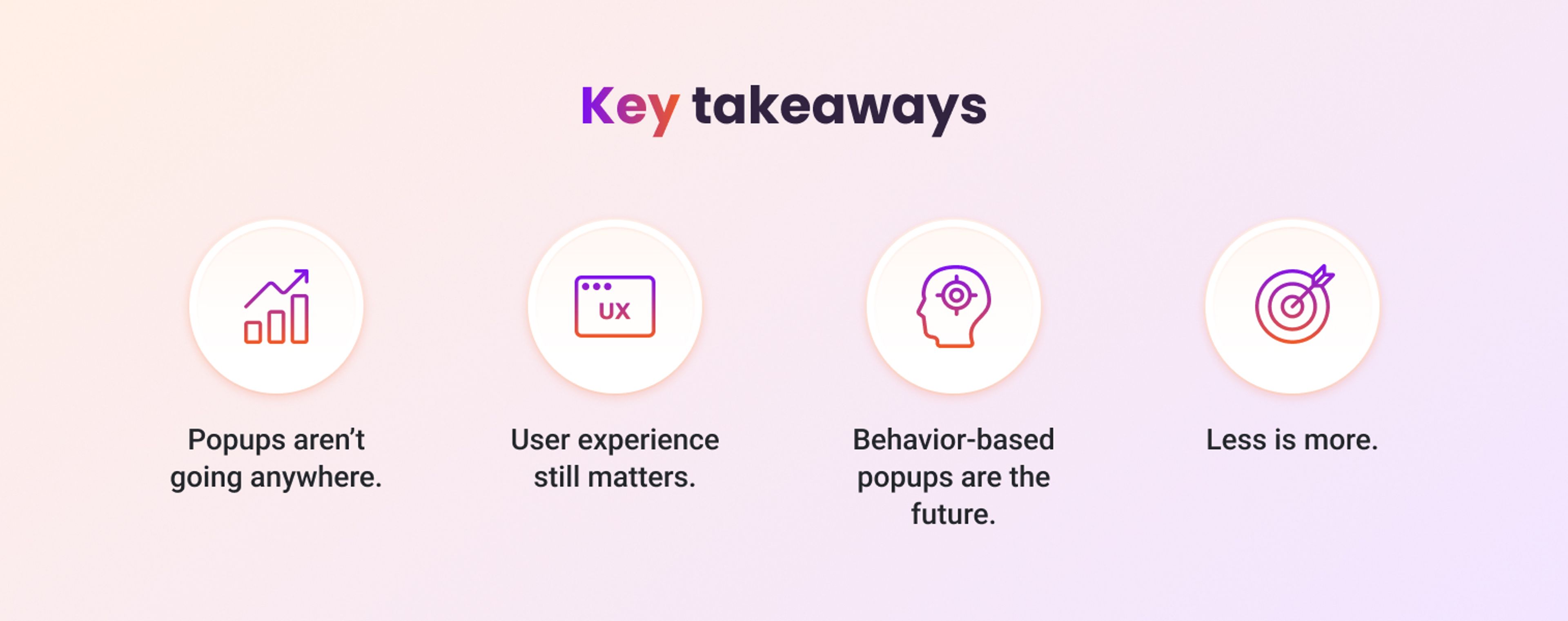
In short, popups can be a game-changer—as long as they’re done right. The challenge for marketers in 2026? Finding the sweet spot between effectiveness and a great user experience.
If you'd like to create high-converting popups that are user-friendly, get started with these popup ideas:

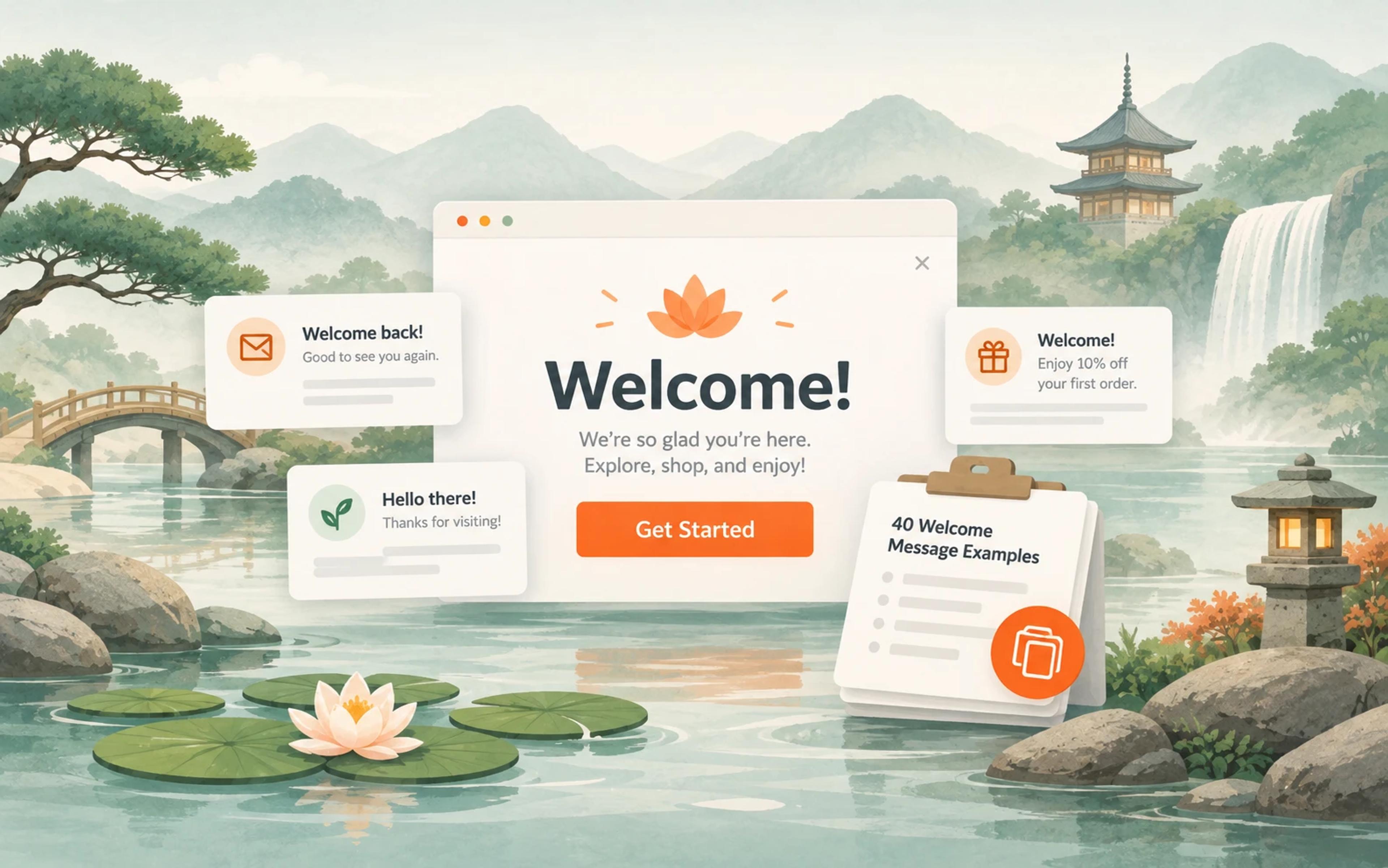
40 website welcome message examples for online stores, grouped by situation and industry, ready to copy into a welcome popup.
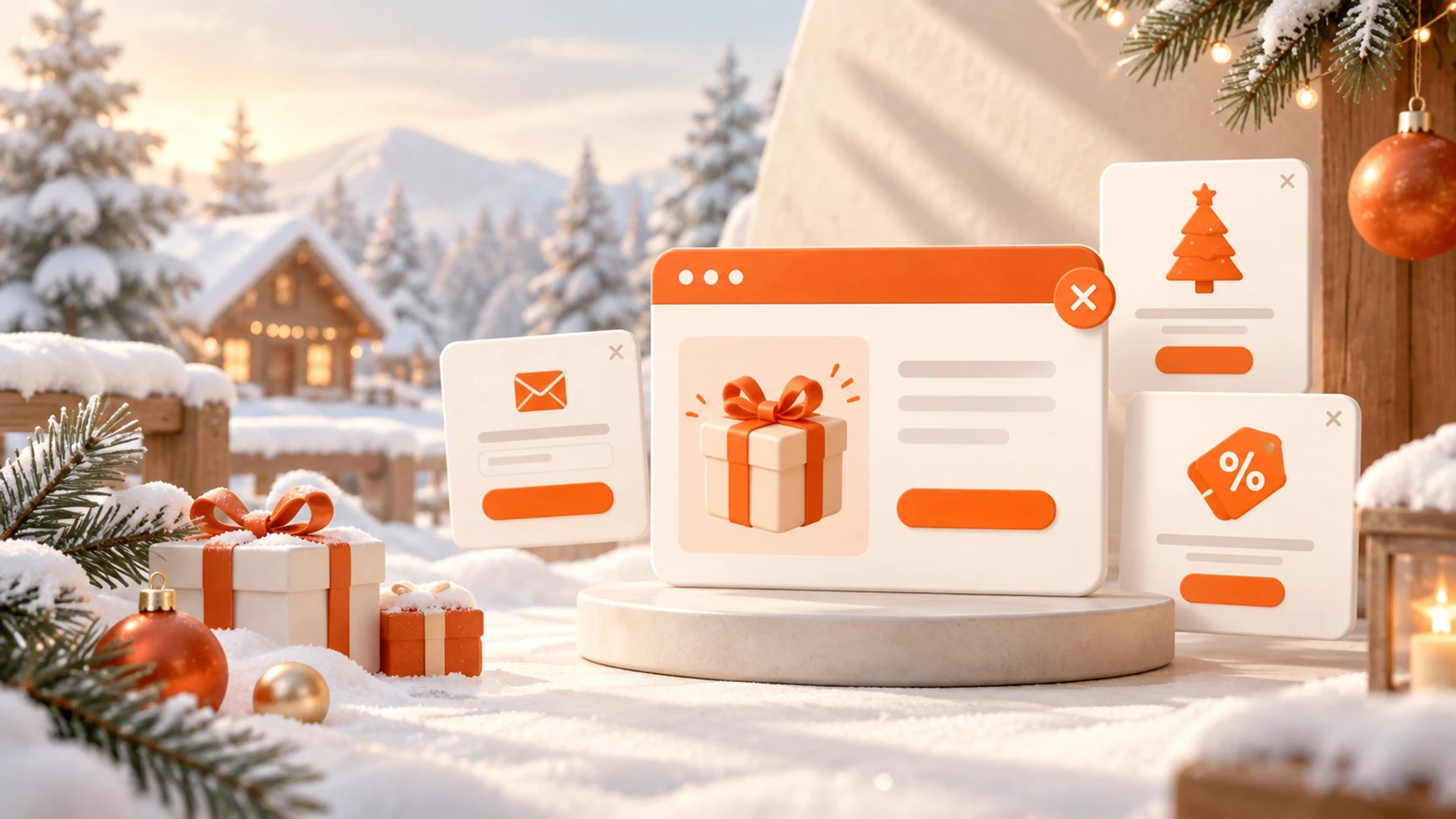
12 Christmas popup examples for online stores, from welcome offers and spin-to-win wheels to gift quizzes and last-chance countdowns.
In this article, we'll share the best alternatives to Sleeknote that help you to get more leads in 2026.